Jingdezhen: China's Porcelain Capital
Jingdezhen, the 1,000-year porcelain capital: ancient kilns, the Imperial Kiln Museum & Taoxichuan. Plus how to get there from Nanchang by high-speed rail.
By Hello Nanchang · Last updated
Jingdezhen, Jiangxi Province, China · Easy day trip or 1–2 nights from Nanchang; best late Sep–Nov
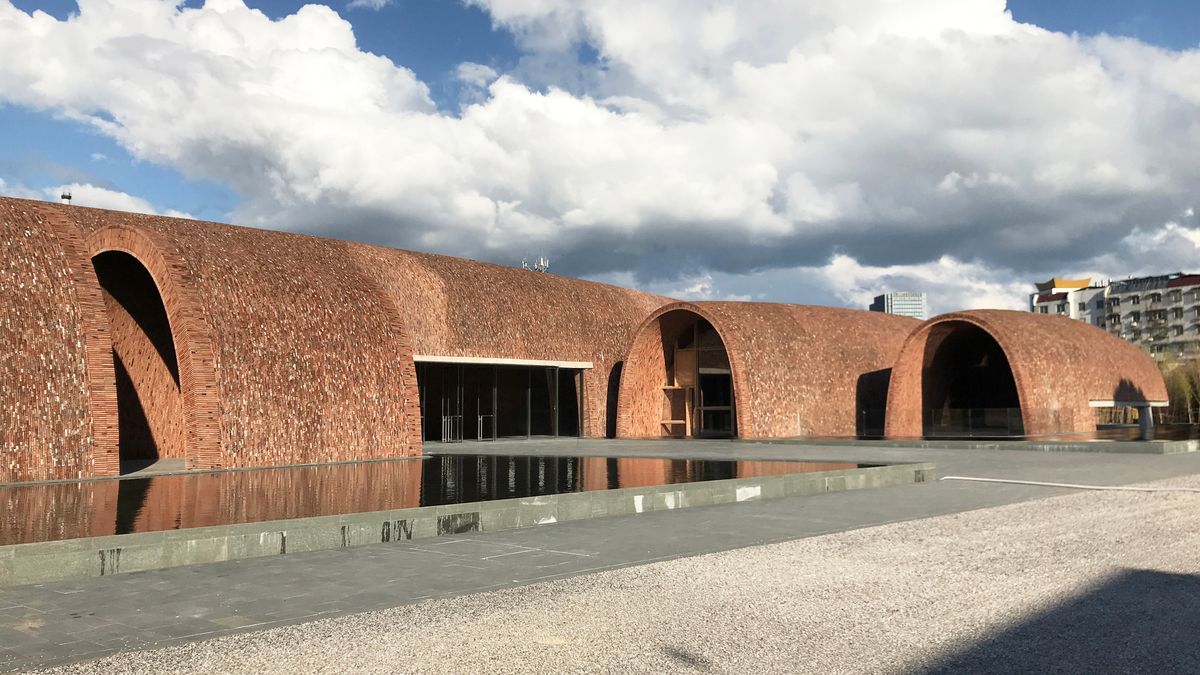
Walk into the old lanes of Taoyangli, the quarter beside the river, and look at the walls. They are built out of kiln bricks — thick, heat-scarred, slightly warped blocks that spent years lining the inside of a wood-fired kiln and were pulled out when it was rebuilt. Around 80% of the 353 lanes recorded in Jingdezhen's old town were put together this way, out of the fabric of the furnaces themselves. The habit didn't stop with the old houses: when the Imperial Kiln Museum went up in the middle of the quarter, its brick vaults took about 2.8 million kiln bricks — roughly 1.9 million fired new to look old, plus 900,000 genuine old ones collected around the city — laid by hand so that no two square centimetres of wall are the same.
That tells you what kind of city this is. Jingdezhen (景德镇) is not a town that used to make porcelain and now sells souvenirs about it. It is still, stubbornly, a workshop: a thousand years of kilns, an export trade in blue-and-white that is the reason "china" became a word for porcelain, and a city that now runs largely on twenty-somethings with clay under their fingernails. For anyone based in Nanchang it is also the best day out in Jiangxi, full stop: roughly 45 minutes each way on the high-speed train.
Come on a Friday, Saturday or Sunday if your dates allow it. From about 4:30pm the Taoxichuan market fills a former state porcelain factory with several hundred stalls — on a good weekend, over a thousand — and every seller has to be selling their own work to get a pitch. It is the least museum-like way imaginable to understand a museum-grade craft.
Why go — and who it isn't for
Five honest reasons, and one warning.
- It became a UNESCO World Heritage site in July 2026. On 25 July 2026 the World Heritage Committee, at its 48th session in Busan, inscribed the Jingdezhen Handicraft Porcelain Industry Sites (景德镇手工瓷业遗存) — China's 61st entry on the list, its first nominated as industrial heritage, and the first porcelain-themed property anywhere on it. What was listed is not one building but a whole supply chain, in five areas: the workshop district in town, the Hutian kiln site (湖田古瓷窑址) southeast of the centre, birthplace of qingbai (青白瓷), the pale bluish-white ware of the Song, the Gaoling (高岭) and Changling (长岭) raw-material mines, and the Jiaotan (蛟潭) firewood district — 45 individual sites in all.
- You can watch the whole craft, not a display case. At the Ancient Kiln park, throwers, trimmers, glazers and painters run the old production line in front of you — a division of labour so specialised that a Ming writer sat down and counted seventy-two separate jobs in it.
- You can make something. Sitting at a wheel here costs less than a mediocre lunch in Shanghai, and the wonky bowl that arrives in the post three weeks later beats any souvenir you could buy. (We break down formats, prices and how firing and shipping actually work in the 2–3 day Jingdezhen ceramics itinerary.)
- You can buy directly from the person who made it. Not a licensed reproduction, not a factory line — the maker, at their own stall, for a price you can afford.
- It's genuinely easy. Fast trains all day from Nanchang East, a fifteen-minute taxi at the far end, and everything worth seeing sits within a few kilometres of the river.
Who should skip it: if you have no interest in objects, making, or history-as-industry, Jingdezhen will read as a pleasant mid-sized Chinese city with a lot of pottery shops. It has no mountain, no dramatic gorge, no signature view. Lushan, Wugongshan and Sanqingshan do scenery far better. Come here for the hands, not the horizon.
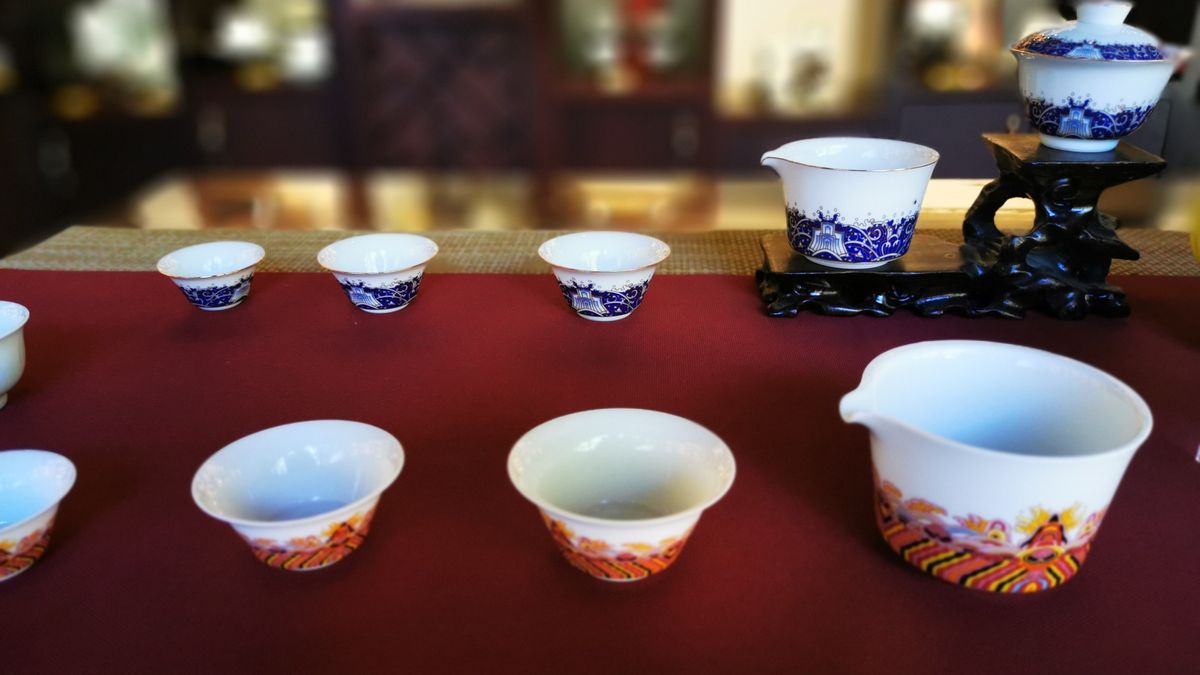
Imperial-style painted porcelain at the Ancient Kiln Folk Customs museum — the standard every workshop in town is still measured against. Photo: Liuxingy, "景德镇古窑民俗博览区 精美瓷器 02" (CC BY-SA 4.0) via Wikimedia Commons.
The man in the kiln, and the seventy-two pairs of hands
Two pieces of local history explain almost everything you'll see, and both are short enough to tell over a bowl of noodles.
The first is about a potter named Tong Bin (童宾). In 1599 the Wanli emperor's court sent a eunuch supervisor, Pan Xiang, to Jingdezhen to force through a batch of enormous dragon vats. Firing after firing failed. Pan Xiang's answer was to beat and punish the kiln workers harder. According to the story the town has told ever since, Tong Bin walked to the mouth of the burning kiln and threw himself in. The next morning the vats came out perfect. The potters made him a god — the Wind-and-Fire Immortal (风火仙师), patron of the kiln — and built him a temple beside the imperial kiln works. A Qing-dynasty rebuild of that temple still stands, and you can visit a reconstruction of it inside the Ancient Kiln park. In a city where a whole season's income could vanish in one bad firing, it is not hard to see why the kiln needed a saint.
The second is a sentence. Song Yingxing (宋应星), born in 1587 in Fengxin county, a short drive west of Nanchang, wrote the great Ming technology encyclopedia Tiangong Kaiwu (天工开物) — and devoted its ceramics chapter largely to what he saw here. His line about a single porcelain body is still quoted on half the signage in town: "共计一坯之力,过手七十二,方克成器" — the making of one vessel passes through seventy-two pairs of hands before it is finished. Clay preparation, throwing, trimming, painting, glazing, firing: six broad stages, seventy-two jobs, each done by a specialist who did nothing else. Keep that number in your head at the Ancient Kiln and the demonstrations stop looking like folklore and start looking like a production line.
Getting there from Nanchang — the numbers
This is the most-asked Jiangxi transport question and the answer is easy: take the high-speed train from Nanchang East. The Nanchang–Jingdezhen–Huangshan line opened at the end of 2023 and collapsed a half-day slog into a coffee-and-a-podcast.
- Route: Nanchang East (南昌东) → Jingdezhen North (景德镇北), about 156 km.
- Time: the fastest services do it in 42 minutes; most take 45–60 minutes depending on stops. Around 35 departures a day, roughly 7am to 9pm.
- Fare: second class runs about ¥86–94, and speed costs a little more rather than less: the 42-minute G-trains sit at the top of that band while the slower D-trains are the cheap ones. Chinese rail fares float now, so scan the whole day's list before you book rather than taking the first departure you see.
- The trap: a slow conventional train still runs the old route for roughly ¥45 in a hard seat. It takes hours. Ignore it.
- Check your station. Nanchang has several. The fast Jingdezhen services leave from Nanchang East; trains out of Nanchang West can take an hour and a half. Our guide to Nanchang's airport and train stations explains which is which.
Book on 12306.cn, the official railway site, or through an English-language reseller such as Trip.com. Your passport is your ticket — carry the physical document to the gate, not a photo of it. In peak season and around public holidays, book a day or two ahead; on a normal Tuesday you can usually walk up. For the wider picture on Jiangxi rail, see getting around Jiangxi by train.
At the far end: Jingdezhen North sits about 10 km from the centre. There's an underground transfer hall with taxi and bus ranks; a taxi or Didi into town runs roughly ¥17–25 and takes 15 minutes or so. City buses are a flat ¥1 but many routes stop early in the evening, so plan on a car after dark.
The places that matter
Five sites carry a visit. You can do two in a long day, four comfortably over a night, all five if you're serious.
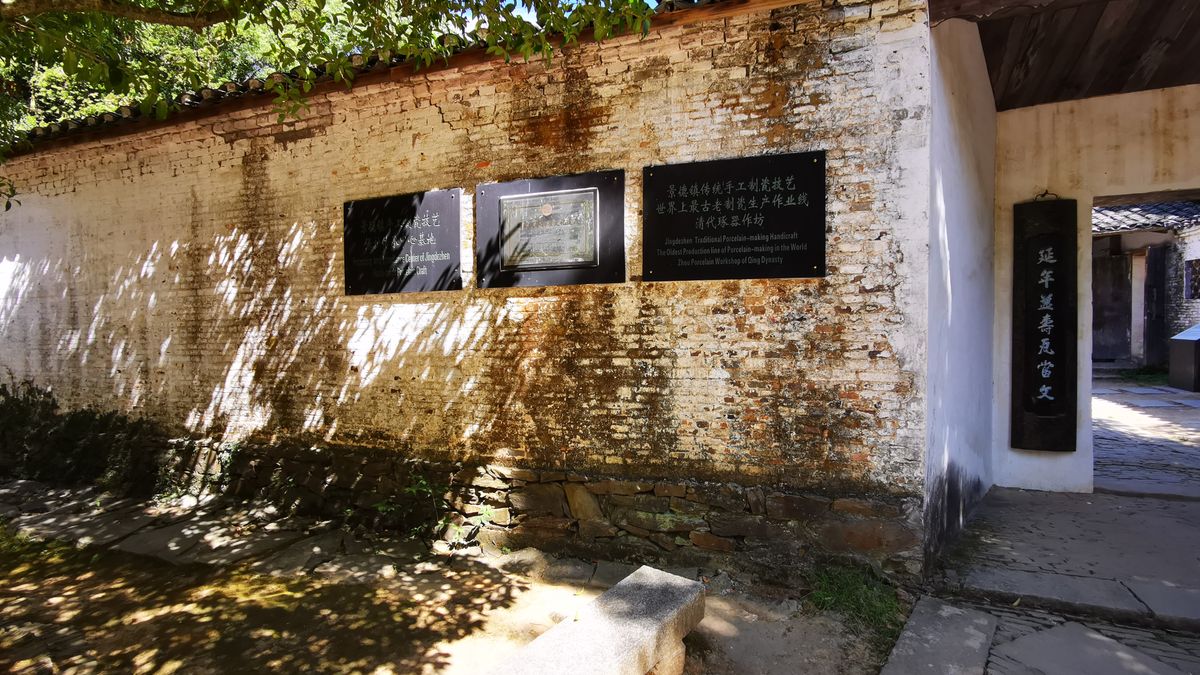
The workshop yard at the Ancient Kiln park: a weathered brick wall, a gateway, and a plaque billing the Qing-dynasty Zhen kiln workshop behind it as the oldest porcelain production line in the world. Photo: Liuxingy, "景德镇古窑民俗博览区 古建筑与制造瓷器的窑 01" (CC BY-SA 4.0) via Wikimedia Commons.
Ancient Kiln & Folk Customs Museum (古窑民俗博览区)
The best single introduction, and the one to do first. It is a national 5A attraction on Guyao Road, off Cidu Avenue, and its point is that the kilns still work. Reconstructions of a Song dragon kiln, a Yuan bun kiln and a Ming gourd kiln stand in the grounds, along with a Qing-dynasty Zhen kiln (镇窑) billed as the largest wood-fired porcelain kiln in the world. Some are periodically fired for real. In the workshop halls, elderly craftspeople run the traditional line in sequence — a thrower pulling a bowl in about the time it takes you to read this sentence, then a trimmer, then a painter laying a cobalt line freehand. Allow two to three hours.
Practical: open roughly 8am to 5pm (a little later in peak season). The list price has recently been ¥95, with a concession rate around ¥50 and small discounts for booking online ahead of arrival; free entry for young children and older visitors. Ticket structures here have changed more than once — check the current price when you book.
Taoyangli and the Imperial Kiln Museum (陶阳里 · 御窑博物馆)
Taoyangli is the old town core beside the Chang River (昌江, not the Yangtze): the excavated Ming and Qing imperial kiln site, a group of kiln workshops over 400 years old, the Xujia kiln (徐家窑) — the most complete surviving wood-fired kiln in the city — and 108 of those kiln-brick lanes, most of them named after the family that once lived there. Wander it slowly; this is the part of Jingdezhen that feels like a town rather than an attraction.
Inside it stands the Imperial Kiln Museum, a run of brick vaults by architect Zhu Pei built directly over the dig. It is worth the trip on its own if you like buildings, and the collection is the reason the vaults exist: shards from imperial "rejects." Anything that fell short of the court's standard was smashed on the spot and buried so it could never leave the compound, which is why archaeologists have been able to reassemble whole vessels the emperor never saw.
Practical: the museum runs Tuesday to Sunday and is closed Mondays (public holidays excepted), opening at 9am and — recently — staying open into the evening, with last entry about half an hour before closing. Admission has changed repeatedly: the museum itself has lately been free with an advance slot booked through the official WeChat mini-programme, while the wider Taoyangli scenic area has sold a combined adult ticket in the region of ¥50–60. Assume you need a reservation, assume you may pay for the surrounding park, and confirm both on the day.
Jingdezhen China Ceramics Museum (景德镇中国陶瓷博物馆)
The big provincial-grade collection, and the best free thing in the city. Its most famous resident is a small seated figure officially called the Contemplating Arhat (沉思罗汉) by the master Zeng Longsheng, nicknamed online the "speechless bodhisattva" (无语菩萨) because his expression is the exact face of someone whose Monday has gone badly. He is a Republican-era piece rather than an imperial treasure, whatever the memes imply, and he lives in the sixth-floor permanent gallery with a queue of people posing beside him. Come for him; stay for a thousand years of glazes under one roof.
Practical: free, Tuesday to Sunday, opening 9am with last admission 4:30pm and closing at 5pm; closed Mondays except public holidays. Individual slots open about five days ahead on the official WeChat mini-programme, and the museum insists on a physical ID document at the gate — for foreign visitors that means your actual passport, not a photo or a copy. Store big bags in the lockers on the plaza before you queue.
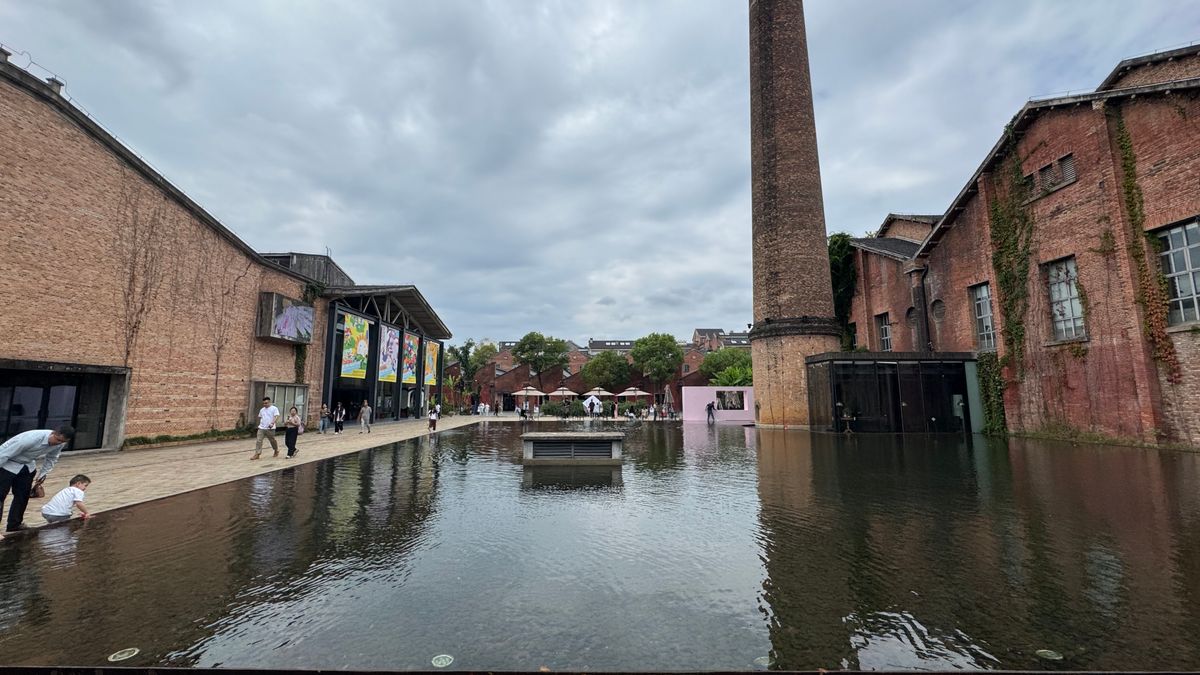
Taoxichuan: a 1950s state porcelain factory turned over to studios, galleries and the weekend market. Photo: Simon Wade, "Taoxichuan 20241019" (CC BY-SA 4.0) via Wikimedia Commons.
Taoxichuan (陶溪川)
A state porcelain factory from the 1950s, saw-tooth roofs and chimneys intact, converted into studios, galleries, cafés and shops — and the engine room of the city's young scene. The creative market runs Friday, Saturday and Sunday from around 4:30pm to 10pm, free to enter, in the first-phase yard. Stalls are juried: you have to be selling your own original work, and sellers who do well can graduate to a permanent unit in the covered Yi Space (邑空间), which trades all week — useful if you arrive on a Tuesday and the yard is empty.
This is where the word jingpiao (景漂) gets its meaning: the "Jingdezhen drifters," incomers who moved here to make things. Estimates have run to about 30,000 of them, several thousand from outside China. Talk to people. Most of them will happily tell you what kiln they use.
Sanbao (三宝)
A green valley about 5 km south of the centre, strung along one road, full of working studios, small kilns, galleries and design-minded cafés. No direct bus goes there; take a taxi (20 minutes or so) and ask for Sanbao Peng Art Centre (三宝蓬艺术中心), which is the useful drop-off. There's a shuttle buggy running the valley through the day, roughly 8:30am to 5:30pm with a lunch break. Come for a slow half-day, a long lunch, and the option of a proper workshop rather than a rushed thirty-minute go on a wheel.
Buying porcelain without getting burned
Almost everyone leaves with something. Here's where to buy it and roughly what it costs.
- Taoxichuan weekend market — young makers, contemporary shapes. Most pieces sit somewhere between a few tens of yuan and ¥500. Best value in the city, and you can ask the person who threw it how they got that glaze.
- Yi Space (邑空间), Taoxichuan — the permanent shops. Same scene, higher prices, open midweek.
- "Laochang" (老厂) wholesale area — a sprawl of small private workshops and trade counters selling everyday ware. Cheap, chaotic, brilliant if you want twelve matching cups rather than one precious object.
- Fanjiajing (樊家井) — near the old railway station, a street of hundreds of shops making antique-style reproductions, complete with artificial ageing. Go for the spectacle and for a very good ¥200 "Yuan dynasty" jar. Do not go believing you have found an undiscovered treasure; this is the reproduction industry's home address, and it is very good at its job.
Rough bands to calibrate against: a plain everyday tea set can be around ¥100; market pieces by named young makers run from tens of yuan into the hundreds; established artists' work climbs into the thousands and beyond. Haggling is normal at Laochang and Fanjiajing, less so at Taoxichuan where the maker set the price themselves. Ask any seller to double-box; most do it as standard, and porcelain in a backpack on a high-speed train is a bad bet.
What to eat
Jingdezhen eats like the working town it is — rice-based, sharply seasoned, cheap. A casual sit-down meal runs about ¥40–60 a head. We're not going to invent shop names for you; ask your guesthouse which noodle stall they actually use, and go there.
- Cold rice noodles (冷粉) — the local breakfast and mid-morning habit, and the dish to try first. The noodles are fat, around half a centimetre thick, served cool and tossed with a wet pickled-mustard relish, dried orange peel, fermented black beans, spring onion, garlic, soy and chilli paste. Breakfast to mid-afternoon. Around ¥6–10. Say 少辣 (shǎo là, less chilli) if you're not sure — the default lands harder than Nanchang's version. First-timer friendly. It's a close cousin of Nanchang's banfen, but thicker, cooler and more pickle-forward.
- Steamed dumpling cakes (饺子粑) — the classic breakfast: a soft rice-flour wrapper steamed around shredded radish, green beans, chives or tofu with a little pork. Sold by the piece for small change; a full plate is usually well under ¥15. Eat them hot, standing up, before 9am. First-timer friendly.
- Alkaline rice cake (碱水粑) — ground rice set with alkaline water, steamed, sliced thin and stir-fried with cured pork, garlic greens or chilli. Lunch or dinner, as a shared dish. Chewy and savoury; the thing locals order with beer. More of an acquired texture than an acquired taste.
- Clay-baked chicken (瓷泥煨鸡) — the city's one show-off dish: a whole chicken stuffed with pork, ginger and spring onion, wrapped in lotus leaf, cased in porcelain clay and baked for hours until the case cracks off. Dinner, shared, in a proper restaurant rather than a stall — and not on every menu, so ask before you sit down.
Where to base yourself
- Around Taoxichuan — the default. Walkable to the market and the cafés, minutes from the Sculpture Factory (雕塑瓷厂) studio cluster, with the most food and the liveliest evenings. Best choice for a first visit or a short one.
- Taoyangli / the old town — quieter, atmospheric, right on the imperial kiln site and the lanes. Good if the history is what brought you.
- Sanbao valley — guesthouses among the studios, green and slow, but you'll be taxiing in and out for everything else. Choose it if you're here to make, not to sightsee.
Prices are gentle by Chinese city standards: hostel beds have gone for around ¥50, mainstream chain hotels roughly ¥150–250 on a weekday, and design-led guesthouses roughly ¥300–600, climbing on holiday weekends. Weekends spike because of the market — if you want a Friday or Saturday night near Taoxichuan, book early.
Best time to visit
Late September through November is the sweet spot, with October the driest month of the year here and daytime temperatures easing into the high teens and twenties — right for wandering between outdoor kilns and an evening market. Spring, roughly late February through April, is the next-best window and the prettiest, though it shades into the wet season.
What to avoid: April to June is the rainy stretch, and a wet market night is a miserable market night. July and August are hot — daytime highs around 34–35°C with humidity to match, which makes a wood-fired kiln park hard work. Winter is cool rather than freezing but damp and grey, with January lows near 2°C; it's the cheapest time to come and the studios are at their most relaxed.
Two scheduling rules override the weather. The big museums close on Mondays, and the Taoxichuan market runs Friday to Sunday evenings. A Friday-to-Sunday overnight catches both. There's also a large international ceramics fair, usually held each October — dates and venues shift every year, so check current announcements before you build a trip around it, and expect hotel prices to jump while it's on.
Combining Jingdezhen with the rest of Jiangxi
Jingdezhen North is a genuine junction — the new Nanchang–Huangshan high-speed line crosses the older Jiujiang–Quzhou line here — so the city slots into a loop rather than forcing an out-and-back.
- Wuyuan (婺源) — the obvious pairing. Direct trains from Jingdezhen North take about 26–32 minutes over roughly 69 km, with second class recently around ¥26. Whitewashed Huizhou villages, terraced fields, and the yellow rapeseed bloom each spring. Note it is not on the Huangshan high-speed line, despite what a lot of itineraries claim — it's a short hop on the other railway that meets here.
- Sanqingshan (三清山) — for the granite. Jingdezhen North to Shangrao runs about 55 minutes to an hour and 10 (155 km, second class recently around ¥65), then roughly an hour by bus to the mountain's south entrance for something in the region of ¥27.
- Yaoli (瑶里) and Fuliang (浮梁) — the local countryside. Yaoli is an old Huizhou-style village about 61 km northeast, up in the hills where the clay came from; the neighbouring village of Gaoling (高岭) is literally where the word kaolin comes from, transliterated by a German geologist in the 1800s and adopted worldwide. Buses have run from the Licun short-distance bus station for around ¥13, only a couple a day, so check times and the return trip before you commit.
- Huangshan — the same high-speed line continues into Anhui, which makes a Nanchang–Jingdezhen–Huangshan run straightforward if you're leaving Jiangxi eastwards.
The tidiest version of all this is Nanchang → Jingdezhen → Wuyuan → Sanqingshan → Nanchang, which is exactly what our 5–7 day classic Jiangxi loop does. If you only have a few days, base in Nanchang and pick Jingdezhen plus one neighbour. New to the province? Start with why Jiangxi is worth your time.
How long to give it
As a day trip — first train out of Nanchang East, the Ancient Kiln park, lunch, Taoxichuan, last train back — you'll catch the craft and the scene and miss the museums. That's the version most business travellers do, and it's a good day.
Stay a night and you add the two museums and time at a wheel; stay two and you add Sanbao, a longer workshop and proper shopping. For how those days actually fit together — including what a pottery session involves, what it costs, and how your piece gets fired and posted home — follow our 2–3 day Jingdezhen ceramics itinerary.
Practical info
- Getting there: high-speed train, Nanchang East → Jingdezhen North, 42–60 minutes, ~35 services a day. Station is ~10 km from the centre; taxi ~¥17–25, 15 minutes.
- How long: one long day minimum; one or two nights to do it properly.
- Tickets: Ancient Kiln park recently ~¥95 list; Taoyangli scenic area ~¥50–60; Imperial Kiln Museum and the China Ceramics Museum recently free but reservation-only; the Folk Kiln Museum (民窑博物馆) out at the Hutian kiln site free and, since the World Heritage listing, walk-in on ID rather than reservation-only. Prices and free-entry policies here move — verify before you go.
- Closed days: the major museums close Mondays. The Taoxichuan market runs Friday to Sunday from about 4:30pm.
- Bookings and ID: museum slots are booked through Chinese WeChat mini-programmes; bring your physical passport for both train gates and museum entry. Expect the good slots to go faster than they used to — the July 2026 World Heritage listing pushed visitor numbers up sharply, so book as soon as the window opens rather than the night before, especially for weekends and public holidays.
- Pay and language: Alipay or WeChat Pay for essentially everything, including market stalls. English is limited outside Taoxichuan, where a good number of makers speak it. Translation apps get you a long way.
- Good for: makers, designers, collectors, families with school-age children, anyone who likes watching skilled work. Less good for: scenery hunters, big-city nightlife, travellers with mobility limits in the old lanes (uneven brick underfoot).
- Pack: tissues (public toilets rarely stock paper), a bag with room for breakables, and shoes you don't mind getting clay on.
Frequently asked questions
Is Jingdezhen worth visiting?
If you have any interest in craft, design, or how things are made, yes — it is the most distinctive city in Jiangxi and unlike anywhere else in China. If you are chasing landscape or nightlife, spend the day in the mountains instead.
How do I get from Nanchang to Jingdezhen?
High-speed train from Nanchang East to Jingdezhen North: 42 minutes at best, most services 45–60 minutes, around 35 a day, second class about ¥86–94 — the fast G-trains at the top of that band, the slower D-trains at the bottom. Book on 12306.cn or Trip.com and carry your passport.
Can you do Jingdezhen as a day trip from Nanchang?
Comfortably. Take an early train, do the Ancient Kiln park and Taoxichuan, and you'll be back for dinner. You'll skip the museums and the hands-on studio time, which is why most people who care about ceramics stay a night.
Do I need to book museum tickets in advance?
Yes for the Imperial Kiln Museum and the China Ceramics Museum, which run on advance reservation slots through official WeChat mini-programmes, and which close on Mondays. The Ancient Kiln park you can generally buy at the gate, though booking online ahead usually shaves a little off the price.
Where do I actually buy good porcelain?
The Taoxichuan weekend market for contemporary work bought directly from its maker; Yi Space at Taoxichuan for the same thing midweek; the Laochang wholesale area for cheap everyday ware; Fanjiajing for beautifully made antique-style reproductions, which you should buy as exactly that.
Plan it with us
Want Jingdezhen built into a Jiangxi trip that fits your dates, your interests and your tolerance for early trains — or a ceramics-focused version with a studio booked in advance? Plan a custom trip with us.
Images: "景德镇古窑民俗博览区 精美瓷器 02" and "景德镇古窑民俗博览区 古建筑与制造瓷器的窑 01" by Liuxingy (CC BY-SA 4.0); "Taoxichuan 20241019" by Simon Wade (CC BY-SA 4.0); cover "01-Jingdezhen Imperial Kiln Museum" by Zhu Pei (CC BY-SA 4.0) — all via Wikimedia Commons.
Last verified: 2026-08 — train times, fares, ticket prices, free-entry policies, opening hours and market days in Jingdezhen change often, and several have changed recently. Please double-check official sources before you travel.
You Might Also Like
- Lushan (Mount Lu): China's Summer Escape
- Nanchang Travel Guide: Jiangxi's Capital
- Poyang Lake Nature Reserve: See the Cranes
Explore Nanchang & Jiangxi itineraries · Plan a custom trip with us