Lushan (Mount Lu): China's Summer Escape
Mount Lu (Lushan), a UNESCO summer resort near Jiujiang: cool air, Guling town, seas of cloud and Three Step Spring, plus how to reach it from Nanchang.
By Hello Nanchang · Last updated
Lushan, Jiujiang, Jiangxi Province, China · Best June–August (cool summer escape); allow 2 days. Mountaintop ~10°C cooler than the plains
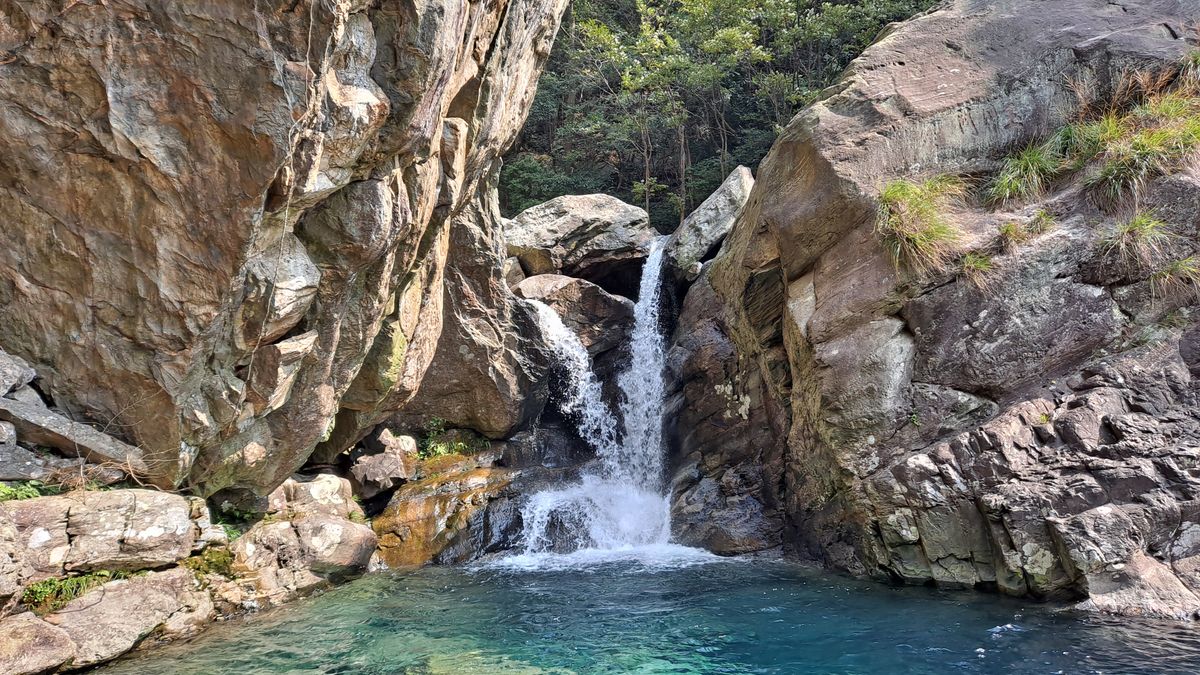
Why Lushan?
You feel it before you see anything. The bus grinds up the north road, hairpin after hairpin, everyone silent and slightly green — and then somewhere past the two-hundredth bend the air coming through the window changes temperature. By the time you step out at Guling, the sweat has dried on your shirt and someone in a fleece is selling roasted sweetcorn. Down on the plain it is 37°C. Up here it is not.
That single fact built the place. Lushan (庐山, "Mount Lu") is a forested massif rising straight out of the Yangtze plain near Jiujiang, and the top can sit a good 10°C cooler than the cities below. It has been one of China's most famous hill stations for well over a century — one of the country's "Four Great Summer Resorts", and a UNESCO World Heritage Site listed as much for its cultural weight (centuries of poets, a great Confucian academy, a hillside of stone holiday villas) as for its peaks, waterfalls and famous sea of clouds.
The twist most first-timers don't expect: you don't really climb Lushan. There is an actual town up top — Guling (牯岭镇) — at about 1,164 m, hills on three sides and a valley on the fourth, with hotels, restaurants, mini-marts, bus stops and a nickname that translates as "the mountain town in the clouds". You ride up, sleep in the cool air, and spend your days moving between viewpoints. It is a mountain you can do with kids and grandparents. If you want the opposite — a tent, a ridge and a 4am alarm — see Wugongshan.
The town called Cooling
Guling's name is a pun that stuck. In 1886 a British Methodist missionary named Edward Selby Little walked up Lushan, decided the climate was wasted on the mist, and in 1895 secured a lease on land in the East Valley below Guniu Ridge. He laid out a summer settlement for foreigners escaping the Yangtze heat and called it Cooling — then took the sound of the English word and wrote it in characters that read naturally to Chinese ears: 牯岭, Gǔlǐng. Both jokes landed.
What followed was a hillside of holiday houses. 636 villas survive, in the styles of sixteen countries — 259 Chinese, 185 American, 125 British, and a scatter of German, Swedish, Japanese, French, Finnish, Norwegian and more — which is why Lushan gets called an open-air museum of villa architecture. Several, including Meilu Villa (美庐) in the East Valley, have been nationally protected monuments since 1996. Walk the lanes after dinner and you get stone gables, hydrangeas and wood smoke; it does not feel like anywhere else in Jiangxi.
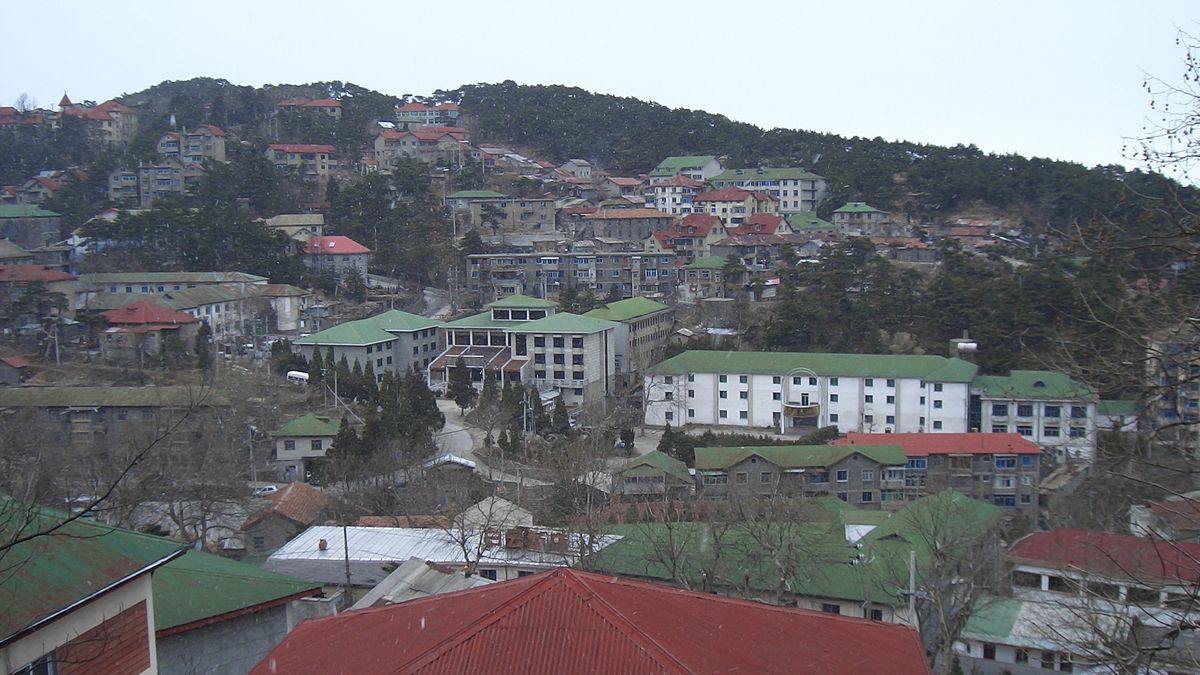
Stone villas in Guling — 636 of them survive, in sixteen national styles. Photo: pfctdayelise / CC BY-SA 2.5, via Wikimedia Commons.
The poets got here first. Li Bai stood in front of the waterfall on Xianglu Peak and wrote the line every Chinese schoolchild can still recite — the torrent "flying straight down three thousand feet", as if the Milky Way had fallen out of the sky. Three centuries later, in 1084, Su Shi broke his journey to Ruzhou to wander Lushan and left four lines on the wall of Xilin Temple: you cannot know the true face of Lu Mountain, because you are standing in the middle of it. He meant it as philosophy. On a misty afternoon at Hanpokou, when the view is a wall of white and someone's grandmother is patiently explaining that the lake is right there, it also works as weather reporting.
How to get to Lushan from Nanchang
Easier than the name suggests — with one trap. The fast, frequent way is the high-speed train from Nanchang to Jiujiang (九江), the gateway city at the foot of the mountain.
- Step 1 — train to Jiujiang. There are a hundred-plus services a day. The quickest do it in about 55 minutes; most intercity D-trains take 1 to 1.5 hours. Second class runs roughly ¥30–60 depending on the service. Check which Nanchang station your ticket uses — the city has several.
- Step 2 — up the mountain by road. The Lushan tourist coach runs from the long-distance bus station beside Jiujiang railway station up to Guling: about 70 km, roughly 80 minutes, first departures around 06:30 and last around 17:00. Fares quoted recently sit in the ¥15–30 band depending on which station and service you take; a taxi shared with others runs about ¥80. You buy your scenic-area ticket at the gate before the road continues up.
- Step 2, alternative — up by ropeway. The Lushan aerial tramway lifts you 873 m over 2,864 m of cable in about seven minutes, from a lower station at the Lushan Yunwu tea farm in Jiujiang's Bailihu district (next door to the thousand-year-old Donglin Temple) to an upper station on Huiyuan Road in Guling. Roughly ¥75 up, ¥65 down, ¥120 return. Hours are about 07:30–18:30 from May to October and 07:30–18:00 in winter, sometimes later in peak weeks. If anyone in your party gets carsick, this is the answer.
The trap: there is a station called "Lushan Railway Station", but it's awkwardly placed and still a long transfer from the scenic area. Most travellers find Jiujiang the simpler railhead. If your ticket says Lushan station, budget a separate minivan or bus onward — don't assume it's at the foot of the trail.
About those bends. The north road is famous for them. Guidebooks say 396, and the number comes with a story: Mao Zedong is said to have flicked a matchstick out of the car window at every corner on his way up, arriving at the top with four empty boxes — four hundred matches — until an aide pointed out he had also lit four cigarettes. Hence 396. Others count 399, or 400, and road-widening has straightened enough of them that the real figure today is probably nearer 300. The south road has about 190. What matters to you is that the crew hand out sick bags before you board, and they are not being funny. Sit forward, look out of the front, and skip the big breakfast.
Book the train on 12306.cn or via Trip.com, and bring your passport — it's your ticket ID at the gate. Our Jiangxi rail guide untangles the station names.
Tickets, the sightseeing bus & the cable cars
Lushan's pricing has three separate layers, which trips people up. The plain version — recent figures, a guide rather than gospel:
- Scenic-area entrance — around ¥160, and the useful part: it's valid about 7 days with multiple entries, so a multi-day stay doesn't mean paying twice. It covers the core area plus outlying sights including Three Step Spring, White Deer Grotto Academy, Xiufeng, Guanyin Bridge and Taohuayuan — but not the buses or the ropeways. Some listings quote a lower winter rate; check before you buy.
- You must book in advance, under your real name. This catches foreign visitors out. Reserve through the official "一机游庐山" WeChat/Alipay mini-programme or an OTA such as Ctrip; in the July–August peak, book about three days ahead.
- Sightseeing shuttle bus — two versions, and the difference matters. The ~¥90 pass is valid about 7 days and covers one ride up, one ride down and unlimited hopping between viewpoints on top; the ~¥70 pass is 7 days on the mountain only. Shorter one-day (~¥65) and three-day (~¥80) versions exist. On a mountain this spread out the bus is effectively compulsory rather than optional — but check which one you're being sold. Buses run roughly 07:00–19:00 in peak season, shorter hours off-season.
- Ropeways — extra, pay per ride. The main Lushan tramway is about ¥75 up / ¥65 down / ¥120 return. The separate Three Step Spring (Sandiequan) rail-car has been re-priced since it resumed service, and recent listings disagree — anywhere from about ¥55–60 one way to ¥80–120 return. Buy at the station and read the board rather than trusting an old blog.
Worth knowing: Jiangxi periodically runs limited-time free-entry promotions for Lushan — a whole month of waived gate tickets has happened more than once. When it does, the gate is free but the shuttle bus and ropeways are not. Check the official scenic-area channel before you assume you'll pay, or that you'll get the buses thrown in.
What to see — and a two-day route that works
Lushan is a collection of viewpoints, waterfalls and old streets rather than one summit, and the sights fall naturally into a west line (gentle, literary, half a day) and an east line (the big views and the leg work).
Day one — the west line, then sunset
- Ruqin Lake and Huajing (如琴湖 / 花径), a twenty-minute stroll from Guling: a small lake shaped like a lute and the garden where a Tang poet found peach blossom still in flower in April, because he was a thousand metres higher than he thought.
- Jinxiu Valley to Xianren Cave (锦绣谷 → 仙人洞) — the best walk on the mountain, a cliff path along a gorge with the plain dropping away. Allow 3–4 hours for the lake, the garden and this traverse together.
- Hanpokou (含鄱口) for sunset — the saddle looking east over Poyang Lake, China's largest freshwater lake.
- Guling street after dark for dinner (see below).
Day two — the east line and the waterfall
- Hanpokou again, for sunrise. First bus, warm layer, no arguments. This is the shot everyone comes for.
- Culture stops: Meilu Villa, the Lushan Conference site and the museum around Lulin Lake — an hour or two, and the reason the UNESCO listing mentions culture first.
- Three Step Spring (三叠泉) — the signature waterfall, dropping in three tiers for a total of about 155 m, thunderous in summer. It's a serious stair workout down into the gorge and back; the rail-car covers 1,496 m and 152.6 m of height in about five minutes and saves roughly three-quarters of an hour of steps, of which there are well over a thousand. Take it down, walk up, or take it both ways and don't apologise.
- Wulaofeng (五老峰) if your legs have anything left — five rocky summits in a row, and the harder of the two big east-line efforts. Doing Wulaofeng and Three Step Spring in one day is possible and unkind.
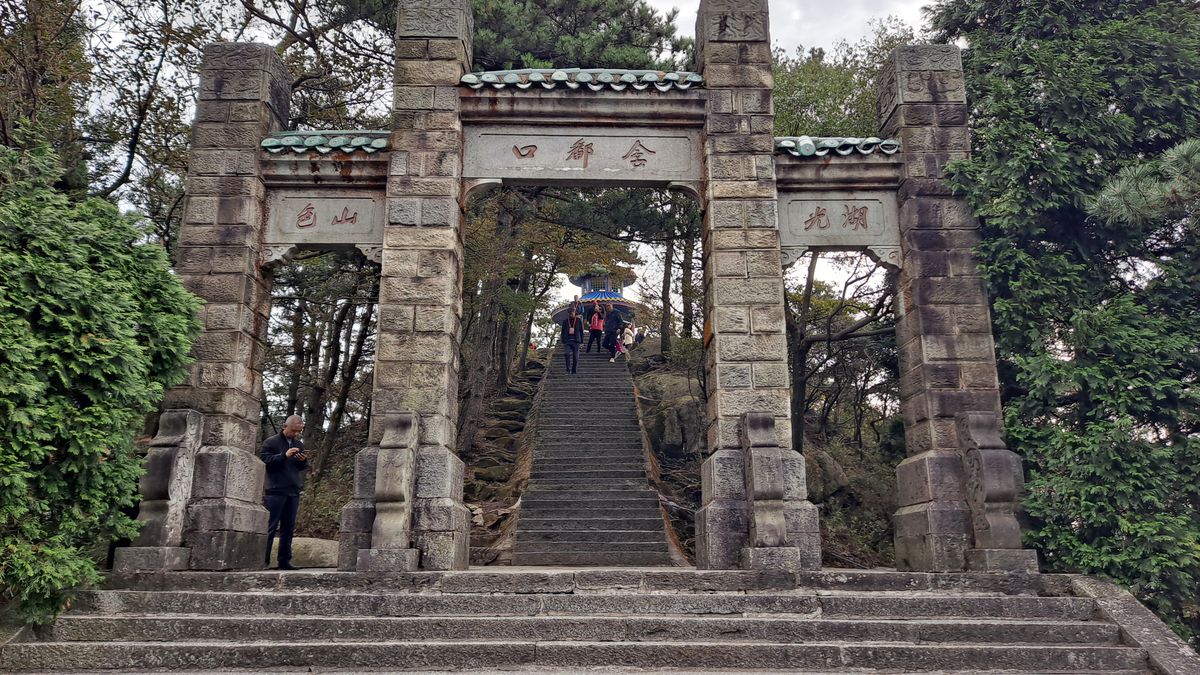
Hanpokou, the saddle where everyone waits for sunrise over Poyang Lake. Photo: 钉钉 / CC BY-SA 4.0, via Wikimedia Commons.
The sea of clouds (云雾) is the wild card — mist pouring over the ridges, likeliest after summer rain with a clearing dawn. You can't book it. Sleeping up top roughly doubles your chances, because the good hour is usually before breakfast. And at the foot of the mountain, if you have a spare half-day, the White Deer Grotto Academy (白鹿洞书院) is one of imperial China's four great Confucian academies, quiet as a library and included in your ticket.
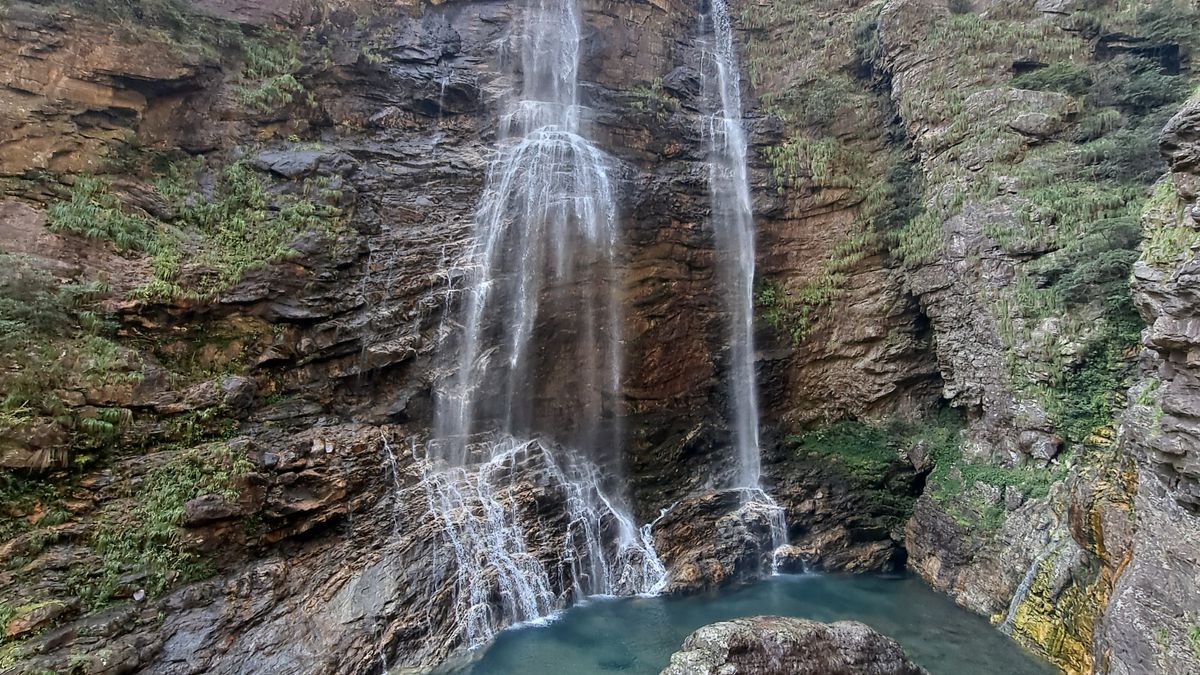
Three Step Spring falls in three stages for around 155 m — loudest in the summer rains. Photo: 钉钉 / CC BY-SA 4.0, via Wikimedia Commons.
What to eat on Lushan
Guling eats better than a mountain town has any right to, partly because it has been feeding holidaymakers for 130 years. The local set piece is the "three stones" (庐山三石) — three things that grow on wet rock — and the local sport is telling the real ones from the substitutes.
- Stone chicken (石鸡) — not poultry: a large wild mountain frog from the cool stream caves, braised or stewed, the meat fine-grained and faintly sweet. Dinner dish, shared. Tell: if what arrives looks like a blackish bullfrog, it isn't stone chicken.
- Stone fish (石鱼) — transparent stream fish barely an inch long, dried to gold and usually cooked into an omelette or a clear soup. Dinner or lunch, ¥80–120 a dish. Tell: big fish are the wrong fish.
- Stone ear (石耳) — a cliff-growing lichen, blacker and thicker than wood ear, with a firm bite. The expensive one, roughly ¥200–300 a jin dried. Tell: if it collapses to mush the moment it's boiled, it's a stand-in.
Ordering trap: check whether the menu prices these per dish (按份) or per jin (按斤). Ask what one portion weighs and what it will come to before you nod. Done honestly at a family restaurant, the three stones run about ¥50–80 a head; a hotel dining room will be nearer ¥150.
The cheaper, better fun is Guling street in the evening, when the night stalls open and the smell turns to charcoal and chilli — braised meats, grills, mountain vegetables, at prices with a decent reputation for not fleecing visitors. Expect roughly ¥15 for a bowl of Nanchang-style minced-pork tossed rice noodles, ¥13 for a preserved-mustard-green flatbread (梅干菜锅盔), ¥15 for a clay-pot soup (瓦罐汤), and ¥20–30 for a stir-fry — a little dearer than down the hill, and worth it. For breakfast, buy a couple of Yunwu tea cakes (云雾茶饼) from an old shop on the street for a few yuan and a cup of hot soy milk; radish cakes, glutinous rice wrapped around fried dough and grilled tea-scented rice cakes all turn up on the same block.
Lushan Yunwu tea (庐山云雾茶) — cloud-and-mist green tea grown on these slopes — is the souvenir worth carrying home, and it's what the ropeway's lower station is named after. Buy it in a proper shop rather than at a viewpoint. Compared with the city below, Guling is gentle on the palate; if you want the full Jiangxi chilli experience, that's a job for Nanchang's rice noodles.
How long to stay & where to sleep
Two days, one night up top is the sweet spot. Lushan rewards a slow pace, and sleeping on the mountain is what buys you the cool night, the sunrise at Hanpokou and the best shot at the cloud sea.
- Stay in Guling. The whole spread of hotels, guesthouses, converted-villa homestays, restaurants and shops is here, walkable, and on the shuttle network. Book ahead for summer weekends and the July–August school holidays, when the town fills.
- One night = Guling, the west line, Hanpokou sunrise. Two nights = add Three Step Spring and a slower culture day without rushing.
- Day-tripping from Nanchang is possible but a shame — you'd spend the cool evening and the sunrise on a train. You'd see the highlights and miss the point.
Best time to visit
Lushan's whole identity is the summer escape, so its peak season is the mirror image of most mountains:
- Summer (Jun–Aug): the headline season and the reason people come — far cooler than the plains, lush, with the best waterfall flow and the likeliest cloud seas. Also the busiest and the fussiest for bookings.
- Autumn (Sep–Oct): arguably prettiest — crisp, clear, long views, changing colour.
- Spring: mild and green, and the rainy season; pack a shell.
- Winter: genuinely cold up high, with occasional snow and ice; atmospheric, but check road and ropeway status and bring serious layers.
Mountain-weather reality check: even in July, dawn and dusk on top can drop to barely above 10°C while Nanchang bakes. Bring a fleece or light jacket whatever the month — that temperature gap is the entire reason Lushan exists as a resort.
Practical info
- Getting there: Nanchang → Jiujiang by high-speed train (fastest ~45–50 min, typically 1–1.5 h, ~¥30–60, 100+ services daily); then the Guling coach (~70 km, ~80 min, ~¥15–30, roughly 06:30–17:00) or the ropeway (~7 min, ~¥75 up / ¥65 down / ¥120 return).
- How long: two days and one night is the sweet spot; three if you want Wulaofeng and Three Step Spring without suffering.
- Tickets: ~¥160 entrance, valid ~7 days, real-name advance booking required (official mini-programme or an OTA; ~3 days ahead in summer). Sightseeing bus ~¥90 (with transfers) or ~¥70 (on-mountain only). Ropeways extra. Prices and promotions change — confirm before you travel.
- Pay & language: Alipay or WeChat Pay everywhere; passport for trains and hotel check-in; Amap (高德) for maps, not Google. English signage is limited outside the main sights.
- Good for: families, older travellers, culture and architecture people, photographers, anyone escaping the summer heat, and anyone who'd rather stroll than scramble.
- Less good for: travellers prone to motion sickness who don't take the ropeway; anyone hoping for a guaranteed view (the mountain is in cloud a lot — that's the deal); big-luggage arrivals, since Guling is a walking town with steps.
Common questions
Is Lushan worth visiting?
In summer, unequivocally — it's ten degrees cooler than the plain, the cloud seas are real, and Guling is a genuinely strange and lovely relic of a town. Off-season it's a solid two days for anyone who likes mountain walks and modern Chinese history. If you want wilderness, go to Wugongshan; Lushan is a resort with a view, and has been since 1895.
How many days do you need on Lushan?
Two days and one night covers the west line, a sunrise and the town. Three days lets you add Three Step Spring and Wulaofeng without doing both in one brutal push. A single day is possible and unsatisfying.
Do you need to book Lushan tickets in advance?
Yes — entry is real-name and reserved online through the official mini-programme or an OTA. In July and August, book roughly three days ahead. Buy the sightseeing bus pass at the same time and check whether it's the version that includes the ride up and down.
Can you visit Lushan as a day trip from Nanchang?
You can — the train is under an hour and a half — but you'll spend the two best hours of the day travelling. The whole payoff of Lushan is being on the mountain at dawn and dusk.
What should I pack?
A fleece or light jacket in any month, a rain shell, shoes with grip for wet stone, and motion-sickness tablets if the road route is your plan. Everything else you can buy in Guling.
Next: for the other kind of Jiangxi mountain, see Wugongshan; to string both into one trip, the Jiangxi summer escape itinerary does it in 5–7 days; or start from Nanchang, the gateway city, and browse the destinations hub. Want it planned around your dates? Plan your trip with us.
Last verified: 2026-08. Ticket prices, sightseeing-bus and ropeway fares, booking rules, train times and opening hours change often (and Jiangxi sometimes runs limited-time free-entry promotions) — please double-check official sources before you travel.
You Might Also Like
- Nanchang Travel Guide: Jiangxi's Capital
- Poyang Lake Nature Reserve: See the Cranes
- Nanchang Countryside: Villages & Day Trips
Explore Nanchang & Jiangxi itineraries · Plan a custom trip with us