Jiangxi Summer Escape: Lushan & Wugongshan
A 5–7 day summer escape from Nanchang's heat: cool, cloud-wrapped Lushan and the alpine grassland & tent camping of Wugongshan. Routes, gear & timing.
By Hello Nanchang · Last updated
Nanchang, Lushan & Wugongshan, Jiangxi Province, China · 5–7 days · best June–August · two cool mountains, ~10°C below the plains; bring warm + rain layers
Who this trip is for — and the pitch
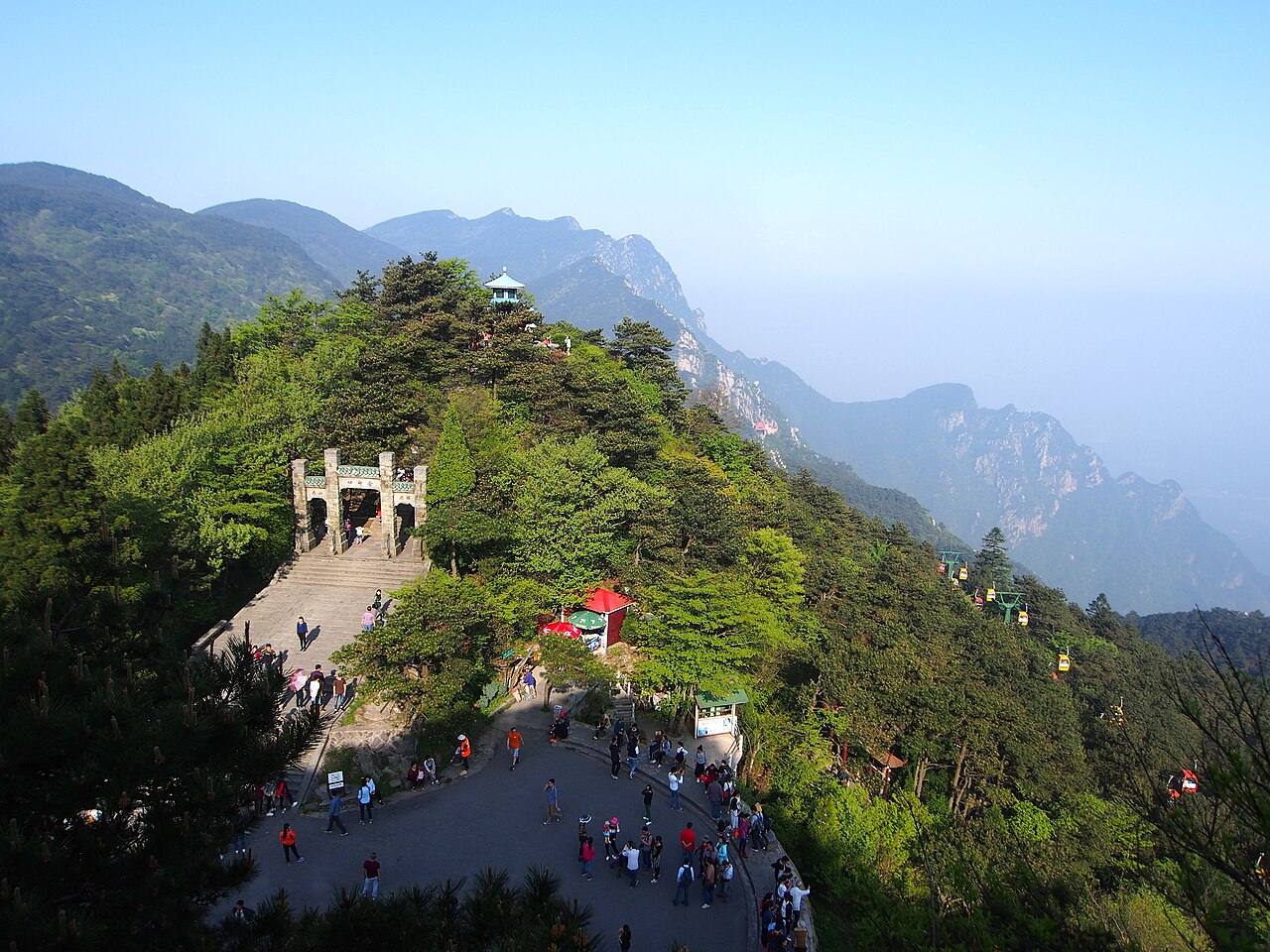
Here's the premise. By July the Jiangxi lowlands are a sauna. When the national climate centre ranked China's hottest summer cities, Nanchang came in the top four — and the internet promptly renamed that group the "new four furnaces", displacing the old Yangtze line-up. Nanchang earned it on humidity as much as heat: 35–37°C with air like warm soup is an ordinary week. So you do what people here have done for well over a century: you go up.
This 5–7 day route chains together Jiangxi's two great summer mountains, where the air sits a good 10°C below the plains. Lushan is a genteel UNESCO hill station with a town on top, where you ride, stroll and eat well. Wugongshan is 100,000 mu of alpine grassland where you sleep in a tent and wake above the clouds. It suits China-based expats wanting a proper week off, and anyone who'd rather walk a cool ridge than melt in a city.
It's deliberately two-paced: Lushan is the easy, scenic half (cable cars, a hill town, sunrises, villas); Wugongshan is the active, camping half (a real hike and a night on the meadow). Run it in 5 days tight, or 7 to give each mountain room and a soft landing in Nanchang. If you'd rather see more of the province and less of the ridge, the Jiangxi 5–7 day loop covers the same window with porcelain and villages instead.
Before you go — the summer-mountain essentials
The trip hinges on one counter-intuitive truth: you are going somewhere cold to escape the heat. Pack for both.
- A warm windproof layer (fleece) AND a rain shell — even in July. Dawn and dusk on both summits drop to barely above 10°C, and summer is the rainy season; the cloud seas you came for are made of that moisture. On Wugongshan's exposed ridge this is a safety item, not a comfort item.
- Boots with grip, trekking poles, a head-torch, a power bank, insect repellent, and water and snacks for the Wugongshan ridge — everything up there was carried up and is priced accordingly.
- Motion-sickness tablets if you're taking the road up Lushan. The north route has something like 396 hairpins and the crew hand out sick bags before you board.
- Set up Alipay or WeChat Pay, carry your passport (needed for trains, tickets and hotel check-in), and use Apple Maps for navigation — inside China it runs on local AutoNavi data, is accurate, and downloads offline; Google Maps doesn't work. Amap (高德) is the local standard if you can read some Chinese. Install a VPN at home for Google, Gmail, WhatsApp and Instagram.
- Book Lushan entry in advance, under your real name, through the official mini-programme or an OTA — roughly three days ahead in the July–August peak. Wugongshan you can buy at the gate.
Summer is peak season for both mountains and exactly when locals flee the heat — so book accommodation and any summit tent early, especially for July–August weekends and the school holidays. Midweek is a noticeably emptier trip.
Day 1 — Land in Nanchang (and feel why you're leaving)
Fly or take the high-speed train into Nanchang, the gateway hub in the middle of the province. Don't over-plan day one; the city is hot until the sun goes down, so make it an evening.
- Arriving: Metro Line 1 runs to Changbei Airport at Terminal 2, so there's no interchange needed to reach Bayi Square; the airport shuttle bus is a flat ¥15 and takes 45–60 minutes. Coming by rail, Nanchang West sits on Line 2, about 45 minutes and ¥4 into the centre. Details in our airport and stations guide.
- Evening: the Honggutan riverfront comes alive once it cools — the Qiushui Square musical fountain and the lit two-bank skyline. The fountain runs nightly — two shows of about 15 minutes, usually around 7:30pm and 8:30pm — though it's cancelled in thunder, heavy rain, strong wind or fog. Ask your hotel the same day. The riverside boardwalk and the One River, Two Banks light show are free and on regardless.
- Dinner: ease into Jiangxi's chilli. Tossed rice noodles (拌粉) are about ¥6 a bowl and clay-pot soup (瓦罐汤) ¥5–10 — locals order them as a pair (一粉一汤), and the two together run about ¥11–16 at a neighbourhood counter. Our rice-noodle guide covers how to order. Say 微辣 (wēi là, mild) if you're not chilli-hardened.
- Tomorrow's logistics: Lushan's railhead is Jiujiang, Wugongshan's is Pingxiang North, and they leave from different Nanchang stations. Read your tickets tonight, not on the platform.
First time in the city and want a fuller day before heading up? Bolt our 2 Days in Nanchang plan onto the front.
Day 2 — Up to Lushan: the road of 396 bends, then Guling
Lushan (Mount Lu) is the gentle half — a forested massif with a real town on top, where you spend your days moving between viewpoints in cool air.
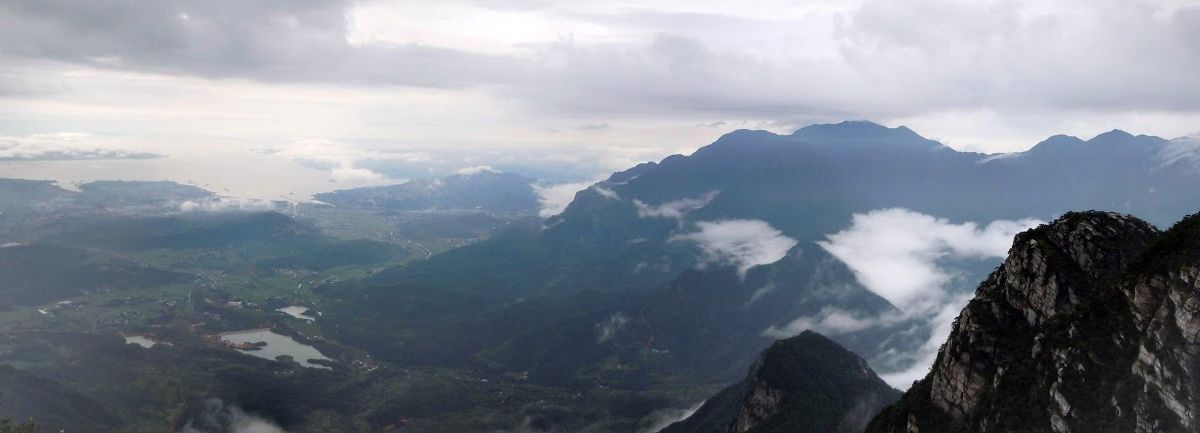
Hanpokou looks east over Poyang Lake — the classic Lushan sunrise, and a Day 3 alarm call. Photo: Sinopitt / CC BY-SA 4.0, via Wikimedia Commons.
- Morning — get up there. High-speed train from Nanchang to Jiujiang (九江): the fastest run about 55 minutes, most take an hour to 90 minutes, and there are over a hundred a day. Then either the coach up to Guling (about 80 minutes) or the ropeway, which climbs 873 m in roughly seven minutes and skips the hairpins entirely. Take the ropeway if anyone in the party gets carsick. Use Jiujiang, not the awkwardly-sited "Lushan Railway Station." Full fares and booking rules are on the Lushan guide.
- Tickets: the scenic-area entrance is about ¥160 and valid roughly seven days, and you'll also want the hop-on sightseeing bus pass — but note there are two versions, only one of which includes the ride up and down. Current prices and the booking mini-programme: see the Lushan guide.
- Afternoon — the west line. Ruqin Lake and the Huajing garden, then the cliff path through Jinxiu Valley to Xianren Cave. Three to four hours at a stroll, and the prettiest walking on the mountain.
- Sunset at Hanpokou (含鄱口), the saddle above Poyang Lake, then back down to town.
- Sleep in Guling (牯岭镇), at about 1,164 m — a hill town of stone churches and 636 surviving holiday villas in sixteen national styles. It was laid out in 1895 by a British missionary, Edward Selby Little, who named it Cooling and then wrote the sound in Chinese characters. Both jokes stuck.
- Dinner: Guling's night stalls open after dark — grills, braises and mountain vegetables at fair prices. Around ¥15 for a bowl of minced-pork tossed noodles, ¥13 for a preserved-mustard-green flatbread, ¥20–30 for a stir-fry.
Day 3 — Sunrise, the villas, and a waterfall in three tiers
- Before dawn: first bus back to Hanpokou for sunrise over the lake. Take the fleece. If the ridges are pouring mist instead, you've got the sea of clouds, which is the better prize.
- Mid-morning — the culture hour: Meilu Villa (美庐) and the Lushan Conference site around Lulin Lake. This is the half of the UNESCO listing that isn't scenery, and it's genuinely interesting even if twentieth-century Chinese politics isn't your thing.
- Lunch — the "three stones" (庐山三石): stone chicken (石鸡, a large mountain frog, not poultry), stone fish (石鱼, transparent stream fish an inch long, usually in an omelette, ¥80–120 a dish) and stone ear (石耳, a cliff lichen with a firm bite). Done honestly at a family restaurant it's ¥50–80 a head. Check whether the menu prices per dish or per jin before you order — that's where the bills go wrong.
- Afternoon — Three Step Spring (三叠泉), a waterfall dropping about 155 m in three stages and at its loudest in the summer rain. It's a long stair descent into the gorge and back; the little rail-car covers 1,496 m in around five minutes and removes roughly three-quarters of an hour of steps. Take it at least one way.
- Evening: back in Guling, buy Yunwu tea (庐山云雾茶) from a proper shop — the cloud-and-mist green tea grown on these slopes, and the one souvenir worth the luggage space.
Fit and greedy? Wulaofeng (五老峰), five rocky summits in a row, is the east line's other big effort. Doing Wulaofeng and Three Step Spring on the same day is possible and unkind. With seven days, spread them across Days 3 and 4 and shift the crossing later.
Day 4 — Cross the province via Nanchang
The two mountains sit on opposite sides of Jiangxi, so you cross back through the Nanchang hub. This is a travel day; treat it as one.
- Morning: a relaxed last Lushan viewpoint, then down to Jiujiang and a high-speed train back toward Nanchang.
- Afternoon → evening: connect onward, or overnight in Nanchang and restock, for the line west to Pingxiang. With seven days you can afford a calm city night — a good moment to buy anything you're missing for the camp, since gear on the mountain is limited and dearer.
- Tip: trains to Pingxiang typically leave from Nanchang West, while your Jiujiang train may not arrive there. Check the transfer before you buy. Our Jiangxi rail guide explains the station names.
- If you're in the city for the evening: the night markets are the easy, cheap, air-cooled-by-dusk answer to a travel-day dinner.
Day 5 — Wugongshan: onto the meadow, and a tent
Wugongshan is the adventurous half and the trip's emotional peak: rolling, treeless alpine meadow along high ridges — green, almost Scottish — with a famous cloud sea and Jiangxi's highest point, the Golden Summit (金顶) at 1,918.3 m.
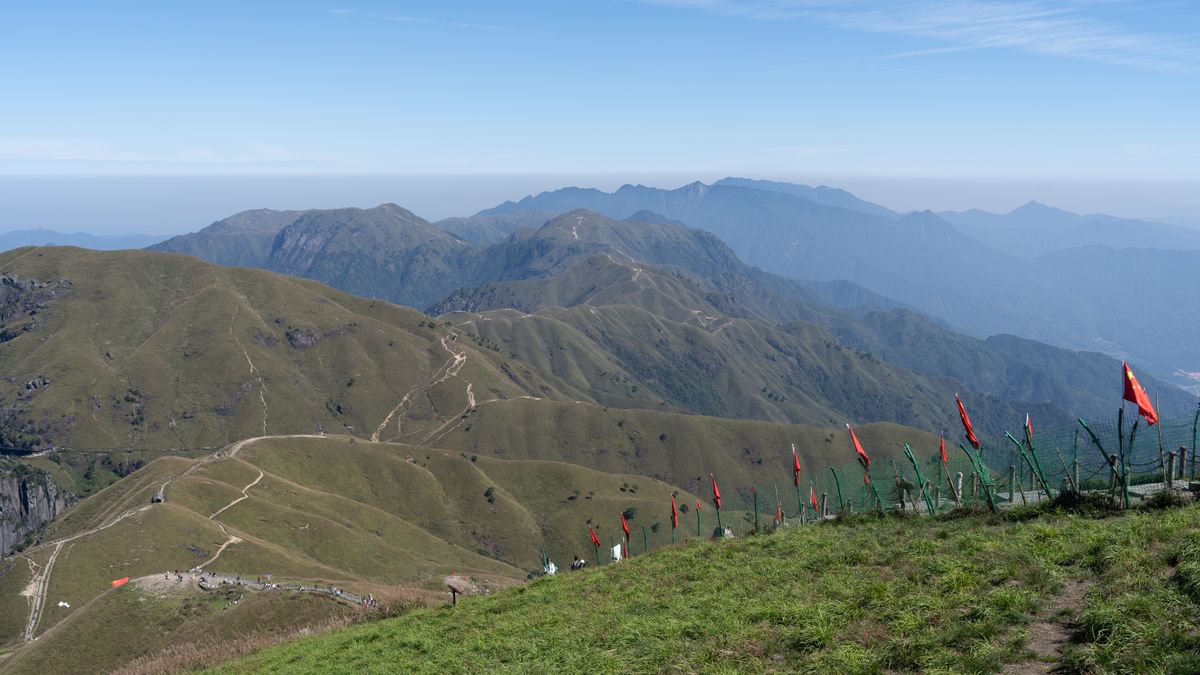
The Golden Summit shrine, 1,918.3 m — the high point of the province and of this itinerary. Photo: RoundNoName / CC BY 4.0, via Wikimedia Commons.
- Getting there: high-speed train from Nanchang West to Pingxiang North (萍乡北) — the fastest under an hour, most 1–1.5 hours. Come out of the station and the scenic-area coach stand is about 100 m to your right; look for the blue buses. Then a free shuttle inside the area to the trailhead at Shigu Temple (石鼓寺). The mountain has more than one entrance — the Pingxiang side is the standard access from Nanchang.
- Breakfast in Pingxiang, if you can: Pingxiang fried rice noodles (萍乡炒粉), ¥7–10 a plate, wok-fried hard with egg and pickled greens. Pingxiang is one of the spiciest cities in China — the local joke is that they put chilli in the congee — so 微辣 is a reasonable opening bid.
- Tickets & cable cars: entrance is around ¥70 and hasn't moved in years; two stacked cable cars (Zhong'an, then Jinding) do most of the climbing, and the internal shuttles are free. Current fares, bundle prices and cableway hours live on the Wugongshan guide — check there before you buy, since the last cars down go mid-afternoon.
- Choose your effort. Camp and cruise: both cable cars up, settle on the meadow, walk a gentle ridge section — the camping payoff without the trek. The classic day traverse: Shigu Temple → the summit → Diaomazhuang meadow → Guanyindang, six to eight hours of real walking, and the postcard stretch is the middle of it.
- The overnight: sleep on the meadow — carry your own tent, or travel light and rent one at the summit camps, sleeping bag and mat included. Guanyindang (观音宕) at about 1,600 m sits in two wide grassy basins and is the sociable choice; the summit camp is the least walking to sunrise. Pitch on flat, sheltered ground — the ridge is breezy after dark. Rates and camp options: see the Wugongshan guide.
- Dinner: realistically, instant noodles (~¥15) with free hot water from a 24-hour service station, or a family-style guesthouse dinner of chicken noodles and stir-fries. Water on the ridge is ¥10–15 a bottle; carry your first two litres up.
Mountain-weather reality check: the exposed summit turns cold and windy after sunset even in summer — average winds around 5 m/s and a day-to-night swing that can reach 15°C. Hikers have died of exposure here after being soaked on unmanaged cross-country routes. Stay on the marked scenic-area paths, and the warm layer and rain shell you packed on Day 1 earn their place tonight.
Day 6 — Sunrise above the clouds, then the ridge
- Before five: head-torches on and up. Sunrise is around half past five in midsummer and shifts through the year — ask at the service station the evening before. If the valleys have filled overnight, you get the cloud sea, usually at its best before eight.
- Morning: walk the meadow while it's empty. The stretch from the Golden Summit out along Diaomazhuang is the one people fly across the country for: open grass, ridgeline both sides, nothing taller than your knees.
- The service stations along the route run 24 hours with free hot water, charging and somewhere to sit; they hand out cooling herbal tea in summer and ponchos when it rains.
- Second night up top if you're on the seven-day version and the weather's holding — a second dawn roughly doubles your odds on the cloud sea, and the mountain empties out midweek.
Day 7 — Down & out (or a soft landing in Nanchang)
- Morning: pack up, cable cars (or walk) down to Shigu Temple, free shuttle out, coach back to Pingxiang North. Watch the cableway's mid-afternoon closing time if you've dawdled.
- Lunch in Pingxiang before the train, if you've time: xiaochaorou (小炒肉), pork belly fried hard with chillies, ¥30–50 — or Lianhua blood duck (莲花血鸭), the county dish that legend blames on a Song-dynasty army cook who tipped a bowl of blood and rice wine into the wok by accident.
- Onward: high-speed train back to Nanchang. With hours to spare before a flight, the riverfront parks are an easy wind-down; allow 40–60 minutes out to Changbei Airport (Metro Line 1 runs to Terminal 2, or take a Didi).
- Tight on time (the 5-day version)? Drop the Day 4 city night and the second Wugongshan dawn: Nanchang → Lushan (2 nights) → straight across → Wugongshan (1 night) → out.
Where to stay
- Nanchang: central, near the river or on a metro line, for the hub nights. Honggutan puts you by the fountain; the old town puts you near the food.
- Lushan: in Guling town, on the mountain — hotels, guesthouses and converted-villa homestays, all walkable and on the shuttle network. Book early for July–August.
- Wugongshan: a tent on the summit is the whole point, rented or your own. If camping isn't for you, ridge guesthouses have basic beds and there are hotels down at the visitor-centre end.
What it costs
Per person, mid-range, excluding flights into Jiangxi and treating trains as second class:
- Trains: roughly ¥350–450 for the whole loop (Nanchang–Jiujiang is cheap; Nanchang–Pingxiang is the expensive leg).
- Mountain tickets and transport: reckon on roughly ¥300–400 for Lushan (entrance, the bus pass and a ropeway ride) and ¥200–250 for Wugongshan (entrance plus both cable cars, round trip). Both mountains sell bundles that shave a little off. The current line-by-line fares live on the Lushan and Wugongshan guides — those pages are the ones we keep updated.
- Beds: ¥250–500 a night in Guling in season, ¥100–300 for a rented summit tent, ¥250–450 in Nanchang.
- Food: ¥100–200 a day, less if you're eating noodles on a ridge.
- Rough total for seven days: ¥3,500–5,000, and comfortably under that if you camp, walk instead of ride, and eat where the locals do.
Common questions
Is summer really the best time to visit Jiangxi's mountains?
For these two, yes — that's their entire purpose. Both are around 10°C cooler than the plains, the waterfalls are full, and cloud seas are likeliest in the rainy months. The trade-off is crowds and rain. September and October are quieter, clearer and still lovely; you just lose the sweet relief of stepping off a bus into cool air.
Can I do this trip without camping?
Yes. Lushan is a hotel-and-bus mountain from start to finish, and on Wugongshan you can ride both cable cars up, spend the afternoon on the meadow and sleep in a ridge guesthouse or down at the visitor-centre end. You'll miss the summit sunrise, which is a real loss — but the meadow in afternoon light is no consolation prize.
How fit do I need to be?
Lushan needs the ability to walk a few hours a day and cope with a lot of steps at Three Step Spring. Wugongshan is your choice: cable cars make it easy, the classic day traverse (6–8 hours) wants base hill fitness, and the two-day reverse traverse is a genuine hike.
Which mountain if I only have time for one?
Travelling with kids, parents or anyone who wants a bed and a restaurant: Lushan. Travelling to walk, camp and see one extraordinary sunrise: Wugongshan. Lushan is the easier trip from Nanchang; Wugongshan is the more memorable one.
Do I need to book anything in advance?
Lushan entry is real-name and must be reserved online — about three days ahead in peak summer. Trains sell out on holiday weekends. Summit tents and Guling hotels fill in July and August. Wugongshan entry itself you can buy at the gate.
Next: the two destination guides carry the current prices and the fine detail — Lushan and Wugongshan. For a different week in the province, see the 5–7 day Jiangxi loop, or browse everything on the itineraries hub. Want this route tailored to your fitness, dates and camping-versus-guesthouse preference? Plan this trip with us.
Last verified: 2026-08. Train and bus times, entrance and cable-car fares, booking rules, opening hours and tent-rental availability change often (and Jiangxi sometimes runs limited-time free-entry promotions for Lushan) — please double-check official sources, and the two destination guides above, before you travel.
Cover photo: rheins / CC BY 3.0 via Wikimedia Commons (cropped & resized).