Classic 5–7 Day Jiangxi Loop from Nanchang
A 5–7 day Jiangxi loop from Nanchang to Jingdezhen, Wuyuan & Sanqingshan: porcelain, Huizhou villages & Taoist peaks. Day-by-day, all by high-speed rail.
By Hello Nanchang · Last updated
Nanchang → Jingdezhen → Wuyuan → Sanqingshan → Nanchang, Jiangxi Province, China · 5–7 days · loops out of Nanchang by high-speed rail · best Sep–Nov & Apr–Jun
Why this loop?
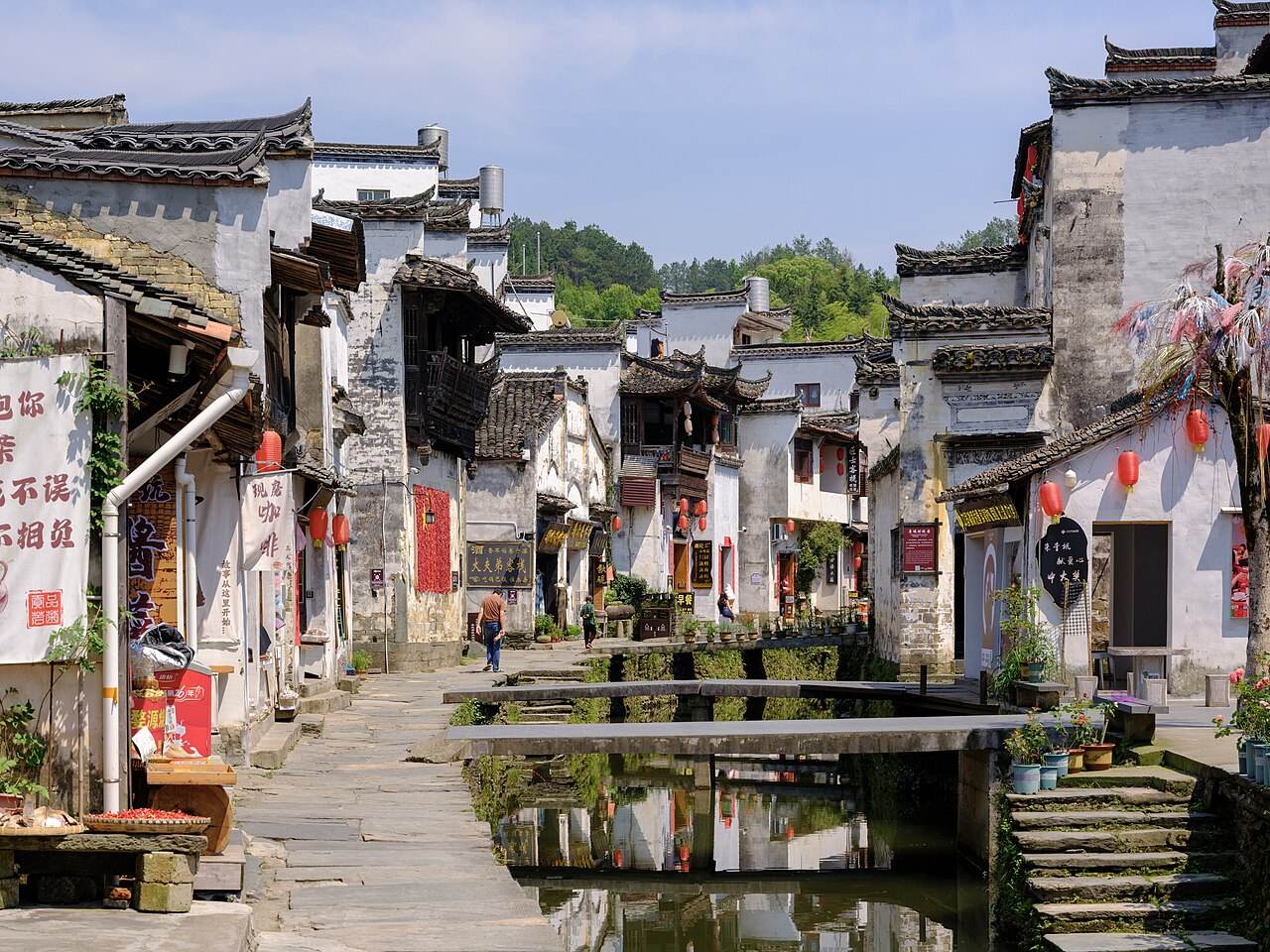
Here's the trip I send people on when they say "I want to see real China without the Shanghai crowds." Jiangxi's headline sights are scattered around the edges of the province, and Nanchang sits dead in the middle with fast trains fanning out to almost all of them. So instead of one long out-and-back, you loop: the porcelain capital, the prettiest villages in the country, and a UNESCO Taoist mountain of granite spires — and you barely touch a long-distance bus. It's culture, then countryside, then peaks, all strung along one high-speed corridor and bookended by a proper city.
This is paced for slow travel, not a death march. Five days is the comfortable minimum; seven lets you breathe, add the mountain properly, and not curse me on day four. You can run it in either order, but the version below — Nanchang first, mountain last — works best for catching the famous dawn "sea of clouds" before you head home.
The loop at a glance
Every leg is a direct train and none of them takes much more than an hour, so the logistics are genuinely easy:
- Day 1–2: Nanchang — riverfront landmarks, old town, the night fountain, museums and famously spicy food.
- Day 2–3: Jingdezhen — a thousand years of porcelain; ancient kilns, the Imperial Kiln Museum and the Taoxichuan art district. ~40 min by train.
- Day 3–5: Wuyuan — whitewashed Huizhou villages, tea terraces and (in spring) golden rapeseed. ~30 min by train from Jingdezhen.
- Day 5–6: Sanqingshan — clifftop plank walks, granite pillars and the dawn sea of clouds.
- Day 6–7: back to Nanchang to fly or train onward.
One scheduling rule that saves a day: most Chinese museums close on Mondays and several want a free advance reservation (the Imperial Kiln Museum and Nanchang's museums included). Sketch your route so the big indoor sights don't land on a Monday — and book tickets the night before.
Day 1 — Arrive in Nanchang: riverfront & old town
Base: Nanchang. Most people arrive by a long-haul flight into a major hub (Shanghai, Beijing, Guangzhou, Shenzhen or Hong Kong) and then hop to Nanchang by domestic flight or — usually nicer — high-speed train. Drop your bags somewhere central, around Bayi Square or the Donghu old town, and ease in.
- Afternoon: start at Tengwang Pavilion (滕王阁), the city's signature Tang-dynasty tower over the Gan River — photogenic by day, lit up at night. Day ticket around ¥50; open roughly 8am–10pm. Then wander the restored, lantern-strung lanes of the Wanshou Palace historical district (万寿宫) — free to enter and full of street food.
- Evening: cross to the Honggutan riverfront for the Qiushui Square musical fountain and the lit-up skyline — the city's best night-time scene. The fountain runs evening shows (roughly from 7:30pm, with extra shows in the May–October season), but exact times shift seasonally, so check the board on site.
- Dinner: ease into Jiangxi's chilli with Nanchang mixed rice noodles (拌粉) and a clay-pot soup (瓦罐汤). Order "微辣" (mild) if you're not battle-hardened.
Day 2 — Nanchang museums, then train to Jingdezhen
Base: shift to Jingdezhen. Spend the morning on Nanchang's culture, then take an early-afternoon train so you arrive in the porcelain capital with the evening free.
- Morning: the Jiangxi Provincial Museum (free, strong on the spectacular Han-dynasty Haihunhou tomb finds) out in Honggutan, or Bayi Square + the August 1st Uprising Memorial Hall (free, the city's "red" founding story). Both close on Mondays and normally need a free online reservation — sort it the night before. Full background in the Nanchang guide.
- Early afternoon — train to Jingdezhen: take a high-speed train from Nanchang East (南昌东) to Jingdezhen North (景德镇北). Fastest is 42 minutes, departures are frequent across the day, and second class runs about ¥86–94 (the ¥45–50 you may see quoted is the old conventional-train fare, not the bullet train). Confirm your departure station on the ticket — Nanchang has several.
- Evening in Jingdezhen: if it's a Friday, Saturday or Sunday, head straight for the Taoxichuan (陶溪川) creative market — a former state porcelain factory reborn as studios, cafés and a famous weekend night market (afternoon into the evening). Base yourself nearby so it's walkable.
Day 3 — Jingdezhen porcelain, then on to Wuyuan
Base: shift to Wuyuan. Do the porcelain highlights in the morning, then continue along the same rail line to the villages.
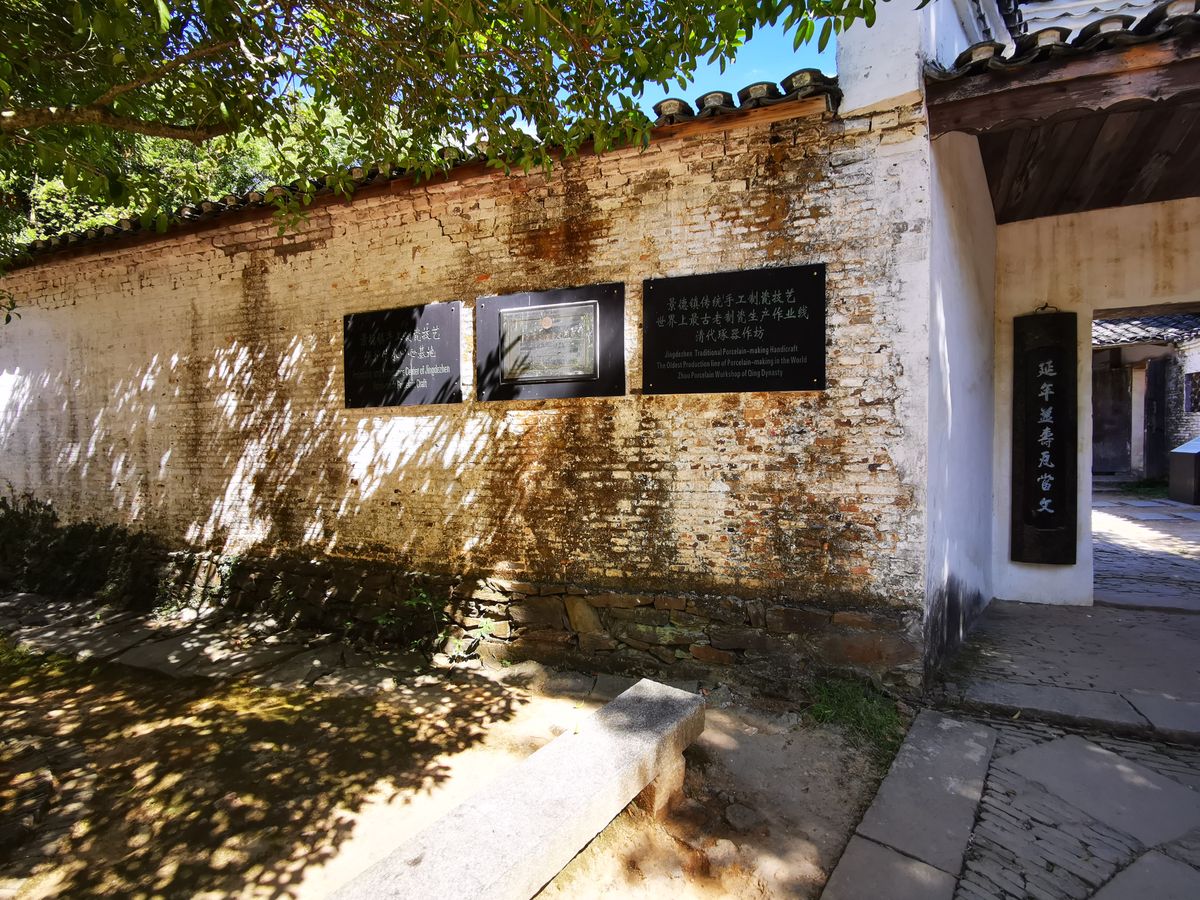
- Morning: the Ancient Kiln & Folk Customs Museum (古窑民俗博览区) — a national 5A site that actually fires reconstructed historic kilns with live demonstrations (around ¥85 in peak season Apr–Oct, ~¥45 off-season; open ~8am–5pm). If you've got an hour, throw or paint your own piece — hands-on pottery is the bit most people remember. Full details in the Jingdezhen guide. (Note: the Imperial Kiln Museum is closed Mondays — swap days if needed.)
- Afternoon — train to Wuyuan: Wuyuan is a short hop east on the older line that crosses the Nanchang–Huangshan one at Jingdezhen North, so it's direct. Take a train to Wuyuan (婺源) — about 30 minutes, close to 30 departures a day, second class ¥26. The station is a few kilometres outside the main town (Ziyang); a guesthouse car or taxi gets you to your village base.
- Evening: settle into a restored Huizhou courtyard guesthouse (民宿) in or near a village like Likeng or Sixi. Slow down — this is the heart of the trip.
Day 4 — Wuyuan: village-hopping at your own pace
Base: Wuyuan. "Wuyuan" isn't one site — it's a whole county of whitewashed, black-tiled villages, so today is about wandering, not ticking boxes. Arrange a car with a driver through your guesthouse; it's the painless way to string several villages together on your own schedule.
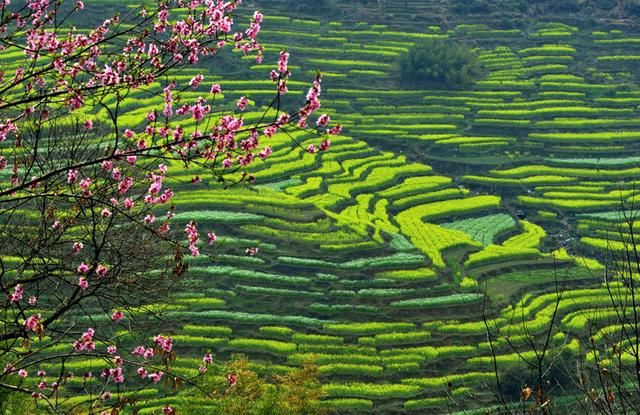
- The icon — Huangling (篁岭): a restored hilltop village reached by cable car, world-famous for "晒秋" (sun-drying autumn), when farmers spread chillies, corn and persimmons across the rooftops. It's a separate ticket from the main Wuyuan combo (combined entry + return cable car ~¥145 in peak season, ~¥120 off-peak); the cable car runs roughly 7:30am–5:30pm, so go up early to beat the tour groups.
- The quiet ones: mix in a couple of calmer villages — Sixi & Yancun (思溪延村) for old merchant houses with few crowds, Wangkou (汪口) for serious Huizhou wood carving, or the Qinghua Rainbow Bridge (彩虹桥), a much-photographed Song-dynasty covered bridge.
- In spring: Jiangling (江岭) is the rapeseed-terrace viewpoint — tier upon tier of gold. The bloom peaks roughly the second half of March, but it shifts a week or two each year, so check a current local source 1–3 days out rather than trusting any fixed date.
If you're tight on time, you can compress Wuyuan into a single full day (Huangling plus one nearby village) and move the mountain up — but the villages reward a second night, and a 7-day version should keep it. See the Wuyuan guide for the two ticket systems and the all-important bloom window.
Day 5 — To Sanqingshan: granite peaks & clifftop walks
Base: shift to Sanqingshan (overnight on or near the mountain). Today swaps villages for one of China's most dramatic — and least crowded — mountains. Note this is the one leg that needs a transfer: no train reaches the mountain itself.
- Morning — get to the mountain: Wuyuan and Sanqingshan are both in the Shangrao region, so you connect via Shangrao (high-speed train + bus) or, when running, a direct seasonal tourist bus. The mountain's gateway town is Yushan: from the Yushan / Yushan South (玉山南) high-speed station a tourist shuttle runs to the scenic area in about an hour (~¥20–30, roughly hourly), or a taxi is about ¥150.
- Afternoon — up the mountain: buy your entry ticket (around ¥120) and ride a cable car up (~¥70 up / ¥55 down) — climbing the whole way is a serious slog. Walk a loop of the famous clifftop plank paths bolted to sheer granite, past the "Goddess" and "Giant Python" rock pillars. Check the Sanqingshan guide for the two entrances and cable cars.
- Evening: stay at a hilltop hotel or near an entrance. This is the whole point of overnighting — you're in position for sunrise.
The dawn sea of clouds is the reason to sleep up top, but it's a genuine weather gamble — some mornings you get the magic, some you get fog and nothing. Plank paths can also close in storms, high wind or ice. Build in a flexible morning and wear grippy shoes.
Day 6 — Sunrise, then loop back to Nanchang
Base: back to Nanchang (or fly out).
- Dawn: be out early for sunrise and — if the weather plays along — the sea of clouds pouring between the peaks. Walk any plank paths you missed, then take the cable car down.
- Midday — shuttle back to Yushan (~1 hour) and pick up a high-speed train. Yushan / Yushan South → Nanchang runs roughly 2 to 2.5 hours (most services back to Nanchang West) — check the time on your specific train.
- Evening in Nanchang: a last bowl of clay-pot soup and the riverside skyline. If your flight home is the next day, an airport hotel or a central one near metro Line 1 (which now runs all the way to Changbei Airport) makes the morning painless.
The 7-day version (recommended if you can)
Five days is brisk; here's where the two extra days go best:
- +1 night in Wuyuan — the villages are the trip's soul and genuinely reward a slower pace. Add a day driver and a few quieter villages.
- +1 night for the mountain or a buffer day — either a relaxed full day on Sanqingshan (so cloud-watching isn't a one-shot gamble), or a buffer back in Nanchang to catch anything you missed (the Provincial Museum, the Ferris wheel, a Gan River boat).
- Spare appetite for more? The same eastern line passes Longhushan (龙虎山), another Taoist mountain with red cliffs, and the corridor continues across the border to Huangshan (Yellow Mountain) in Anhui — easy add-ons if you've got the days.
Best time to run this loop
Two sweet spots, and they're the same windows that suit Jiangxi generally:
- Autumn (Sep–Nov): the all-round best — cool, clear, comfortable, and it lines up with Huangling's sun-drying (晒秋) rooftop displays and Sanqingshan's crisp long-range views.
- Late spring (Apr–Jun): Sanqingshan's ancient alpine azaleas bloom (May–June) and the mountains get frequent morning cloud seas. Mid-to-late March instead if Wuyuan's rapeseed gold is your priority — just expect Wuyuan's one genuinely crowded season and book ahead.
- Summer (Jul–Aug): hot and humid in the lowlands, though the mountain is a cool escape; winter is cold and damp but very cheap and quiet (check that Sanqingshan's plank paths are open).
Quick tips
- It all runs on one corridor — book each leg on 12306.cn (official) or an English-friendly reseller like Trip.com; your passport is your ticket ID, so bring it to every gate.
- Confirm your Nanchang departure station (the fast line east leaves from Nanchang East; the Yushan train mostly uses Nanchang West) — the city has several.
- Set up Alipay or WeChat Pay before you arrive and install a VPN at home; use Amap (Gaode) for maps and Didi for taxis.
- Don't let the Imperial Kiln Museum or Nanchang's museums fall on a Monday (closed + reservation).
- Coming for Wuyuan's rapeseed? Check a current local bloom update 1–3 days out — the peak moves yearly.
- Sanqingshan's sea of clouds is weather-dependent — give it a flexible morning and don't bank on it.
Want this loop tailored to your dates, pace and interests — porcelain-heavy, family-friendly, or with the mountain swapped for Lushan? Plan this trip with us and we'll build it around you.
Images: "Cliffs of Sanqing Mountain" by Huangdan2060 (CC0 / public domain); "古建筑与制造瓷器的窑 01" (Ancient Kiln, Jingdezhen) by Liuxingy (CC BY-SA 4.0); "flower sea in wuyuan huangling scenery" by Maisie008 (CC BY-SA 4.0) — all via Wikimedia Commons.
Last verified: 2026-05. Train times, fares, ticket and cable-car prices, opening hours, museum closures and Wuyuan's rapeseed dates change often — please double-check official sources before you travel.
Cover photo: Chensiyuan / CC BY-SA 4.0 via Wikimedia Commons (cropped & resized).