Nanchang's Gan River: One River, Two Banks
How Nanchang leapt the Gan River to build a new CBD — the two banks, the greenway, and the free Guinness-record skyline light show.
By Hello Nanchang · Last updated
Nanchang, Jiangxi, China · Evening (roughly 7:00 PM onward); fountain shows around 7:30 & 8:30 PM
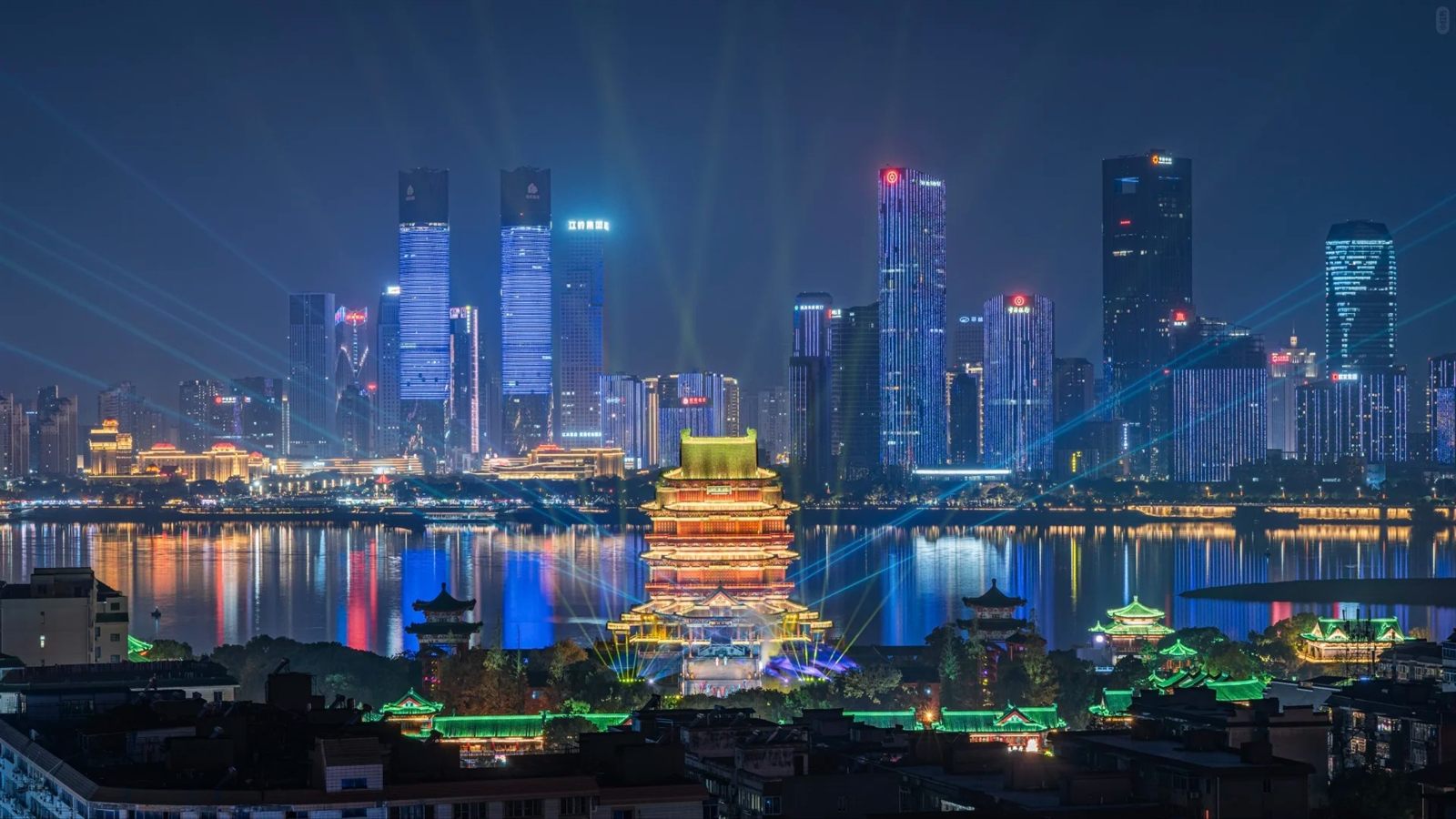
Stand on the east bank of the Gan River (赣江) at dusk, with the old town at your back and the water going pewter in front of you, and wait. Somewhere around eight o'clock — earlier in winter, later in summer — the entire skyline across the water switches on at once. Not one tower, then the next. All of them, together, in a single breath: a wall of skyscrapers a kilometre or more away suddenly reading as one screen, animations rolling from building to building like weather. This is Nanchang's party trick, and it is a genuinely strange thing to watch a provincial capital of central China do better than almost anywhere on Earth.
The show has a name that tells you what you're really looking at: 一江两岸, "One River, Two Banks." It is not fundamentally about lights. It is about a city that, over the last quarter-century, picked up its centre of gravity and threw it across a river — and then wired the result to glow. This is the story of the riverfront itself: how Nanchang built a new city on the far bank, turned ~28 kilometres of muddy floodplain into a green corridor, and made the seam between old and new into the thing you cross the country to see.
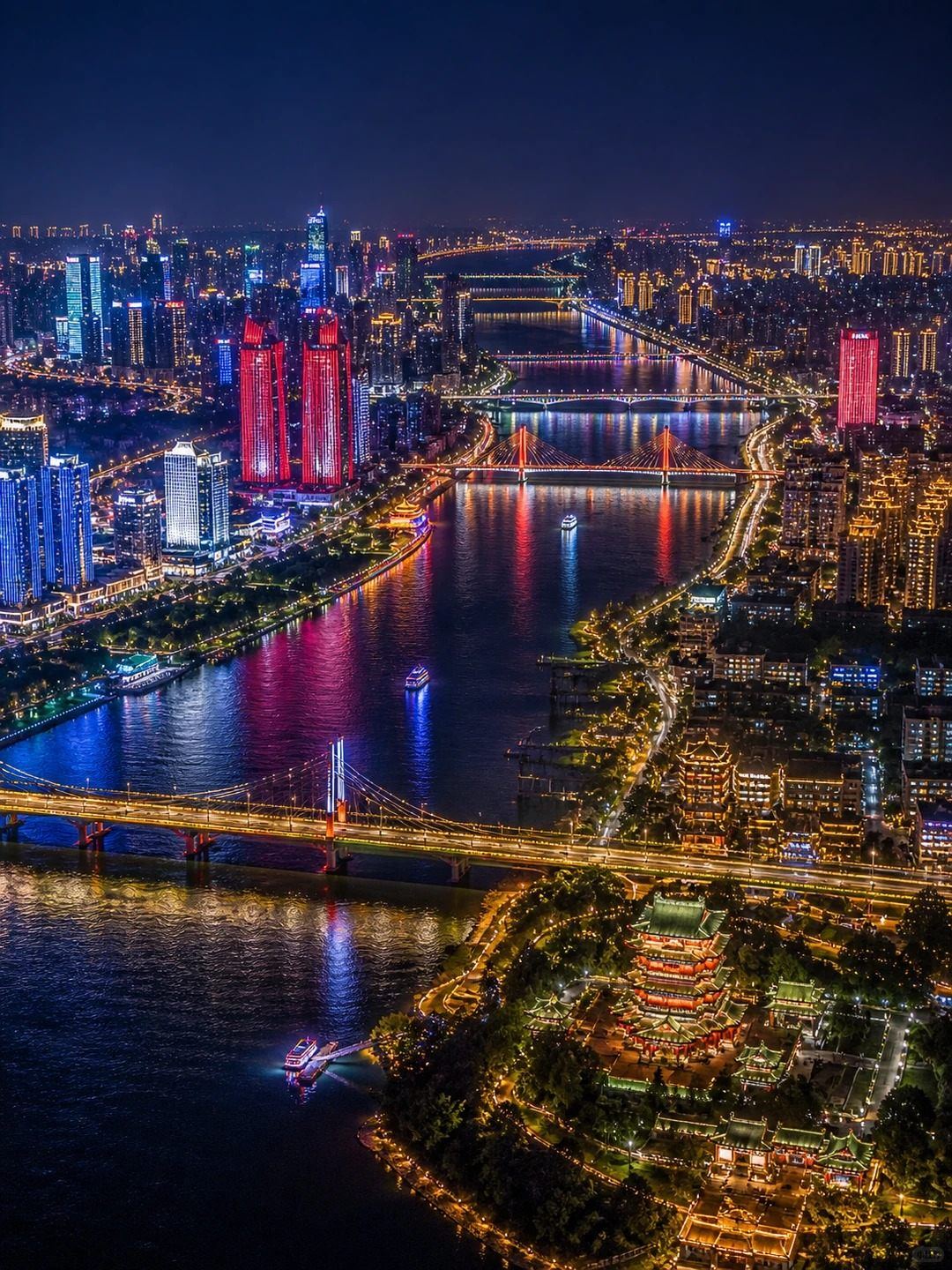 The nightly switch-on from above: towers along the Honggutan skyline animate in unison across the Gan River — a Guinness-record facade show, and completely free to watch.
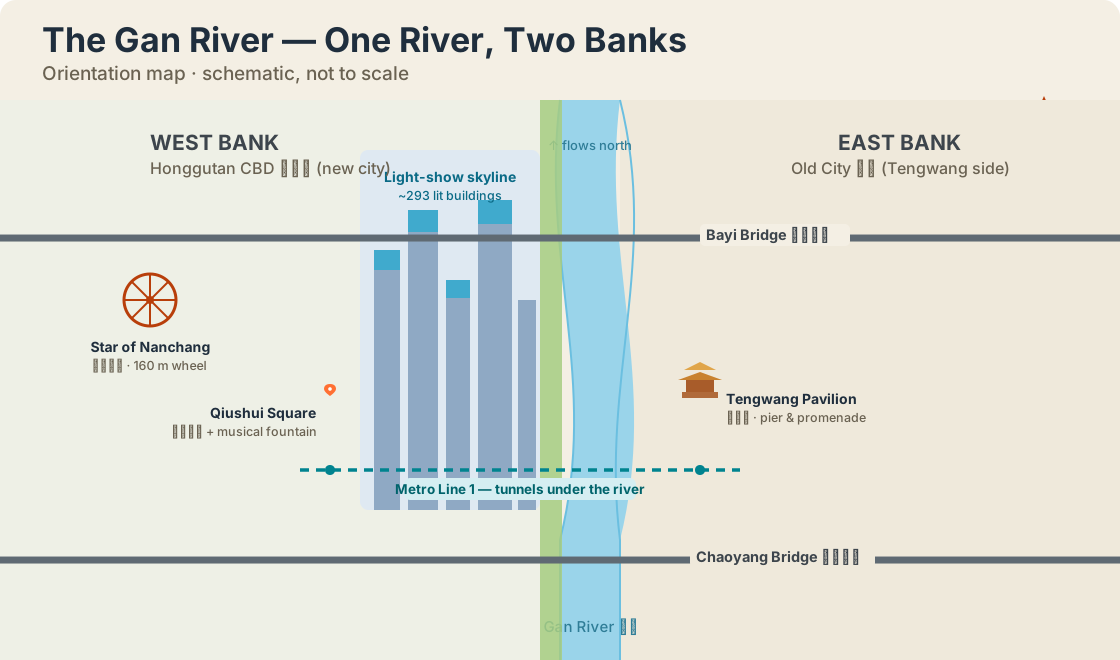 The two banks at a glance: the old city and Tengwang Pavilion on the east, the Honggutan CBD and its light-show skyline on the west, stitched together by the bridges and, underneath, Metro Line 1.
The switch-on: what you're actually watching
Get your bearings first, because the geography is the whole point. The Gan River runs roughly north through the city and splits it in two. On the east bank sits the old town — the dense, lived-in Nanchang of narrow lanes and the Tang-dynasty silhouette of Tengwang Pavilion, first raised in AD 653. On the west bank, directly across the water, stands something that did not meaningfully exist thirty years ago: Honggutan (红谷滩), a purpose-built central business district of glass towers, wide boulevards, and government headquarters. When people say "the light show," they mean the Honggutan skyline seen from the old side — a new city performing for the old one across the river.
Every major tower along that western skyline is fitted with facade LEDs, and the whole array is centrally choreographed into one coordinated canvas. Sequences morph into local motifs — the winged silhouette of Tengwang Pavilion, the city flower, blue-and-white porcelain patterns that nod to Jiangxi's ceramic heartland at Jingdezhen — and then the river doubles all of it in reflection. The riverfront's landscape lighting was first switched on in December 2013; the coordinated, synchronised facade show was formalised soon after and, on 22 October 2015, set a Guinness World Record for the most buildings in a permanent light-and-sound show: 293 buildings, certified along a roughly 8-kilometre stretch of riverbank. (You will see "296" repeated online — that was the number that took part in the challenge; 293 is the figure Guinness actually certified.) The array has only grown since; by the end of the decade hundreds of towers were performing in sync, part of a broader night-lighting line of 600-plus buildings running the length of the urban riverfront.
It is, worth saying plainly, free. There is no gate, no ticket, no paid grandstand. You walk to the water and watch.
Two banks, one river: how Nanchang leapt the water
To understand why a city this size has a waterfront this ambitious, you have to know that the west bank is younger than most of the people standing on it.
For most of its history Nanchang faced inward, hemmed onto the east bank, with the Gan River as its western edge — a boundary, not a spine. The far bank was low, flood-prone tidal flats (滩涂), the kind of ground you farmed cautiously and built on never. In the late 1990s the city made a decision that reads, in hindsight, as the single most consequential move in its modern shape: it would cross the river. Rather than keep thickening the crowded old town, Nanchang would build an entirely new city centre on the empty west bank and leave the historic core to be the historic core.
The planning language that came out of this is unusually vivid for a zoning document. The city reframed its whole layout around the water — "the Gan River as the main axis; one river, two banks; twin cities embracing the river" (以赣江为主轴,一江两岸,双城拥江). The river stopped being the western wall and became the centre line. Old town on one side, new town on the other, the water down the middle as the shared front garden of both.
The timeline, briefly
The bones of it: Nanchang's Planning Bureau solicited international design proposals in November 1998, and an optimised master plan — synthesised from eight submissions — was approved that December, laying out the new administrative, business, cultural, and residential zones. The hard, unglamorous work came first: the "One River, Two Banks" flood-control and road works used sand-pumping reclamation (抽沙造地) to raise thousands of mu of low riverbank into buildable land. Ground formally broke on the Honggutan central area in July — Nanchang's own accounts put the day at 11 July, though the year is reported inconsistently, with most official write-ups citing 2000 and some sources 2001. The Honggutan New District Management Committee was established in 2002 (approved that April, formally operating from mid-May) to run the build-out. Jiangxi's provincial government and Nanchang's municipal government both eventually relocated across the water, dragging the city's institutional weight west with them. Honggutan was finally upgraded from a "new district" to a formal administrative district (红谷滩区) in June 2020 — an area of roughly 393 km² with a resident population somewhere around 630,000.
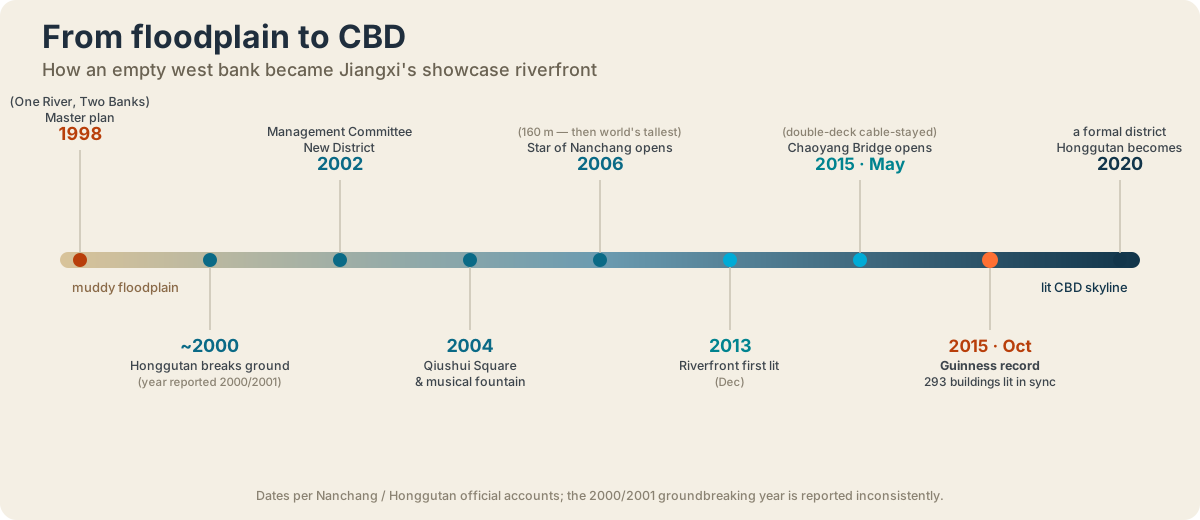 From floodplain to CBD: the milestones that turned an empty west bank into Jiangxi's showcase riverfront.
The result is that Honggutan today is Jiangxi's only true CBD — the province's administrative, financial, commercial, cultural, and innovation hub, all of it looking back across the river at the town it grew out of. The light show, when it finally arrived, wasn't decoration bolted onto a skyline. It was the skyline announcing that it had finished arriving.
The riverfront by day: parks, greenways, and the long walk
Come back in daylight and the same corridor is a completely different animal — quieter, greener, and far more local. The night belongs to visitors with cameras; the day belongs to Nanchang.
Along the west bank runs a continuous ecological green corridor, roughly 28 kilometres of it, strung between the bridges. Its spine is the Gan River Citizens' Park (赣江市民公园), built out over multiple phases into what locals half-jokingly call South Nanchang's Bund — a wide, flat, endlessly walkable riverside where the city comes to exhale. Count the branch paths and the loops inland and Honggutan has laid down something on the order of 50 kilometres of greenway in total, threading together the district's landmarks: the retired warship Nanchang (南昌舰), the Army Founding sculpture plaza, Qiushui Square, the Star of Nanchang wheel, and the Yuzhouwan wetland park at the northern end.
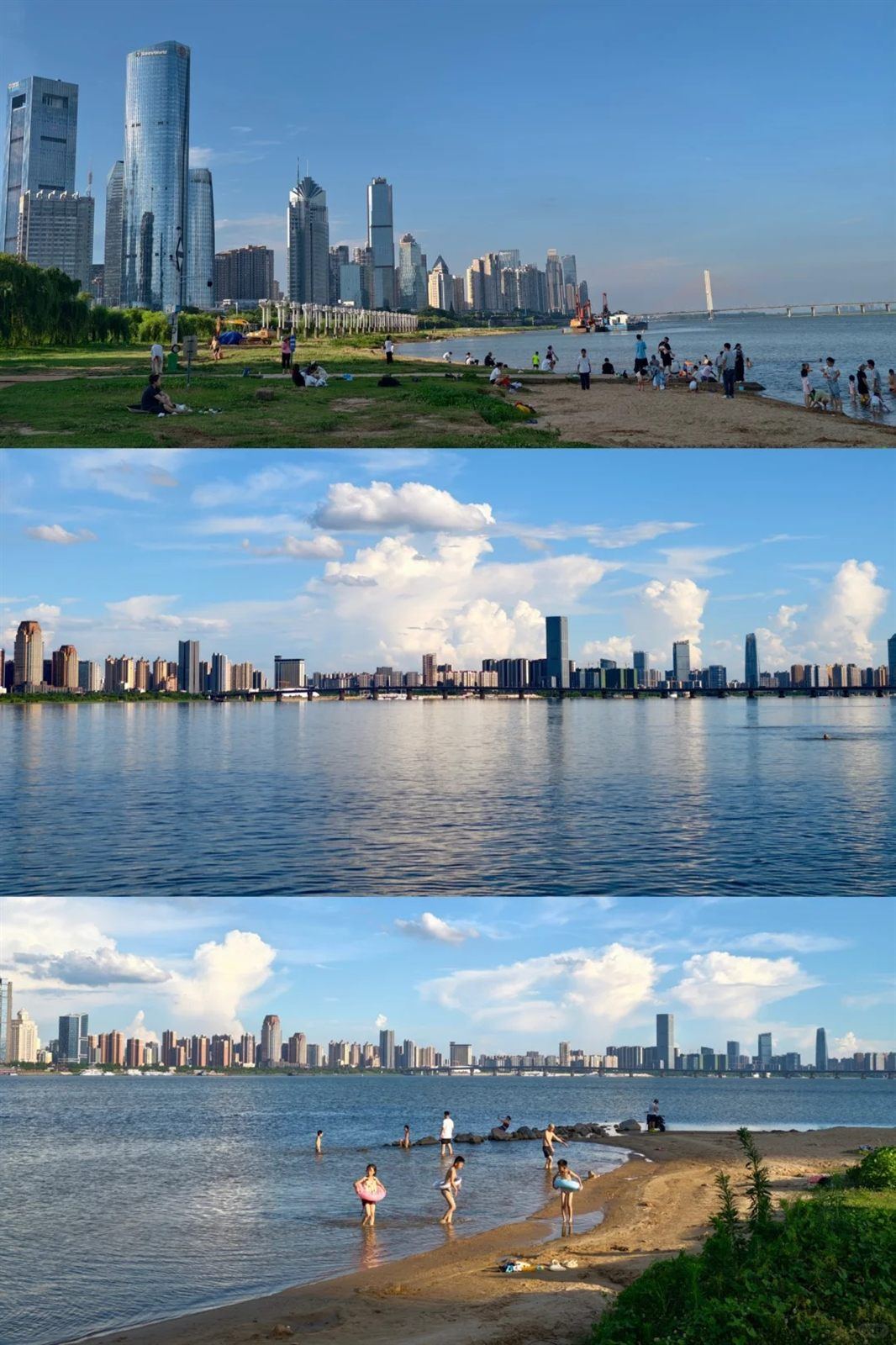 By day the banks belong to the city — families picnic on the lawns and wade in from the sandy shore, the new skyline shimmering across the water.
The design is genuinely thoughtful, not just mown grass by a river. The newest stretch — the Citizens' Park Phase 4, running about 8.5 kilometres from Shengmi Bridge down to the Nanpu freight railway and covering roughly 1.5 million square metres — is organised as three separated paths running in parallel: a colourful cycling greenway, a waterside leisure walkway right along the river's edge, and a dedicated jogging trail, so runners, cyclists, and strolling families never have to fight for the same lane. Around them sit four garden zones and a lake core, wetland pockets where reeds and water plants were deliberately kept, rose gardens, and a smart fitness running track. Phase 4 alone won Nanchang's 2022 honours for the city's most beautiful park and greenway. There is no single branded "skywalk" here to queue for — instead, wooden boardwalks and short elevated boardpaths (栈道) are distributed through the wetland sections, carrying you out over the reeds where the ground is too soft to walk.
The east bank has its own quieter riverside green space around the Tengwang Pavilion promenade, popular for lawns, shade, and picnics. If you want to understand the ecological thinking behind all this — the sponge-city logic of designing riverbanks that drink floodwater rather than wall it off — the clearest place to see it is a little downstream at Fish Tail Park, a former ash-fill brownfield on a Gan River branch rebuilt into a flood-absorbing wetland that Nanchang consciously benchmarks against Singapore.
By day this is a place to move slowly: walk, jog, cycle, fly a kite, spread a picnic, camp on the lawns. Spring is the peak — rapeseed and flower blooms roughly from early March into April bring out families, photographers, and the tents. The views across the water to the Honggutan towers are wide open and, without the lights, oddly serene.
The anchors: the wheel, the square, and the bridges
A few fixed points give the riverfront its shape, and each one rewards a stop.
Qiushui Square and its fountain
If the light show has a front row, this is it. Qiushui Square (秋水广场) is the wide riverside plaza on the Honggutan side, sitting directly opposite Tengwang Pavilion — close enough that the square's name is a quotation from the poem written in the building across the water. Built in 2004, it is the one place that gives you both halves of the riverfront at once: the lit skyline reflected down the Gan, and a musical fountain firing a jet reported at around 128 metres straight up in front of you, free of charge. Get one thing straight before you plan an evening around it: the Qiushui fountain runs every night, not just at weekends — two shows of about fifteen minutes, currently around 19:30 and 20:30 — and it is called off for thunder, rain, winds above force 5 or heavy fog. (The weekends-and-holidays fountain people confuse it with is the one at Jiulonghu Park, across town.) The operator moves the timetable by public notice, so check the same day. Because the show times, the crowd management and the exact patch of railing to stand on are worth getting right — and because the wheel and the observation deck belong to that same walk — the square has its own page. Our Qiushui Square fountain guide has the current show pattern, the metro exit that actually puts you at the water, and the trick locals use to get out afterwards without queuing.
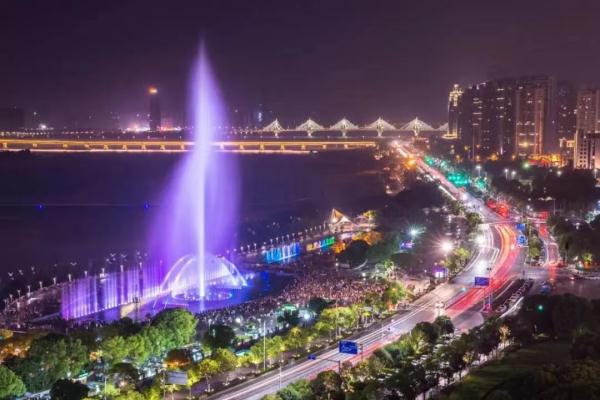 Qiushui Square's musical fountain on the west bank — the one vantage point where the water show and the lit skyline land in the same frame.
The Star of Nanchang
The Star of Nanchang (南昌之星) is the white ring upriver near the international exhibition centre, and a dusk rotation is the best moving vantage point on this stretch of the Gan. It is also nowhere near walking distance from the fountain, which wrecks a lot of otherwise sensible evenings — the height, the ticket and how to fit it into a riverfront night are in our Qiushui Square guide.
The bridges
The crossings are attractions in their own right, and they frame the show. Bayi Bridge (八一大桥) — Jiangxi's first cable-stayed bridge, opened to traffic on 1 October 1997 — carries fans of tomato-red stay cable between twin H-shaped pylons, and at its old-city end two hundred-tonne stone cats, one black and one white, that are a monument to an argument about economic policy. Upstream, Chaoyang Bridge (朝阳大桥) (2015) hides a sheltered walking-and-cycling deck underneath its traffic, with balconies hanging out over the water. Both glow after dark and read as part of the composition rather than infrastructure interrupting it. Every crossing — the history, the cats, the 1957 tablet and a 90-minute walking route — is in our guide to Nanchang's Gan River bridges.
The night show: how it works and where to watch free
Here is the practical heart of it. The riverside buildings are illuminated nightly, roughly from 19:10 to 22:30 (7:10 pm to 10:30 pm), with the window extended on public holidays. Within that band, the choreographed, synchronised segments — the ones where the whole skyline animates in unison to a soundtrack — run to a schedule; a marquee full-skyline sequence is commonly cited around 8:30 pm. Treat every exact minute as approximate: the timings drift with the season and the calendar, and get reshuffled for holidays. Arrive a little before dark, and you'll catch sunset over the water before the switch-on.
One caveat worth knowing before you plan around it: the biggest, most animated Twin Towers LED sequence on the tallest pair of Honggutan skyscrapers is often run Fridays and Saturdays only (roughly 19:30–21:30), not every night. The nightly building illumination — the lit-up skyline itself — does run daily; only the headline animation leans to weekends and holidays. If the full spectacle matters to you, aim for a Friday or Saturday evening.
The best free viewpoints
You have two sides to choose from, and they give you opposite pictures.
- West bank — Qiushui Square. The classic vantage. Stand on the square's curved riverside observation platform and you get both the lit skyline reflected across the water toward Tengwang Pavilion and the musical fountain going off in front of you. This is the single best free spot if you want the whole show in one frame. Metro Line 1 to Qiushui Square station puts you right there; our fountain guide names the exit and the spot on the railing to aim for.
- East bank — the Tengwang Pavilion promenade and Bayi Bridge. From the old side you look across at the full illuminated Honggutan wall — the classic postcard of the new city glowing over the river. The riverside walk by Tengwang Pavilion and the area around Bayi Bridge are both popular for this; you can stroll south along the water from the bridge toward the fountain. (These east-bank spots come mostly from local travellers rather than an official list, so treat them as "also excellent" rather than the one true answer.) Metro Line 1 to Tengwang Pavilion station.
For a slower, on-the-water version, evening Gan River cruises depart the Tengwang Pavilion riverside pier and loop the illuminated stretch — Tengwang Pavilion, Nanchang Bridge, Qiushui Square, Bayi Bridge, and back — in about an hour. Expect roughly ¥80–170 per adult for a standard night sailing, more on fireworks nights; departures run roughly hourly through the evening. Prices and slots vary by operator and season, so confirm before you count on a specific boat.
When and how to visit
The riverfront is a year-round draw, but the calendar tilts it. Spring (roughly March–April) is the daytime peak, with blooms, picnics, and camping on the west-bank lawns. Summer evenings run latest, with the fountain and light programmes often extended — though Nanchang summers are famously hot and humid, so the riverfront breeze after sunset is a mercy, not a luxury. Autumn and winter are clearer and cooler for night photography, but the light show's window shortens and the fountain can pause in cold snaps.
The logic of a good visit is simple: do the two banks in one arc. Spend the late afternoon on whichever side you're staying, cross for sunset, and let the switch-on catch you already in position. Here is that arc as a plan you can follow straight off the page.
A simple evening, in order
- Start at Tengwang Pavilion station (east bank), late afternoon. Surface and walk the riverside promenade in the golden hour, old town at your back.
- Photograph the Honggutan wall from the Bayi Bridge riverside, before dark. This is the postcard frame — the new city stacked over the water while there's still colour in the sky.
- Ride Metro Line 1 one stop under the river to Qiushui Square station (west bank). A single ride, no line change, and you surface on the fountain side.
- Claim a spot on the square's curved riverside platform 15–30 minutes early. Weekends and holidays fill it fast around the fountain times.
- Watch the fountain and the skyline switch-on together. The fountain performs nightly, weather permitting — two roughly 15-minute shows at about 7:30 pm and 8:30 pm — and the marquee skyline sequence is commonly cited around 8:30 pm as well, which is why that slot is the one to hold a railing for. Aim for a Friday or Saturday if you want the full Twin Towers animation, not just the nightly illumination.
- Head back before the last Line 1, or grab a DiDi. Last trains leave the termini around 22:30 — closer to 23:00 on Fridays, weekends and public holidays — but your own station's last train comes earlier, so read the board rather than the headline number.
It builds naturally into a full Nanchang day — see our Nanchang city guide for how the riverfront fits alongside Bayi Square and the old town, our Nanchang itineraries for ways to thread it together, or let us build a custom one via Plan With Us.
Practical notes
- Metro is the move. Line 1 crosses under the Gan River, with the tunnel running between Qiushui Square station (west, the fountain side) and Tengwang Pavilion station (east, the pavilion side) — so a single ride swaps you from one bank to the other with no line change. At Qiushui Square station, Exit 5 is the one for the fountain and the water (Exit 1 serves the Shangri-La and the riverside park); numbering does get reshuffled, so fall back on the boards naming the attraction. Line 4 also runs through Honggutan District, but it serves the Jiulonghu and Wangcheng side, a dozen-odd kilometres from the riverfront CBD — it is no use at all for getting to the fountain. Ignore any older advice sending you to an east-bank station "for the fountain" too: for the fountain, ride Line 1 to Qiushui Square station.
- Mind the last train. Line 1 runs from about 06:00 to roughly 22:30, with last departures commonly stretched to about 23:00 on Fridays, weekends and public holidays. Those are terminus times, so the last useful train from your own station is different — check the board on your platform, and be ready to grab a DiDi. The full picture is in our Nanchang metro guide.
- It's free. The square, the fountain shows, and viewing the light show all cost nothing. The only paid extras are optional: the Ferris wheel (around ¥50), a river cruise (from roughly ¥80), and a paid observation deck on the Twin Towers (around ¥80) — none required to enjoy the free evening spectacle.
- The fountain is nightly; the weather is the variable. Two shows of about 15 minutes, currently around 19:30 and 20:30, every night of the week — the posted rule is that they're suspended for thunder, rain, winds above force 5 or heavy fog, and the water can go quiet in the depths of winter. The static building illumination usually still runs, but the synchronised water-and-light spectacle may not — have a flexible evening and a backup plan on a wet night.
- Crowds. Weekends and public holidays draw large crowds to Qiushui Square, especially around the fountain times. Arrive 15–30 minutes early to claim a spot on the riverside platform.
- How long. Two to three hours for the standard evening: an hour of daylight on one bank, the crossing, and the switch-on from the other. Add an hour if you want a proper stretch of the Citizens' Park, or make it half a day if you're doing the parks in daylight too.
- Pay & language. Alipay and WeChat Pay for everything, including the cruise pier and the wheel — set one up before you arrive. English signage is thin on both banks, so screenshot the Chinese names (秋水广场, 滕王阁) and keep a translation app handy.
- Good for. First-timers, photographers, families, and anyone travelling on nothing. Less good for: anyone who needs a guaranteed show, anyone hoping to eat seriously well without leaving Honggutan, and — on the older east-bank steps and embankments — wheelchair users.
- What to skip. Don't attempt both banks, the wheel and the observation deck in one evening; the wheel alone sits 5 km upriver and a rotation takes half an hour. Pick a bank, hold your spot, save the rest. And skip the midday visit outright — no fountain, no lights, no shade.
FAQ
What exactly is the "One River, Two Banks" light show?
It's a coordinated nightly facade-lighting display in which the skyscrapers along Nanchang's west-bank Honggutan skyline are all synchronised into a single animated canvas, viewed across the Gan River from the old east bank. The riverfront was first lit in December 2013, and in October 2015 the synchronised show set a Guinness World Record for the most buildings in a permanent light-and-sound show, with 293 buildings certified.
What time does the show start, and is it on every night?
The riverside buildings are illuminated nightly, roughly 19:10–22:30, with a marquee synchronised sequence commonly cited around 8:30 pm and holiday extensions. The nightly illumination runs daily, but the biggest animated "Twin Towers" sequence is often weekends-only (roughly Friday–Saturday, 19:30–21:30). The Qiushui Square fountain is a separate performance and it too runs every night — two shows of about 15 minutes, currently around 19:30 and 20:30, cancelled for thunder, rain, winds above force 5 or heavy fog. Exact times drift by season and holiday, so confirm locally on the day.
Where's the best free place to watch?
Qiushui Square on the west bank is the classic free vantage — you get the lit skyline reflected across the water and the musical fountain in the same view. From the east bank, the Tengwang Pavilion riverside promenade and the Bayi Bridge area look straight across at the full illuminated Honggutan wall. Both are free; the metro connects them.
How do I get between the two banks?
Fastest is Metro Line 1, which tunnels under the river between Qiushui Square station (west) and Tengwang Pavilion station (east) — one ride, no change. Road bridges (Bayi Bridge, Chaoyang Bridge) also connect the banks, and an evening river cruise crosses between them. Last trains leave the Line 1 termini around 22:30, and closer to 23:00 on Fridays, weekends and holidays; your own station's last train is earlier.
How much of the riverfront should I actually walk?
The green corridor runs some 28 kilometres, which nobody does in an evening. The rewarding stretch is the two or three kilometres of Gan River Citizens' Park either side of Qiushui Square — flat, lit, and lined with wetland boardwalks — which takes about an hour at a stroll and drops you back at a metro station. Cyclists and runners have the separated greenway lanes of Phase 4 further south if you want distance.
How much does all of this cost?
The riverfront, the parks, Qiushui Square, the fountain shows, and viewing the light show are all free. Optional paid extras are the Ferris wheel (around ¥50), a night river cruise (from roughly ¥80–170 for a standard sailing), and the Twin Towers observation deck (around ¥80). You can have a full evening here for the price of a metro fare.
When is the best time to visit?
Spring (March–April) is best for the daytime parks — blooms, picnics, camping. Summer evenings run latest and the fountain and light programmes often extend, though it's hot and humid by day. Autumn and winter give clearer night photography but shorter show windows and occasional cold-weather fountain pauses. Whenever you come, arrive before dark to catch sunset and the switch-on.
Before you go
Nothing here needs booking and almost nothing here costs money, which makes the riverfront the most forgiving evening in Nanchang — but the timings are the moving part. Pick your bank, get there before the light goes, and confirm the night's schedule locally on the day.
Last verified: 2026-08 — Show times, fountain schedules, ticket prices, metro last-train times, and building counts drift with the season, the calendar, and each year's programme. Treat all specific times and prices as indicative and confirm locally on the day; the light show first illuminated in December 2013 and set its Guinness World Record (293 buildings) on 22 October 2015.