What to Eat in Nanchang
The dishes that define Nanchang — what each one is, when locals eat it, how hot it really is and what it costs, from ¥6 breakfast noodles to night markets.
By Hello Nanchang · Last updated
Nanchang Citywide
Come hungry
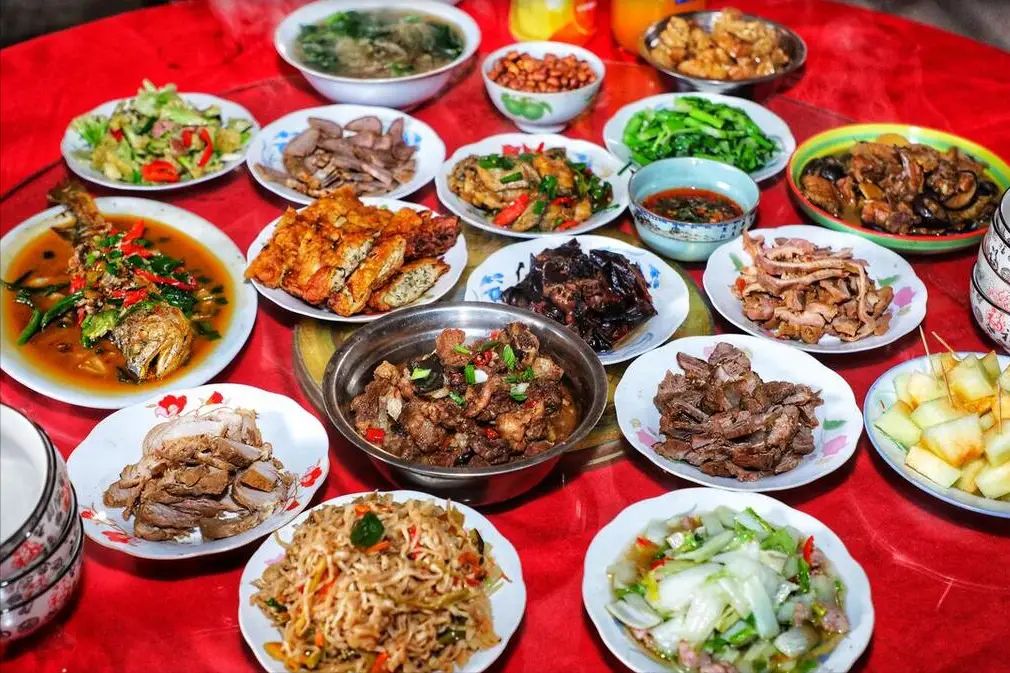
Nanchang doesn't do polished. Its food isn't plated for photos or softened for outsiders — it's cheap, fast and turned up loud, built on rice noodles, clay-pot soup and a chilli habit that would make a Sichuanese nod in respect. This is Gan cuisine (赣菜), the cooking of Jiangxi, and the provincial capital is the best place to eat your way into it. Spend a day grazing — a ¥6 breakfast, a fiery wok-fried lunch, a lantern-lit night-market dinner — and you'll know the city better than any monument could teach you.
Here's the part that surprises people: it costs almost nothing. A noodle-and-soup breakfast comes in under ¥10 at a neighbourhood counter. A full stir-fry lunch runs about ¥50 a head even at a busy city restaurant. Night-market plates mostly land between ¥5 and ¥30. A whole day of eating here costs less than one mid-range dinner in Shanghai, which is exactly why eating is the main event in Nanchang rather than a break between sights.
What follows is the menu, roughly in the order a hungry day takes it: what each dish is, when locals eat it, how hot it really is, what it should cost, and whether to start there.
Breakfast, 6–9am: one noodle and one soup
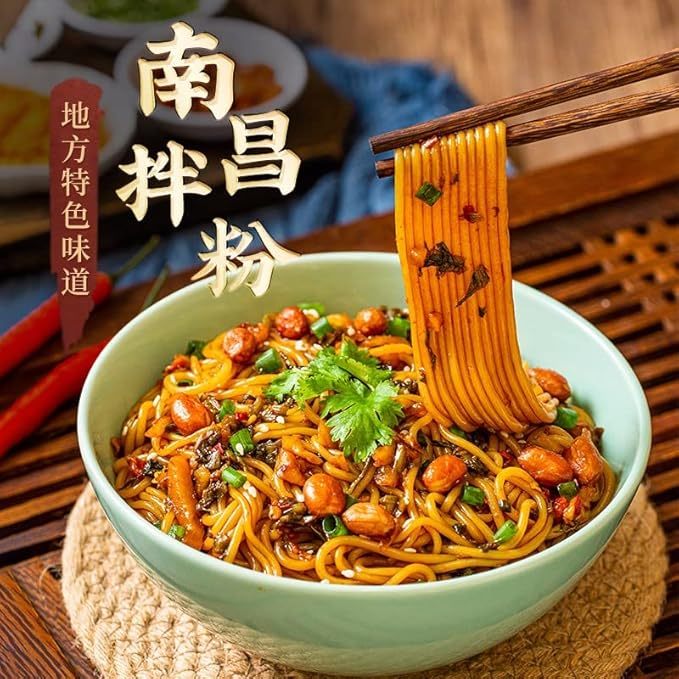
Banfen and clay-pot soup — the classic Nanchang breakfast.
The morning has a fixed shape here, and locals have a phrase for it: 一粉一汤, one noodle and one soup. Order the noodles without the soup and the owner may look at you like you've asked for a sandwich with no bread. Dedicated breakfast shops crank open at dawn, make each bowl to order and wind down by early afternoon, so this is a before-noon meal. Turn up at 3pm and the best broths are long gone.
Banfen (南昌拌粉) — round rice noodles boiled, rinsed cold so they stay springy, then tossed dry (no broth) with house-made chilli oil, soy, sesame oil, pickled radish, pickled mustard greens, crushed peanuts and scallion. Breakfast, best between 6 and 9am, though it doubles as a late-night plate. Local "normal spicy" (正常辣) is real heat, but the chilli goes on last by the spoonful, so asking works: 少辣 (shǎo là) for less, 不辣 for none. About ¥3–6 at a plain neighbourhood shop, ¥8–12 with beef or a big topping; tourist streets and out-of-town chains charge more. Start here — it's the best first dish in the city. One thing that looks like a mistake and isn't: it arrives cool, not steaming. That's the authentic default. (Full story: Nanchang rice noodles.)
Clay-pot soup (瓦罐汤) — small sealed earthenware pots packed inside a ceramic urn about a metre across and cooked by radiant charcoal heat for seven hours or more, simmering without ever quite boiling. You can't fake that broth on a stove. Breakfast and lunch, always beside the noodles. Not spicy at all — this is the restorative half of the meal and the safe order for anyone still recovering from yesterday. About ¥5–10 a pot. Yes, for everyone. If you can't choose from the four or five kinds a shop makes that day, point at 鸡蛋肉饼汤, pounded pork cake with an egg cracked in, the one every local grew up on; rib and lotus root (排骨莲藕汤) is the other classic.
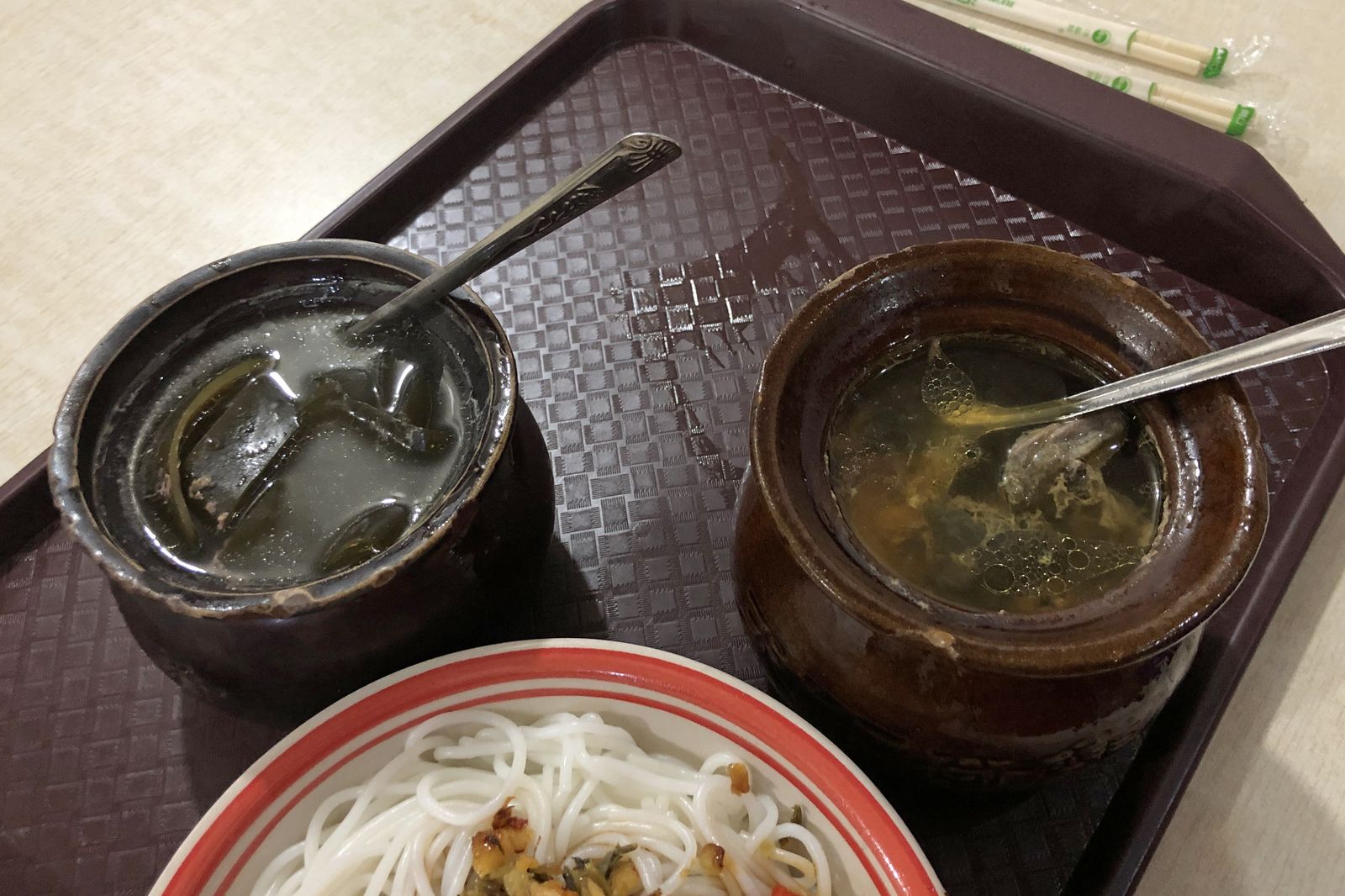
Waguantang in its earthenware crocks — each pot slow-simmered for hours in a charcoal-heated urn, never quite boiling. Photo: N509FZ / Wikimedia Commons (CC BY-SA 4.0).
Fried rice noodles (南昌炒米粉, chaofen) — the same round noodle, par-boiled and then thrown into a screaming old wok until it comes out oil-bright and carrying 锅气, the faint scorched breath of the wok. Heavier and smokier than banfen. Breakfast, or — more often — late-night supper (宵夜). Medium heat, and 少辣 works here too. Roughly ¥8–15 at a street counter, ¥15–25 as a restaurant plate. A good first dish if cold noodles at breakfast feel like a stretch; ask for the beef version, 牛肉炒粉.
Hu geng (糊羹) — a thick, savoury soup bound with sweet-potato starch and studded with tiny dice of chicken, gizzard, water chestnut, shiitake and tofu. Old Nanchang eats it on New Year's Eve and again on the first morning of the lunar year, when it goes by the name 福羹, fortune soup, for 福气盈门 — good luck filling the doorway. Breakfast. Mild as it comes; locals spike it at the table with chilli pickles such as 辣藕. Usually around ¥3–6 a bowl, a little more at the old shops. More local than beginner-friendly — the texture is closer to a thick congee than a soup, and fewer counters make it every day, so ask rather than assume.
Lunch and dinner: the xiaochao table, about ¥50 a head
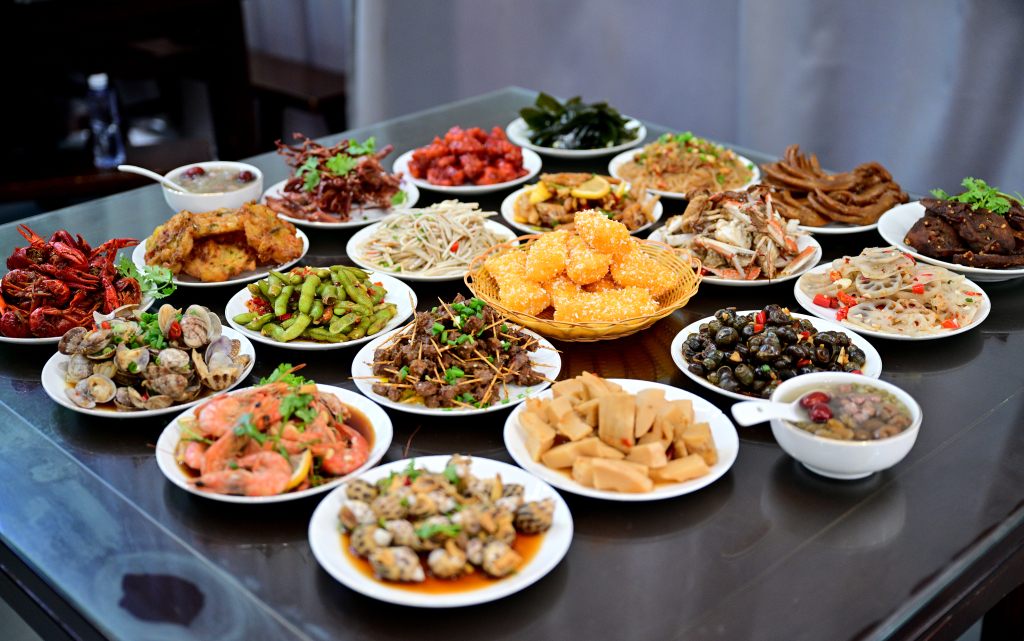
Jiangxi xiaochao — home-style dishes blasted over a roaring wok.
Jiangxi xiaochao (江西小炒) — "small stir-fries" — is the heart of the cuisine: home-style dishes blasted over a screaming wok, heavy on fresh chilli, garlic, ginger and pickled trimmings, served fast and meant for sharing. The room tells you how it works. A refrigerated display case sits by the door with trays of pork, river fish, greens, bamboo shoots and mounds of red and green chillies; you point, a cook fires it, and the plate lands in under five minutes. Two people should order three or four dishes plus rice — and do ask for the rice (米饭, usually ¥1–3 a bowl), because it doesn't always arrive by itself. (More: Jiangxi xiaochao.)
Stir-fried pork with green chilli (青椒炒肉 / 小炒肉) — thin-sliced pork belly tossed with sliced green chillies and fermented black beans. This is the benchmark dish: if a kitchen can't do this one, walk out. Lunch or dinner. Medium-hot, and remember that chilli is a vegetable here, not a seasoning, so the plate may be half meat and half pepper — say 少辣. Typically ¥28–38. Yes, if you eat spice at all.
Stir-fried yellow beef (小炒黄牛肉) — slivered beef seared hard with red and green chilli and ginger, often served over rice noodles. Lunch or dinner. Hot; order 少辣 and mean it. Typically ¥38–58. Yes, with something mild alongside as ballast.
Three-cup chicken (三杯鸡) — bone-in chicken simmered with one cup each of rice wine, soy sauce and sesame oil, then finished with a fistful of basil. It comes from Ningdu in southern Jiangxi, went on to become famous by way of Taiwan, and locals will make sure you know where it was born. Lunch or dinner. Mild, essentially no chilli. Typically ¥48–78. The safest big dish on the table — order it first if your group's heat tolerance varies.
Steamed pork with rice flour (粉蒸肉 / 米粉蒸肉) — pork belly coated in toasted ground rice and steamed until it gives way under a chopstick. Lunch or dinner. Mild. Typically ¥28–42. Yes — the gentlest way to understand why this province is so committed to rice.
Lihao with cured pork (藜蒿炒腊肉) — the dish that belongs to Nanchang and almost nowhere else: crunchy hollow stems of marsh artemisia from the Poyang Lake shallows, stir-fried with smoky cured pork until the greens squeak against your teeth. There's a local line about it — 鄱阳湖的草,南昌人的宝, Poyang Lake's grass, Nanchang people's treasure — and a blunter rhyme about the season: first lunar month a delicacy, second month a herb, third and fourth months you may as well burn the stalks for firewood. Lunch or dinner, and strictly seasonal: cultivated stems show up from around December, the wild lake ones peak in late winter and early spring, and by roughly April the window shuts. Mild to medium. Roughly ¥40–60 a plate. Order it the moment you see it on a menu — nothing else on a Chinese table tastes quite like it, and you can't get it in July.
Poyang Lake fish head with chopped chilli (鄱湖胖鱼头) — a whole freshwater fish head smothered in chopped red chilli and steamed, arriving in a basin for the whole table. Dinner, for a group. Hot. Typically ¥68–128, sized for sharing. Only with four or more people, and only if you're patient with bones.
Crisp lotus root (脆藕片) — Jiangxi grows a great deal of lotus, and the slices arrive cold and snapping, tossed with vinegar, garlic and a little dried chilli. Any meal. Mild. Typically ¥18–28. Yes — this is the fire extinguisher, one per table.
Duck, several ways (啤酒烧鸭 / 谷酒烧鸭 / 莲花血鸭) — Jiangxi braises duck in beer, braises it in fragrant grain liquor, and, in the Pingxiang version, stir-fries it with its own blood into a dark, rich sauce. Dinner, always shared. Medium-hot. A sharing plate in the same band as three-cup chicken, so budget ¥48–78. Beer-braised duck is the easy entry point; blood duck is the acquired taste — order it if you're the sort of traveller who'd regret not trying.
After dark: the night-market plate
Nanchang eats late and outside. The markets fill after about 8pm and run past midnight, and this is where your cheapest and most memorable meal is likely to happen. (Market by market: Nanchang after dark.)
- Stir-fried river snails (炒螺蛳) — the local night-time obsession, cooked in a fiery sauce and eaten by sucking the meat straight out of the shell. Late night. Hot. Most night-market plates run ¥5–30. Adventurous — messy, loud, worth it.
- Charcoal skewers (烧烤) — lamb, chicken wings, aubergine, tofu, whole small fish, grilled to order from about 9pm. Late night. Ask for 微辣 (wēi là) if you want the cumin without the burn. Priced by the stick; five or six between two people is a fair start. Yes.
- Crayfish (小龙虾) — summer only, by the spicy bucketful, roughly late spring to early autumn. Late night. Hot. Sold by weight at market price, so ask first: it's the one stall item that can quietly add up. Yes, with a table of friends and a stack of napkins.
- Iced bingfen (冰粉) and cold-skin noodles (凉皮) — the cool-down course: a wobbly iced jelly under brown sugar, or chewy cold noodles in vinegar and sesame. Late night, and all summer. Not spicy, though say so for the liangpi. Usually ¥5–15. Yes — order one the moment the chilli catches up with you.
Snacks and sweets to eat standing up
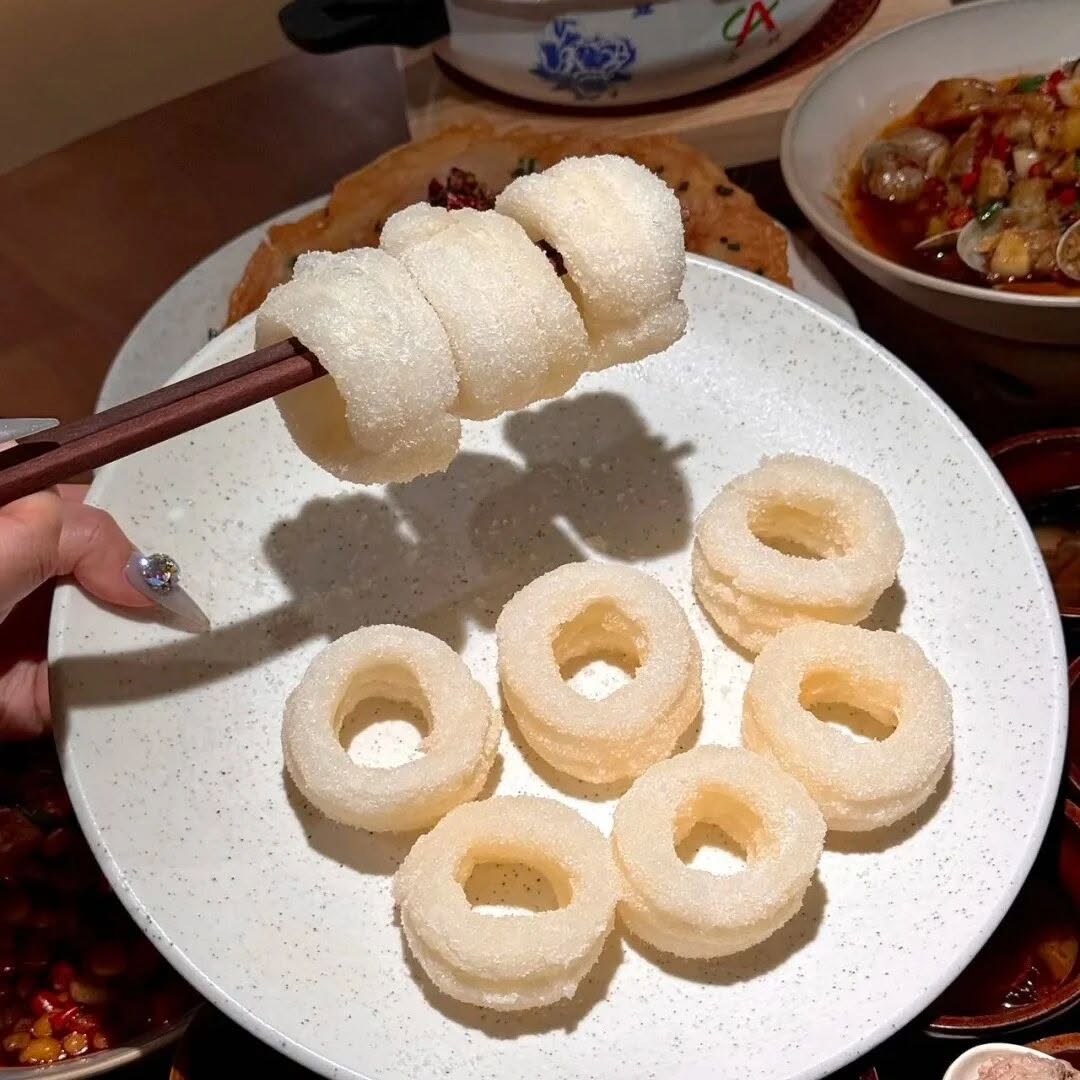
Baitanggao — fermented rice-flour cakes fried crisp and dusted with sugar. Eat them hot.
Between the sit-down meals runs a whole layer of food eaten on foot, most of it ¥1–8. One rule covers all of it: buy from the vendor frying to order, never off a cold tray. (The full hit-list: Nanchang street snacks.)
- White sugar cake (白糖糕) — fermented rice-flour batter ladled into hot oil, where it balloons into something shattery outside and faintly chewy within, then gets dusted with sugar. Not the soft steamed Cantonese cake of the same name. All day, and classic beside a breakfast bowl. Not spicy. Usually ¥1–2 a piece. Yes, immediately — and eat it hot, because cold it turns dense and sad. (The snack, in full.)
- Egg burger (鸡蛋汉堡) — batter and a cracked egg cooked in a round iron mould and folded around savoury filling; a Nanchang cart icon and nothing like a Western burger. Breakfast and afternoon. Mild. About ¥3–5. Yes.
- Hand-made soup dumplings (手工汤包) — thin-skinned steamed buns holding pork and a mouthful of scalding broth; bite a small hole first and let the steam out. Breakfast. Mild. In the ¥1–8 street-snack band. Yes.
- Sesame balls (麻圆 / 麻团) — glutinous rice balls rolled in sesame and deep-fried, crisp then chewy. Anytime. Not spicy. ¥1–8. Yes, and the reliable choice for kids.
- Youtiao and soy milk (油条 + 豆浆) — the universal Chinese breakfast, done the local way: dunk one in the other. Breakfast. Not spicy. A few yuan. Yes — the fallback on a morning when chilli is out of the question.
Where to eat it
Following the queue genuinely works here: a counter with a morning line of people in work clothes is telling you something no list can. But you shouldn't have to gamble on day one, so here are the neighbourhoods and a few attested names. If you would rather have the restaurants than the neighbourhoods, our shortlist of where to eat in Nanchang works from the two Chinese restaurant-award lists instead of from a wander.
The food streets. The lanes around Shengjin Tower (绳金塔) hold the densest concentration of soup-and-noodle shops in the city, with a hundred-odd stall vendors mixed in; take Metro Line 3 or Line 4 to Shengjinta station (they interchange there) and walk out. Wanshou Palace (万寿宫) — red lanterns, grey-tiled lanes, a few minutes on foot from Wanshougong station on Line 1 — is the prettiest place to graze, though it's a restored block and some stalls skew tourist-facing; the plainer counters a street back are usually better value. Hama Jie (蛤蟆街, officially Yuzhang Houjie 豫章后街) is the opposite of pretty: a 330-metre downtown strip within walking distance of Tengwang Pavilion, the city's original late-night canteen, forty-odd stalls doing river snails, beef fried noodles and skewers for ¥5–30. Zijing Night Market (紫荆夜市), out by the university campuses in the Jingkai zone, is the giant — 100-plus stalls under red canopies, a ¥5 bowl of liangpi, food from all over China — and worth the taxi if you've brought a serious appetite.
For breakfast. Zhou Zhenzhen (周真真南昌拌粉·瓦罐汤) is the traveller-friendly chain: banfen from about ¥5, beef around ¥12, served in enamel bowls, and named to the Dianping 必吃榜 Must-Eat List three years running (2019–2021). Wanfangyuan (万方圆) keeps a flagship on Rongmen Road (榕门路) near Tengwang Pavilion, around ¥26 a head for a full spread of noodles and soups. If you'd rather an old counter than a chain, Long Lao Wu (龙老五汤店) on Zhanqian West Road (站前西路) has been ladling crock soup since 1989 — an egg-and-pork-cake pot around ¥7, a full meal easily under ¥30.
For a proper Gan-cuisine meal. Jiachangfan (家常饭), at 495 Minde Road and 141 Ruzi Road, is the locally loved home-style option at roughly ¥45–55 a head; the Ruzi Road branch runs 10:30–14:30 and 17:30–21:00. Hui Jia Chi Fan (回家吃饭·地道南昌菜) at 139 Jiandeguan Street is a Dianping Must-Eat honouree cooking traditional Nanchang dishes at about ¥76 a head. Lanbianwan (蓝边碗) — the Nanchang-born brand now expanding across China as "Jiangxi Xiaochao King" — has several mall branches at ¥60–65 a head, including one in Honggutan, which makes it the easy choice if you're staying on that side of the river.
Small Chinese restaurants move, rebrand and change their hours constantly. These addresses were checked against Dianping and Ctrip listings in 2026 — search the Chinese name on Amap or Dianping the same day before making a special trip.
How spicy is it, really — and how to order
Spicier than most visitors expect. Jiangxi treats fresh chilli as a vegetable rather than a seasoning, so "a little spicy" is not a figure of speech. The burn is clean and fresh-peppered rather than the numbing tingle of Sichuan peppercorn, but it builds through a meal, and it will find you again on day two.
Three phrases carry you: 少辣 (shǎo là) for less, 微辣 (wēi là) for mild, 不要辣 (bú yào là) for none. At noodle counters this genuinely works, because the chilli goes on at the end. At a stir-fry restaurant, build a balanced table instead: one or two fiery dishes, then three-cup chicken or steamed pork with rice flour as ballast, lotus root as the cooling foil, and enough rice. Portions are generous and half the pleasure is grazing across several stops, so under-order rather than over-order — you can always add a plate.
Practical notes for eating out
- Ordering. Many places have picture menus or a QR-code digital menu you can scan and translate, and point-and-choose is normal even at small local restaurants — at xiaochao places you order by pointing at the display case. Nobody minds that you don't speak Chinese; hold up fingers for quantity.
- Water. Don't drink the tap water. Restaurants serve hot boiled water or tea as a matter of course, and bottled water costs about ¥2–3 anywhere.
- Tipping. Not a thing in China. Don't leave money on the table — staff will chase you down the street to give it back.
- Meal times. Lunch runs roughly 11:30 to 13:30, dinner starts around 17:30, and plenty of small restaurants shut completely in between. A 15:00 lunch usually means a noodle counter or a market, not a sit-down meal.
- Vegetarians. Options are limited compared with Western cities. Temple restaurants serve proper vegetarian meals, most noodle shops will make a plain bowl on request, and the fried snacks — sugar cake, sesame balls, youtiao — are meat-free, though fryers and griddles are shared. Learn 我吃素 (wǒ chī sù), "I'm vegetarian." It helps to know that cured pork and lard turn up in plenty of dishes that read as vegetable dishes.
- Paying. WeChat Pay and Alipay work almost everywhere, street carts included, and both now accept linked international cards. Carry a little cash in small notes anyway — the tiniest stalls sometimes use a personal QR that declines foreign-linked cards.
A day of eating, if you want it planned
- 07:00 — breakfast on a plastic stool. Banfen plus a crock soup at any busy neighbourhood counter. Under ¥10, four minutes to eat, and the best introduction the city offers.
- 09:30 — a sugar cake, hot. Find a fryer on a food street or at the edge of a wet market. ¥1–2, eaten standing.
- 12:00 — xiaochao lunch. Green-chilli pork, three-cup chicken, crisp lotus root and rice for two, around ¥50 a head. Order 少辣 on the first dish and adjust upward tomorrow.
- 16:00 — the cool-down. Iced bingfen, or a pot of clay-pot soup if the chilli has been winning.
- 19:00 — the pretty graze. Wanshou Palace or the Shengjin Tower lanes with the lanterns on; small plates from several stalls rather than one big meal.
- 21:30 — the real one. Hama Jie for river snails, beef fried noodles, a handful of skewers and a cold local beer. Stop when the stools do, sometime after midnight.
Worth it?
Eating is the single best thing you'll do in Nanchang — cheaper, more memorable and more local than any ticketed sight. Build a day around it: breakfast banfen, a xiaochao lunch, a night-market graze. Pair this with our guides to rice noodles, xiaochao, white sugar cake, street snacks and the night markets, browse the rest of Eat & Play, or let us plan a food route for you.
FAQ
What food is Nanchang famous for? Rice noodles (拌粉), clay-pot soup (瓦罐汤), fiery Jiangxi xiaochao (江西小炒), lihao with cured pork (藜蒿炒腊肉), three-cup chicken (三杯鸡) and white sugar cake (白糖糕) — cheap, chilli-forward Gan (Jiangxi) cooking.
Is Nanchang food very spicy? Often, yes — Jiangxi rivals Hunan and Sichuan for chilli, and fresh peppers are used as a vegetable rather than a seasoning. Ask for 少辣 (less), 微辣 (mild) or 不要辣 (none), and keep a mild dish and plenty of rice on the table.
How much does it cost to eat in Nanchang? A noodle-and-soup breakfast is under ¥10, street snacks are ¥1–8, a stir-fry lunch runs about ¥50 a head, and most night-market plates are ¥5–30. Prices drift with the year and the neighbourhood, so treat these as ranges rather than promises.
Where should I eat in Nanchang? The food streets around Shengjin Tower (Metro Line 2) and Wanshou Palace (Line 1), Hama Jie downtown for the old-school night market, and Zijing Night Market if you'll travel for it — plus any busy local breakfast counter with a queue.
What's a good first dish to try? A bowl of banfen with a pot of clay-pot soup. It's the city in a bowl, it costs under ¥10, and the soup is completely mild if the noodles turn out hotter than you bargained for.
When can I eat lihao with cured pork? It's seasonal. Stems appear around December, the wild Poyang Lake ones are best in late winter and early spring, and by about April the season is over and it comes off menus.
Last verified: 2026-08 — prices, shops and hours change; please double-check locally before you go.