Nanchang Street Food Snacks: What to Eat
The fried, griddled and steamed snacks that fuel Nanchang — soup dumplings, egg burgers, sesame balls and more, and where to find them.
By Hello Nanchang · Last updated
Breakfast on your feet
At a folding griddle outside Metro Central station (地铁大厦), where Lines 1 and 2 cross under Honggutan, a middle-aged couple work in silence and at speed. One of them cracks eggs into a hot iron mould — two rows of yolks going glassy at once. The other drops a spoon of seasoned pork onto each, caps it with a lid of batter, and turns the whole thing out as a golden puck the size of a fist. There is nearly always a queue. Nobody in it is reading a menu, because there isn't one.
Nanchang eats on the move. Between the sit-down bowls of rice noodles and the night-market stir-fries there's a whole world of grab-and-go snacks — fried, griddled, steamed, wrapped in paper and eaten while walking — and a morning spent grazing them is one of the cheapest pleasures the city offers. Most single items cost between ¥1 and ¥8. You can work through six of them for the price of one airport coffee, and you'll remember them for longer.
Here's what to point at, when to go looking for it, and the exact lanes where the stalls cluster thickest.
The clock — when the good stuff is actually out
This is the part most snack lists leave out, and it's the part that decides whether your morning works. Nanchang's street food runs on shifts, and turning up at the wrong hour gets you a cold tray and a shrug.
- Around 6:00–9:00 — the real rush. Breakfast shops start pulling their shutters up around six; by seven the stools are full and the fryers are going flat out. On the old food lanes the prep starts long before that — one Dashiyuan stallholder told a local paper they're up at two in the morning prepping and don't finish until eight at night. This is the window with the widest choice and the freshest everything.
- Around 9:00–11:00 — the tail end. Still good, thinner queues, but the morning-only shops (some of the best rice-noodle counters among them) start selling out and shutting. If there's one specific place you're chasing, get there before nine.
- Midday to mid-afternoon — the lull. The dedicated breakfast trade largely disappears. What's left is the all-day stuff: fried skewers, boiled-snack shops, soup-dumpling counters, mall food courts.
- Around 16:00–19:00 — the cart shift. The griddle carts come back out for the school run and the commute home — egg burgers, toasted buns, fried skewers, sugar cakes. Different crowd, same food, better light for photographs.
- After dark — the whole thing turns into Nanchang's night-market scene: stools on the pavement, woks roaring, stir-fried river snails and skewers until midnight.
One rule beats all the others: buy from the pan, not the tray. A vendor frying to order is worth a five-minute wait; a stack of the same thing going soft under a heat lamp is not. If you can't see it being cooked, walk on — there's another one fifty metres along.
A morning graze through Dashiyuan (大士院)
If you only do one snack walk in Nanchang, do this one. Dashiyuan is an old residential lane in the Donghu district, a few hundred metres of shopfronts running between Shengli Road and Rongmen Road, close enough to Tengwang Pavilion and the river to fold into a half-day. It's narrow — three metres across in places — so on a busy morning you shuffle. A recent facelift gave it a deliberately Eighties look (repainted walls, a mock-antique gateway) and pushed the shop count past five hundred. It is emphatically not a secret — a majority of its visitors now come from outside Nanchang. Go early on a weekday and it still belongs to the neighbourhood.
A simple 60–90-minute route
- Ride Line 1 to Wanshougong (Wanshou Palace) station and walk 10–15 minutes through the old-town grid toward Tengwang Pavilion. Chinese trip reports route it this way, and it's old blocks the whole distance, shaded on both sides — which matters a great deal in a Nanchang summer.
- Start at the mouth of the lane with the mung-bean cakes. Tao Ji (陶记绿豆饼) sits right at the entrance and is hard to miss — a griddle laid out with rows of sesame-topped discs and a queue that forms most days. Reckon on roughly ¥20-plus for a mixed box. The plain mung-bean filling is the one locals rate; the purple sweet potato and taro versions look better than they taste.
- Then the sugar cakes. Old Nanchang White Sugar Cake (老南昌白糖糕) fries them to order at about ¥1 a piece, and the wait can run to a quarter of an hour at peak. Worth it, and worth reading the full story of baitanggao before you burn your fingers on one.
- Get an egg youtiao while it's still dripping. The alum-free egg fritter stall (无矾鸡蛋油条) is a Dashiyuan fixture — a savoury cruller with egg worked through the dough. Eat it standing, within about ninety seconds of it leaving the oil.
- Take a crock of soup with you. The old soup houses along here — Xiao Luozi (小罗子汤店), Yuzhang Da Lao Wu (豫章大老五煨汤店) — sell clay-pot soup by the pot, lid off, steam curling. Pork-rib-and-lotus-root is the safe first order.
- Finish sitting down, with noodles. Duck into one of the rice-noodle counters — Lao Sanyuan (老三院拌粉) is the classic — and order banfen, the cold-tossed chilli-oil rice noodles the whole province wakes up on. Say 少辣 (shǎo là) if you want it toned down; say nothing and you'll get the local calibration, which is not gentle.
Two people can eat their way down the lane for roughly ¥30–50 all in. There's a local line about the combination that says it better than any menu: 嗦碗粉喝罐汤,炸根油条配豆浆 — slurp a bowl of noodles and drink a pot of soup, fry a stick of youtiao and pair it with soy milk. That's the whole morning in fourteen characters.
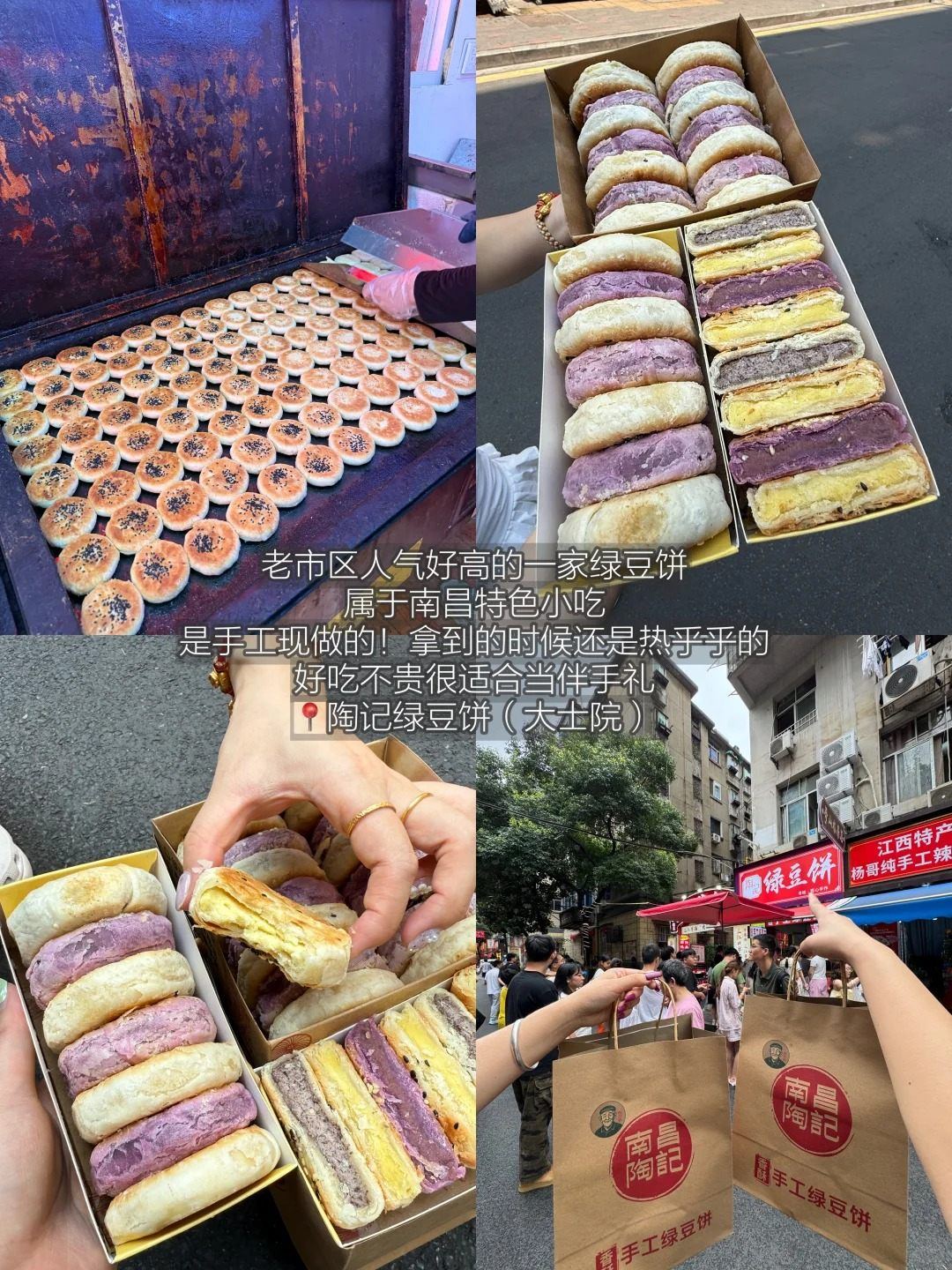
Tao Ji (陶记绿豆饼) at the mouth of Dashiyuan — cakes griddled in rows, boxed while still warm, and carried off in branded paper bags. · Photo: Hello Nanchang
Three more places where the snacks cluster
- Shengjin Tower (绳金塔). Come up from Shengjinta metro station (Lines 3 and 4), Exit 3, and the food street starts more or less at the top of the steps, with the seven-tiered pagoda rising behind it. It's the tidiest of the old-town grazing grounds and the easiest to combine with an actual sight — see the full Shengjin Tower guide. Best in the late afternoon, when the light warms the brick and the fryers restart.
- Wanshou Palace (万寿宫). Take Line 1 to Wanshougong — the historic block sits essentially on top of the station, about five minutes' walk. Chinese guides send you out of Exit 1, some English sources say Exit 3; just follow the in-station signage for the historic district. Prettiest after sunset, when the lanterns come on. Details in the Wanshou Palace guide.
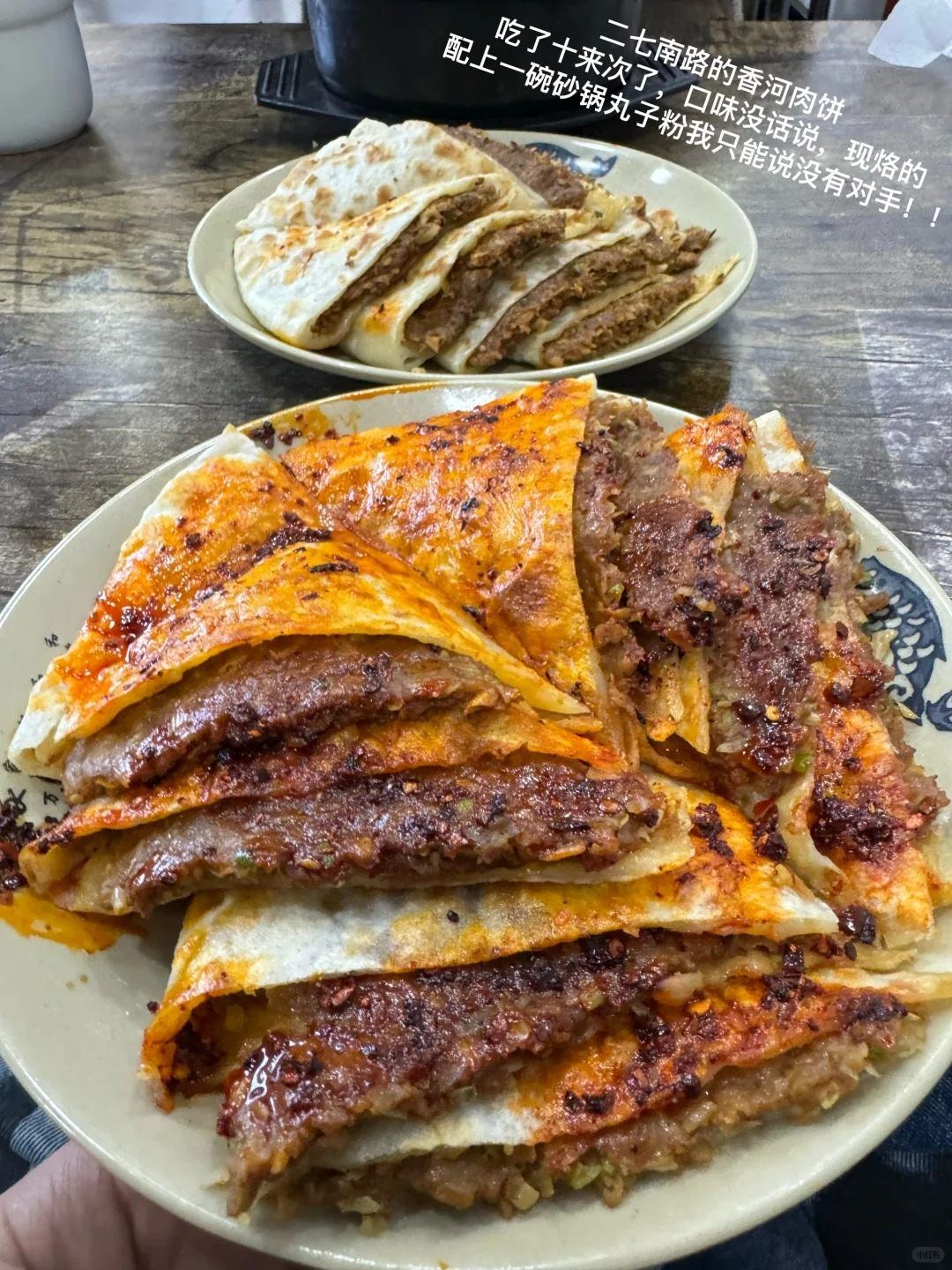
- Erqi South Road (二七南路). The long street running south from Nanchang Railway Station (Line 2) is where you eat if you've just come off a train — no lanterns, no restoration, just working shopfronts. It's the sort of street where a griddle shop turns out xianghe roubing (香河肉饼) — the meat pancake in the list below — and regulars pair it with a clay-pot bowl of meatball noodles.
The snacks to hunt for
Roughly in order of how easy they are on a first-timer.
Start here
- Hand-made soup dumplings (手工汤包) — thin-skinned steamed buns holding pork and a mouthful of hot broth. Breakfast, mostly. Bite a small hole first and let the steam out, or you'll wear it. Around ¥10–20 a basket. Wei Yu Chang (味豫昌手工汤包) is the local chain that made its name on wrapping them by hand, with branches around the city including one in Honggutan. About as first-timer-friendly as this list gets.
- Griddled mantou and flower rolls (烤馒头 / 烤花卷) — plain steamed buns and scallion rolls split and pressed onto a hot plate until the outside goes crackly-brown and faintly sweet. Afternoon-cart food more than breakfast food. About ¥2 a piece. No chilli unless you ask. The easiest thing on this list to hand to a nervous child.
- Mung-bean cakes (绿豆饼) — flat, flaky, palm-sized pastries with a dense sweet bean filling, sold hot off the griddle and boxed for taking home. All day. The best edible souvenir in the city, and the only snack here that survives the trip.
- White sugar cake (白糖糕) — fermented rice-flour batter dropped into hot oil, crisp outside, chewy inside, dusted with sugar. Breakfast through late afternoon, about ¥1–2. It has its own story here. Eat it hot or don't bother.
- Youtiao and soy milk (油条 + 豆浆) — the universal Chinese breakfast, done the Nanchang way, often with egg worked into the dough. Morning only. A few yuan for both. Dunk one in the other.
- Sesame balls (麻圆 / 麻团) — glutinous rice balls rolled in sesame and deep-fried: shattery outside, stretchy within, barely sweet. All day, ¥2–5.
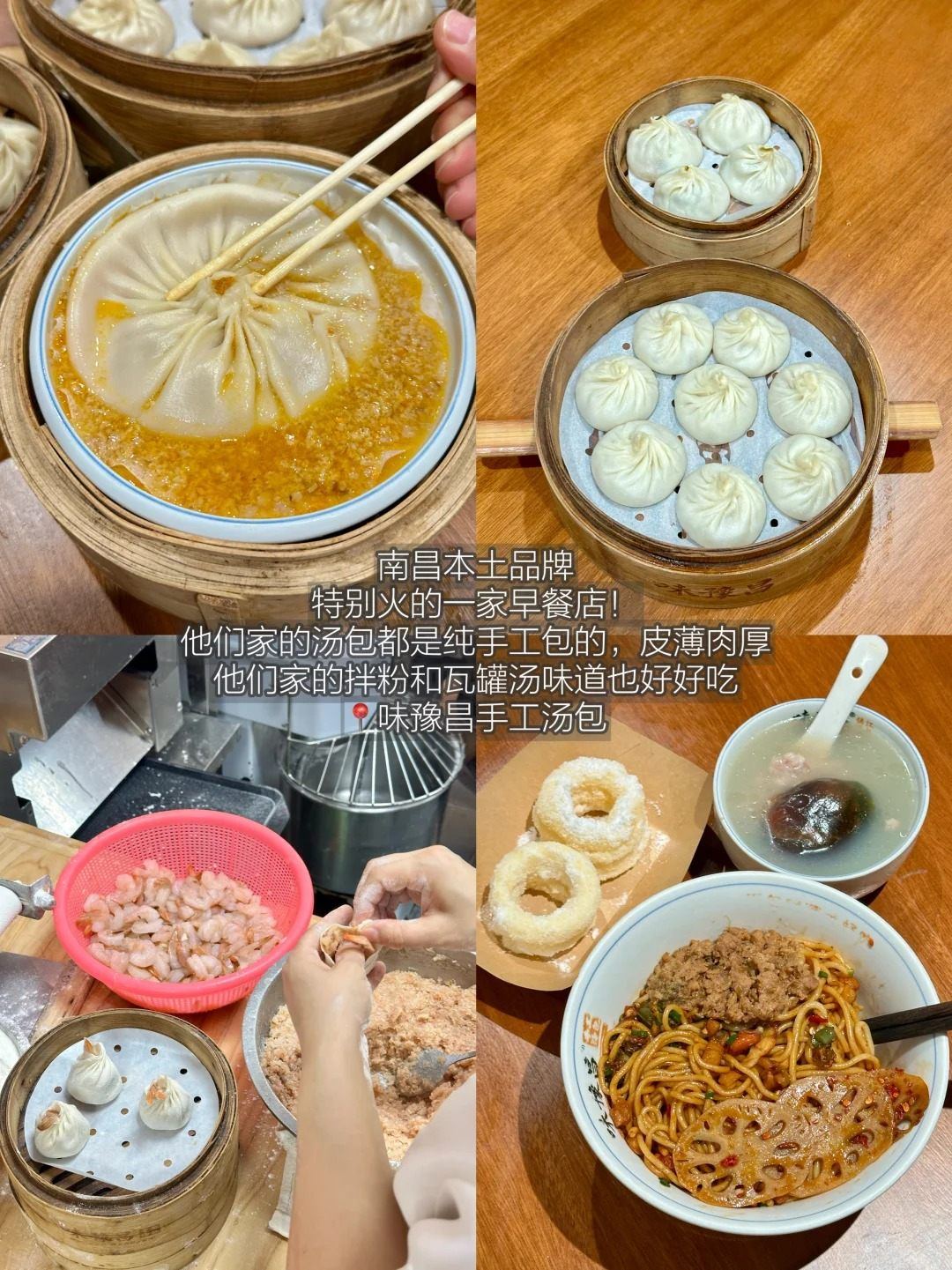
Hand-wrapped soup dumplings at Wei Yu Chang (味豫昌手工汤包) — with the mixed noodles and clay-pot soup that usually arrive alongside them. · Photo: Hello Nanchang
Then go savoury
- Egg burger (鸡蛋汉堡) — a Nanchang street-cart icon and nothing whatsoever like a Western burger: batter and a cracked egg cooked in a round iron mould, folded around a seasoned pork patty, then loaded to order with coriander, pickle, chilli sauce and a stripe of mayo. Breakfast and again at the after-work rush. Roughly ¥3–6 depending on the cart. Say 不要辣 (bú yào là) for no chilli. Cheap, hot and genuinely filling — the single best-value thing on this page.
- Youtiao wrapped around mochi (油条包麻糍) — a Jiangxi carbohydrate special: warm glutinous mochi tumbled in sesame, sugar and crushed peanut, then wrapped inside a length of savoury fried cruller. Sweet and salty at once, around ¥5, sold from mid-morning. Odd on paper, excellent in the hand.
- Fried skewers and balls (炸串 / 炸丸子) — fish balls, meatballs, tofu twists and sausage on bamboo sticks, dropped into the fryer and then dusted with chilli-and-cumin powder. All day into the evening, ¥2–5 a stick. Point at the raw basket, hold up fingers, and say 少辣 if you want the powder gone light. The dusting is where the heat lives, not the food.
- Boiled snacks (水煮) — the quieter cousin of malatang: rice-cake sticks, hollow macaroni-like noodles, fish balls and sausage simmered in a red chilli broth and ladled into a paper bowl. All day, roughly ¥8–15 depending on what goes in. These are neighbourhood shops rather than tourist stops — Dashiyuan's Xiao Qiu (小邱水煮) is one of the names locals throw around. More local than beginner-friendly, and worth the step up.
- Griddled meat pancake (香河肉饼) — a thin, wide pancake of dough and seasoned beef or pork with plenty of scallion, pressed on a flat top until the outside blisters and the inside runs juicy, then cut in wedges. Lunch and dinner rather than breakfast, ¥15–25 for a whole one to share. Not a Nanchang invention — it came south with northern cooks — but the city adopted it enthusiastically.
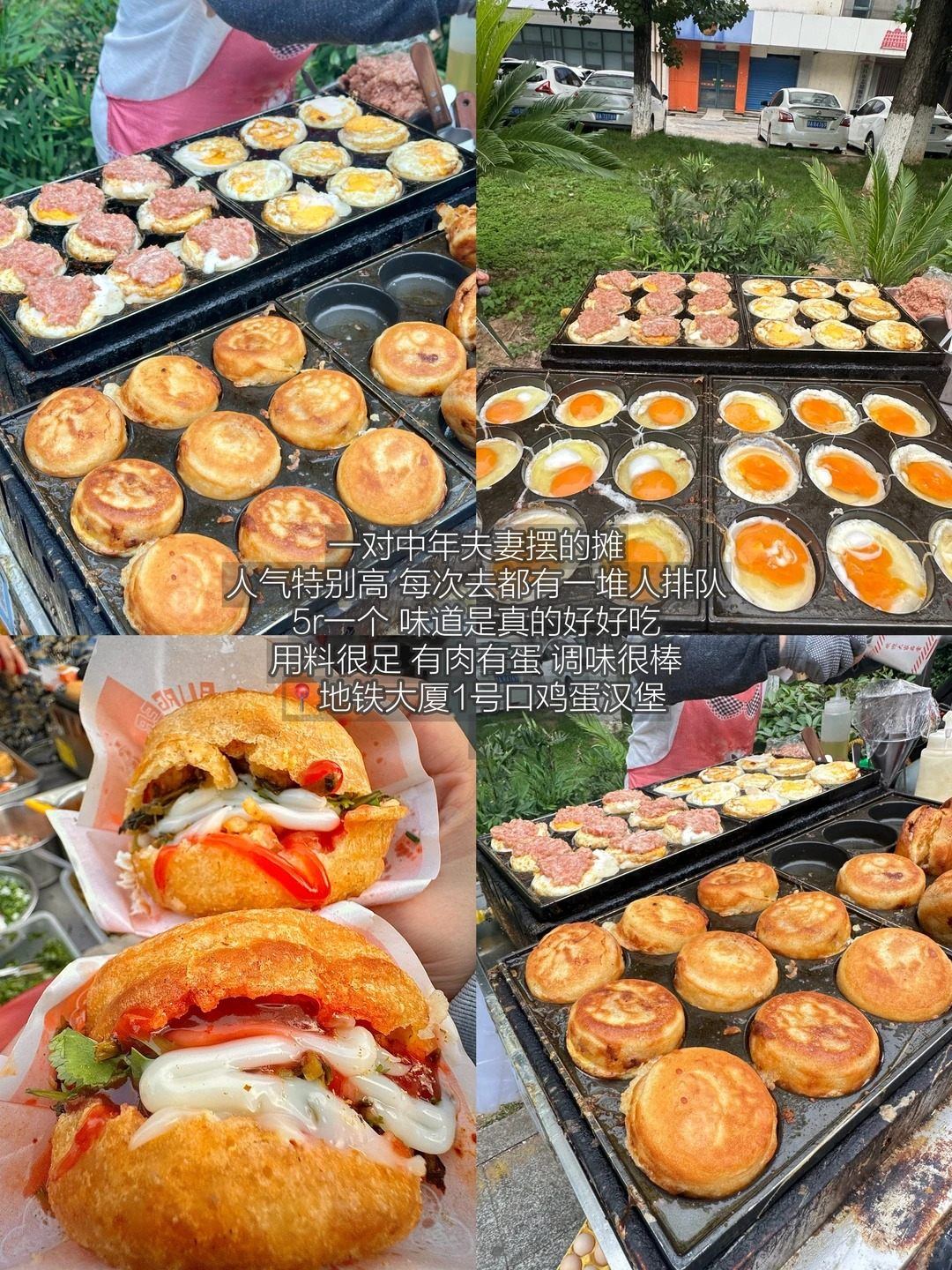
The egg-burger cart outside Metro Central station (地铁大厦), where Lines 1 and 2 meet in Honggutan — eggs into the mould, pork on top, around ¥5 each. The couple who run it work the Exit 1 side; carts move, so follow the queue. · Photo: Hello Nanchang
When you'd rather sit down
Grazing is fun until the fourth thing on a stick, at which point a chair helps. Two easy landings:
- Old-style malatang (老式麻辣烫) — a big bowl of noodles, tofu skin, lotus root and greens in numbing chilli broth. The useful trick: most shops offer both a fixed-price bowl (often somewhere around ¥18–25) and a self-select tray priced by weight. Order the fixed bowl. The self-select tray is how a ¥20 lunch quietly becomes a ¥60 one.
- Rice noodles, properly — a bowl of banfen and a clay pot of soup, four minutes flat, around ¥6 for the noodles. It's the meal the whole city is built on, and we've written it up in detail in the Nanchang rice noodles guide.
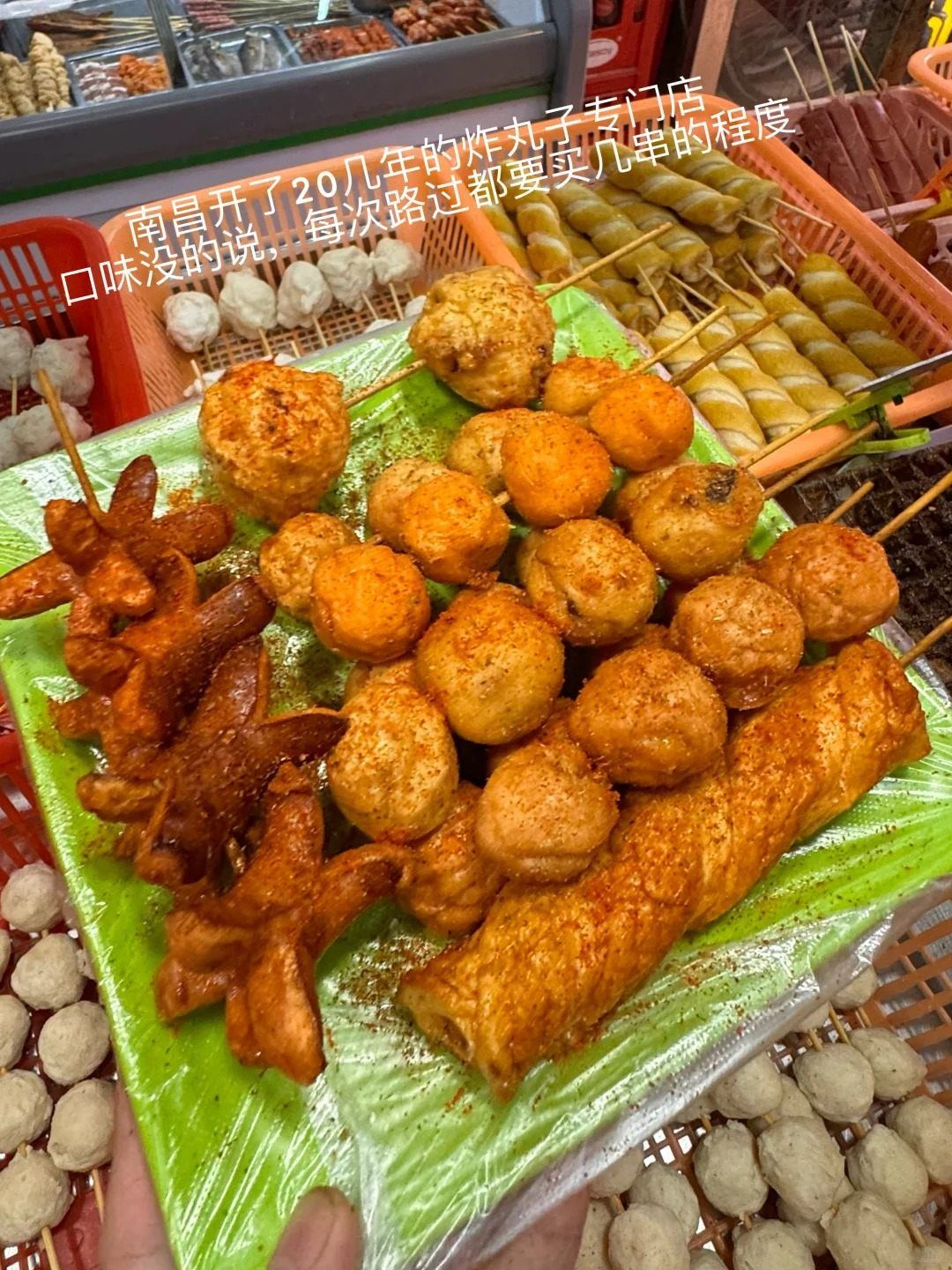
Fried balls, tofu twists and skewers, dusted with chilli-and-cumin powder and eaten straight off the stick — the baskets behind hold what hasn't gone in the fryer yet. · Photo: Hello Nanchang
How to buy any of this without a word of Chinese
- Point and count. Point at what's cooking, hold up fingers for how many. Nobody minds, and nobody is going to try to sell you a tour.
- Pay by phone. Alipay and WeChat Pay both take foreign cards now, and street vendors will show you a printed QR code. Carry ¥20–50 in small notes anyway — the oldest carts sometimes have neither a code nor change for a ¥100 note.
- Learn two phrases. 少辣 (shǎo là) = less chilli. 不要辣 (bú yào là) = no chilli. Nanchang's default heat level is higher than most visitors expect, and "not spicy" here is still a negotiation.
- Have a translation app open. Camera translation on a menu board works well enough; ingredient questions are where it earns its keep.
- Expect to stand. Most of this food has no seating and no bins — eat as you walk and hang onto the paper until you find one. Public toilets exist on the restored food streets; plan around them elsewhere.
- Getting between the lanes. Line 1 links Wanshougong and Metro Central; Lines 3 and 4 both stop at Shengjinta; Line 2 runs to the railway stations. Our Nanchang metro guide covers tickets, QR entry and last trains.
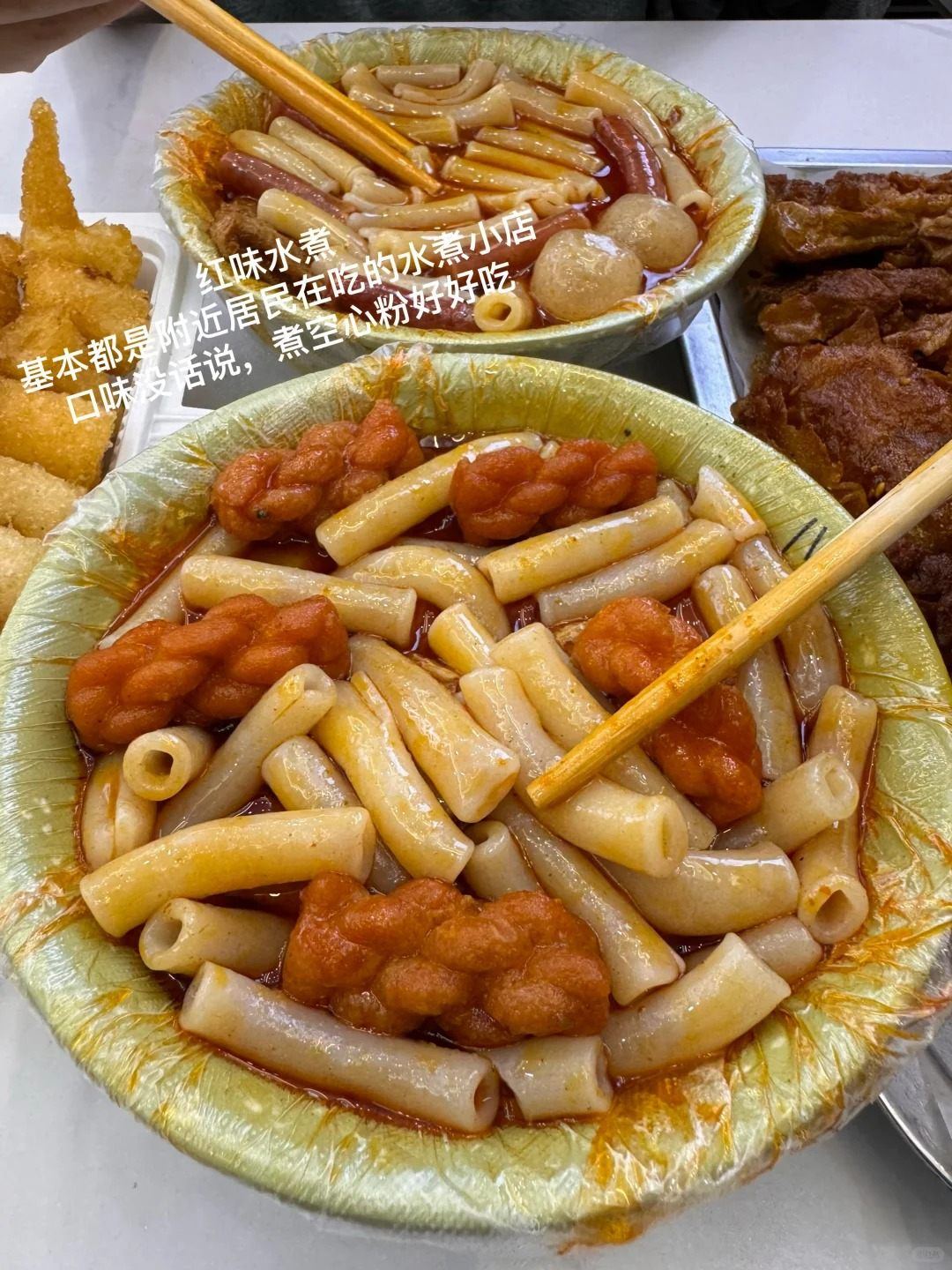
Shuizhu (水煮) — rice-cake sticks, hollow noodles and fried fish balls ladled out of a red chilli broth into a paper bowl, with tempura strips and braised tofu skin waiting alongside. · Photo: Hello Nanchang
What to skip, honestly
- Anything sitting on a cold tray. Repeating this because it's the single most common way visitors end up unimpressed by Nanchang street food.
- The self-select malatang tray, unless you're disciplined with tongs.
- Dashiyuan on a public holiday. Peak-season foot traffic on the old food lanes runs into the tens of thousands a day, and a three-metre lane does not absorb that. Go on a weekday morning instead.
- Ordering five things at the first stall. Buy one item per shop, share it, keep walking. The point of a graze is the range.
- Assuming "mild" travels. A dish described as not spicy by a stallholder can still be assertively chilli-forward. Ask, then ask again.
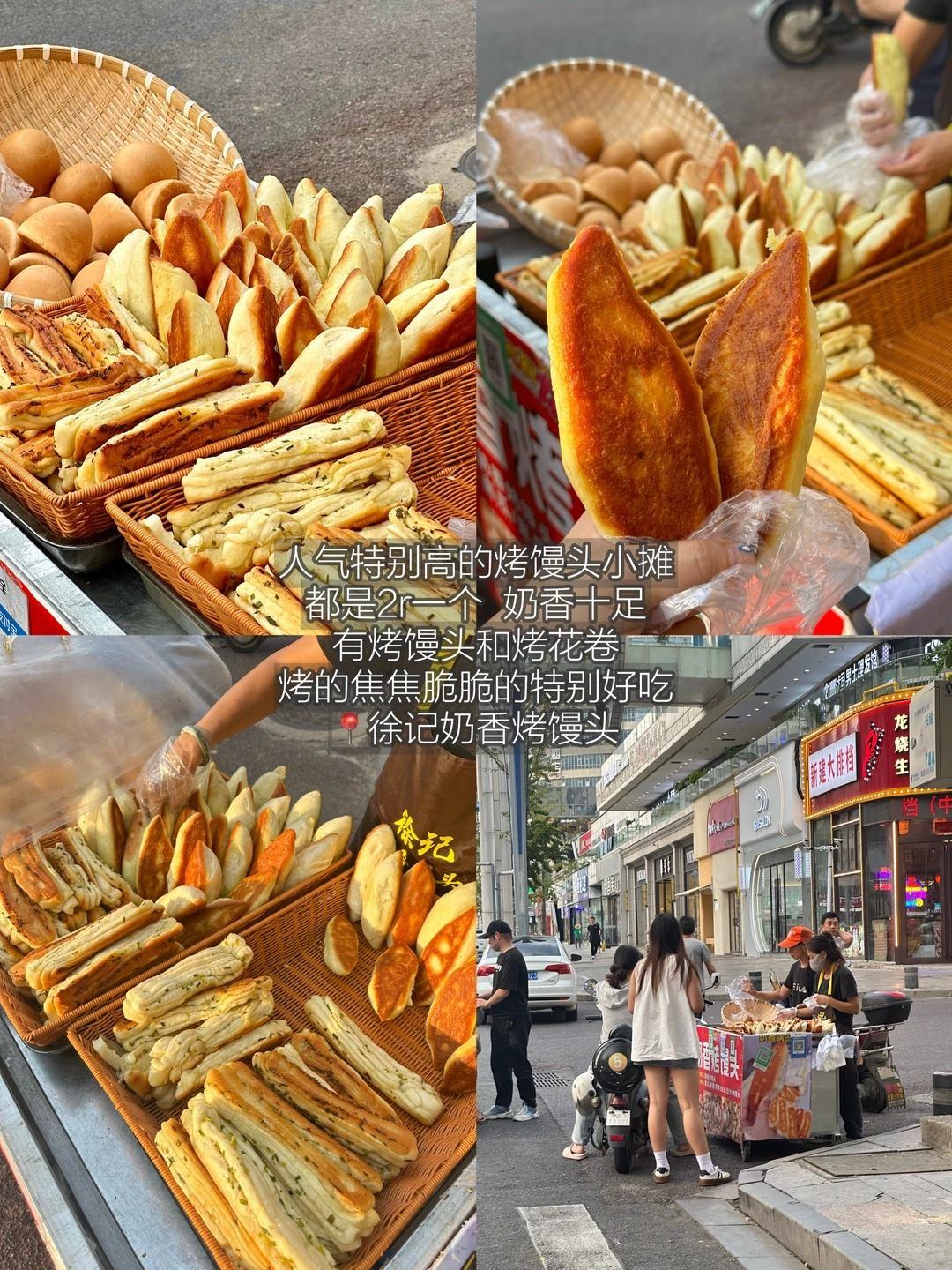
Griddled mantou and scallion flower rolls, about ¥2 each, from a cart that draws its own small crowd on the late-afternoon shift. · Photo: Hello Nanchang
Worth it?
Completely — this is everyday Nanchang at its most enjoyable and most affordable, and it's the part of the city that survives no matter what else gets renovated. Make a breakfast of three or four things, chase them with a bowl of banfen, and fold the lot into a wider graze through Nanchang's food scene. More ideas for the rest of your days are in Eat & Play. Want a snack route mapped around where you're staying, with the timings worked out? Plan your trip with us.
FAQ
What street snacks should I try in Nanchang? Start with the egg burger (鸡蛋汉堡), hand-made soup dumplings (手工汤包), griddled mantou (烤馒头), mung-bean cakes (绿豆饼), white sugar cake (白糖糕) and youtiao with soy milk. Then push on to fried skewers (炸串), boiled snacks (水煮) and youtiao wrapped around mochi (油条包麻糍).
Where's the best place to find them? Dashiyuan (大士院) in the old town is the densest single lane — Line 1 to Wanshougong, then a 10–15 minute walk. After that: the food street under Shengjin Tower (Shengjinta station on Lines 3 and 4, Exit 3), the Wanshou Palace block (Line 1, right on top of the station), and Erqi South Road by Nanchang Railway Station on Line 2.
What time of day should I go? Between about 6am and 9am for the widest choice — breakfast shops open around six and the morning-only ones start selling out after nine. The carts come back out roughly 4–7pm, and the night markets take over after dark.
How much does it cost, and how do I pay? Most single snacks are ¥1–8; a boxed set of mung-bean cakes or a full bowl of malatang costs more. Alipay and WeChat Pay work almost everywhere, but carry ¥20–50 in small notes for the oldest carts.
Are there vegetarian options? Plenty — sugar cake, sesame balls, mung-bean cakes, youtiao, plain griddled mantou and most of the sweets are meat-free. Ask if you're strict: griddles and fryers are shared, and broths are often pork-based.
Last verified: 2026-08 — stalls, prices, opening hours and metro exits change; please double-check locally before you go.