The Best Photo Spots in Nanchang
A photographer's guide to Nanchang: what to shoot and when the light is best, from the riverfront classics to the red-cypress 'floating forest.'
By Hello Nanchang · Last updated
Nanchang, Jiangxi, China · Year-round; best light at golden hour and the blue hour just after sunset
Where — and when — to point your camera
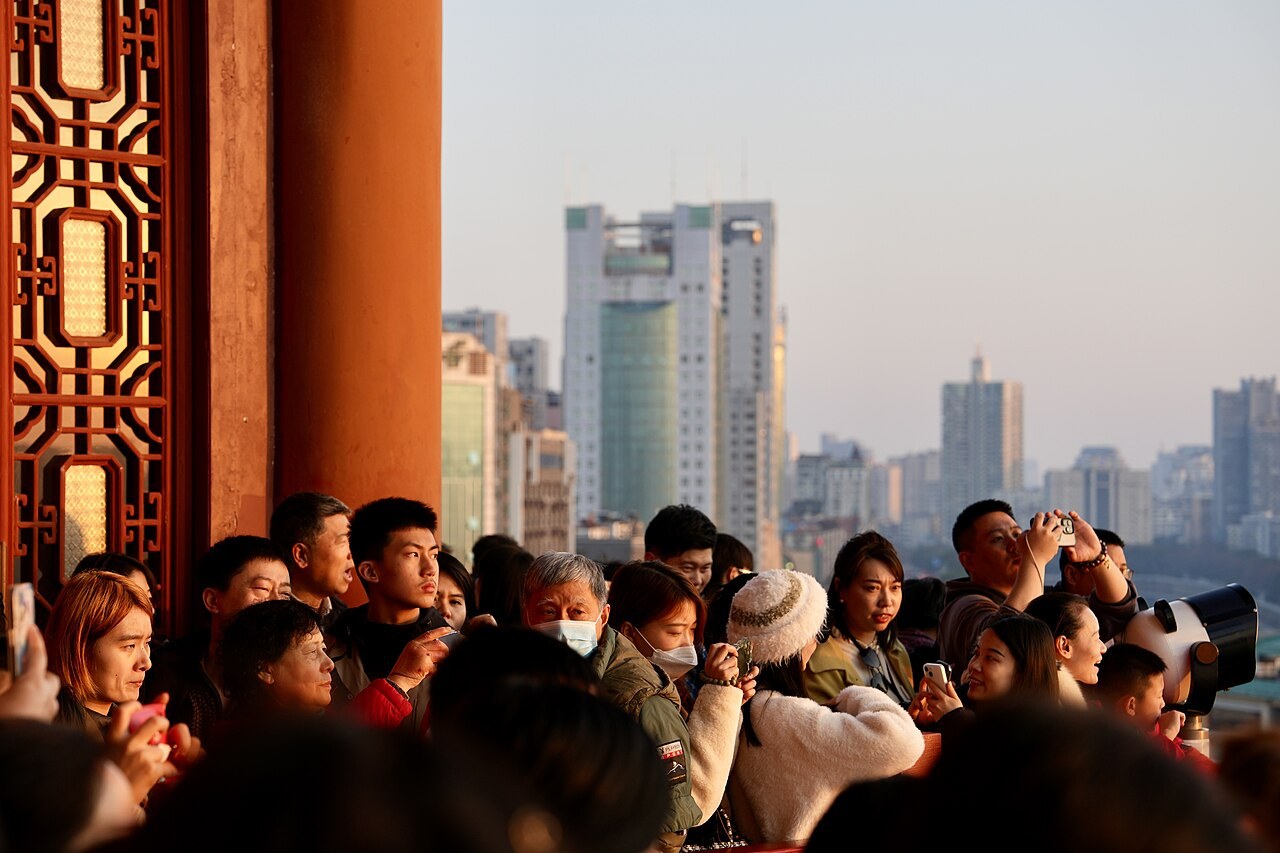
Come out of Tengwang Pavilion station about an hour before sunset and you will see both the problem and the answer at once. The pavilion's tiered roofs sit flat and grey against a white sky; the river is the colour of dishwater; nothing works. Then the sun drops behind the Honggutan towers, the tiles go copper, the water picks it up, and forty minutes later the whole far bank starts animating in unison like a slow firework. Nanchang is not a difficult city to photograph. It is a city with a narrow window, and the entire trick is standing in the right place when it opens.
Nanchang photographs best at the edges of the day: the blue hour after sunset, the gold of late afternoon, the neon of the night markets. But beyond the obvious riverfront shots, the city hides frames that almost no visitor finds — a "floating forest" that turns rust-red in early winter, a ginkgo avenue that drops a gold carpet next to a crane enclosure, a free classical garden on the south side, and a university gate 323 metres wide. Here is a photographer's map: what to shoot, when the light is best, which metro exit puts you closest, and two ready-made routes you can walk today.
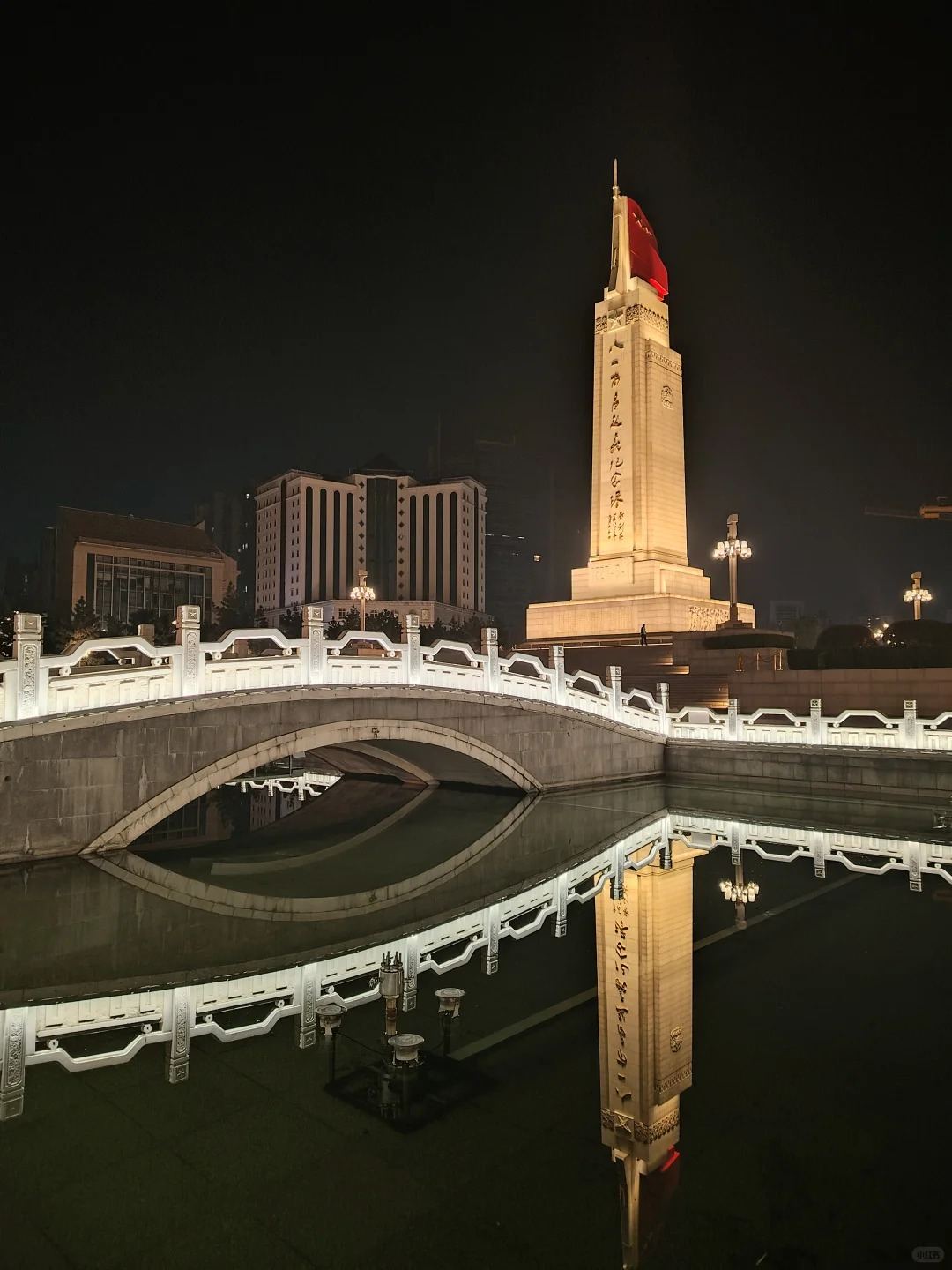
Blue hour at Bayi Square — Nanchang is at its most photogenic once the sun goes down.
First, the light: Nanchang's daily window
- Sunset moves a long way here. Nanchang sits at roughly 28.7°N, so the sun goes down around 5:30pm near the winter solstice and closer to 7:15pm in high summer. Check a sun app on the morning of your shoot — a forty-minute misjudgement is the difference between golden light and a car park.
- Blue hour is the money, and it is short. The 20–30 minutes after sunset — sky still holding colour, city lights already on — is when the riverfront, Bayi Square and the lantern lanes all peak at once. Be in position before the sun goes, not after.
- Summer is hazy and brutal; winter is clear and cold. July and August give dramatic skies and unshootable afternoons: work early, or after dark. Late autumn through winter brings the cleanest air, the sharpest skyline and the year's best colour in the trees.
- The day after rain is the best day of the month. Wet grey brick in the old lanes, a scrubbed sky over the Gan, and reflections standing in the plaza pools at Bayi Square.
- Weekday over weekend, always. The nature spots in particular go from contemplative to conga-line on an autumn Sunday.
Route one: a 90-minute golden-hour-to-blue-hour run
Do this on your first evening. It uses a single metro line, crosses the river underground, and ends where the food is.
- Start at Tengwang Pavilion station (滕王阁) on Line 1, Exit 2 — the north-side exit off Zhongshan West Road, signed for the pavilion, the city library and the city museum. Aim to surface about 75 minutes before sunset.
- Shoot the pavilion from the riverside path first, while the light is still warm and the tour groups are thinning. The full story of the tower — Wang Bo, the preface he improvised at a riverside banquet in his twenties, and the view from the top gallery — is in our Tengwang Pavilion guide.
- Ride one stop west on Line 1 to Qiushui Square (秋水广场). The tunnel runs under the Gan, so you swap banks in about two minutes and arrive facing back at everything you just photographed.
- Claim the front railing 15–20 minutes before sunset. Stand river-left of centre and the lit pavilion lands in the same frame as the fountain jets. Front row is wetter and better if there is any breeze.
- Stay through blue hour. The riverside buildings are illuminated nightly from roughly 19:10, and the big synchronised sequence across the skyline is commonly cited around 8:30pm. The musical fountain is a separate act: nightly, usually around 7:30pm and 8:30pm, roughly 15 minutes each, free — and cancelled in wind or high water. Check the same-day schedule locally before you build an evening on it. Both are unpacked in our Qiushui Square fountain guide and the One River, Two Banks riverfront guide.
- Finish two stops back east at Wanshou Palace (万寿宫) for lantern-lit lanes, steam, and people — the most photogenic night-food quarter in the city. Watch the clock: last trains generally leave the terminals around 22:30, a little later on Friday, weekend and holiday nights.
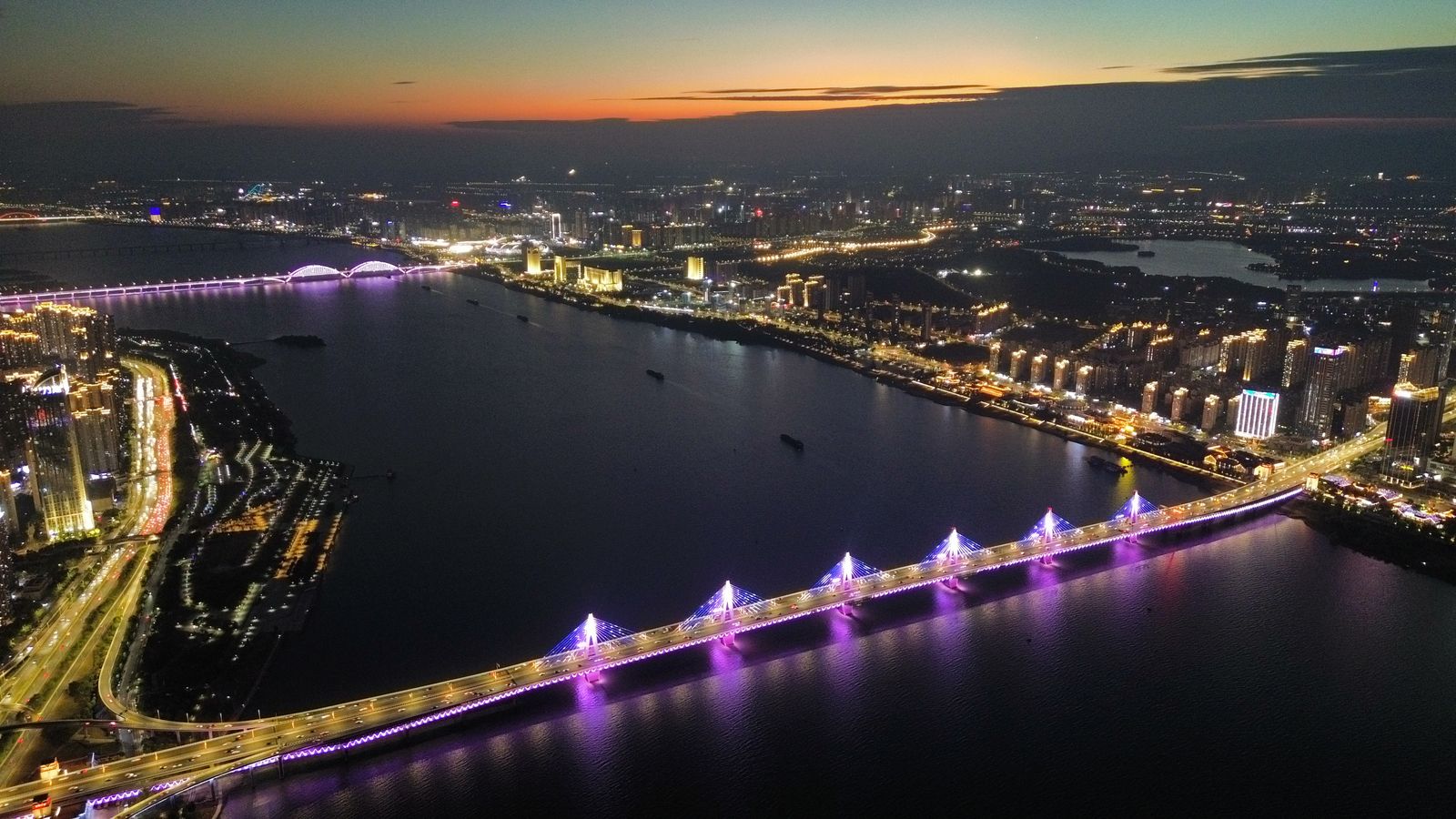
Dusk over the Gan and the Honggutan waterfront — the hour to arrive, before the lights come up. Photo: Ddayzzz / Wikimedia Commons (CC BY 4.0).
The riverfront classics (brief — each has its own guide)
- The riverfront light show — the Honggutan skyline ablaze. Shoot from the east bank (Tengwang riverside, Bayi Bridge); best at blue hour, ~15 min before full dark. (guide)
- Tengwang Pavilion — the gold-lit tower from the riverside path, or the river-and-sky view from the top gallery at sunset. Line 1, Tengwang Pavilion station, Exit 2. (guide)
- Qiushui Square fountain — the tall lit jet, from the railing at show time (nightly, typically ~7:30 and ~8:30pm). Line 1, Qiushui Square station. (guide)
- Bayi Square — the monument and the red-star hall (now the Jiangxi Provincial Art Museum) mirrored in the plaza pools at blue hour. Line 1 or Line 2 to Bayi Square — the network's busiest interchange, so allow time to find the right exit. (guide)
- Wanshou Palace & Shengjin Tower lanes — red lanterns, steam and crowds after dark. Line 1 to Wanshou Palace; Line 3 or Line 4 to Shengjinta for the tower and its food street. (Wanshou · Shengjin)
- Greenland Twin Towers — the 303-metre pair over Honggutan's administrative square, and Jiangxi's tallest buildings; the closest station is Metro Central (地铁大厦) on Line 1 or Line 2. Best as a silhouette at dusk, or from the public observation deck.
- The Star of Nanchang — the 160-metre riverside wheel, tallest on earth for two years after it opened in 2006, and a good foreground for the far bank. It sits in the riverside park on the Honggutan side and folds naturally into a Qiushui Square evening.
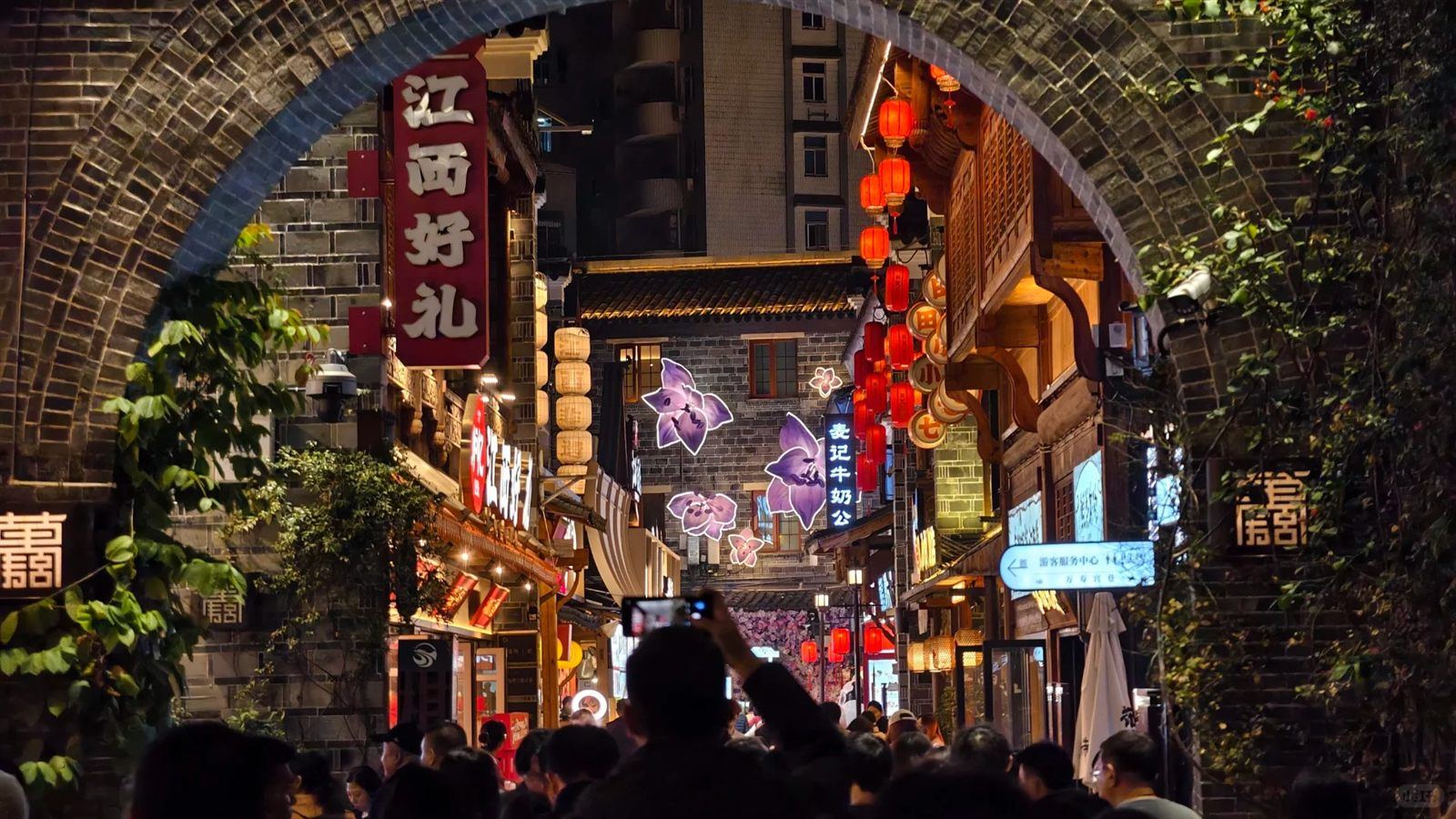
Wanshou Palace after dark — grey brick, red lanterns and a slow tide of people, five minutes from a Line 1 exit.
Lesser-known spots worth seeking out
Fish Tail Park (鱼尾洲公园) — the "floating forest"
The most photogenic place in Nanchang that almost no outsider knows. An award-winning wetland park (by the landscape firm Turenscape) of little islands threaded with crisp white minimalist bridges, pavilions and a viewing tower, set among a "floating forest" of pond cypress and dawn redwood that stand right in the water. It is also, structurally, a piece of flood infrastructure designed to be submerged — the full story is in our Fish Tail Park guide.
- Shoot: the cypress reflections, the white modern structures against the trees, boardwalks vanishing into the forest, and the whole thing from the viewing tower.
- Best time: mid-November to early December, when the cypress flares russet-orange and mirrors in still water — that is the marquee visit. Go in the golden hour after sunrise or before sunset; mornings are calmest, which matters when the reflection is the picture. The white structures shoot well year-round, and summer evenings after eight bring out the local crowd.
- Getting there: Metro Line 4 to Yuweizhou (鱼尾洲), Exit 3 — the exit signed for the park, on the north side of Aixi Lake North Road — then roughly an 8-minute walk. Free, open, un-gated.
- How long: half a day if you are chasing the red forest; 60–90 minutes for a walk-through.
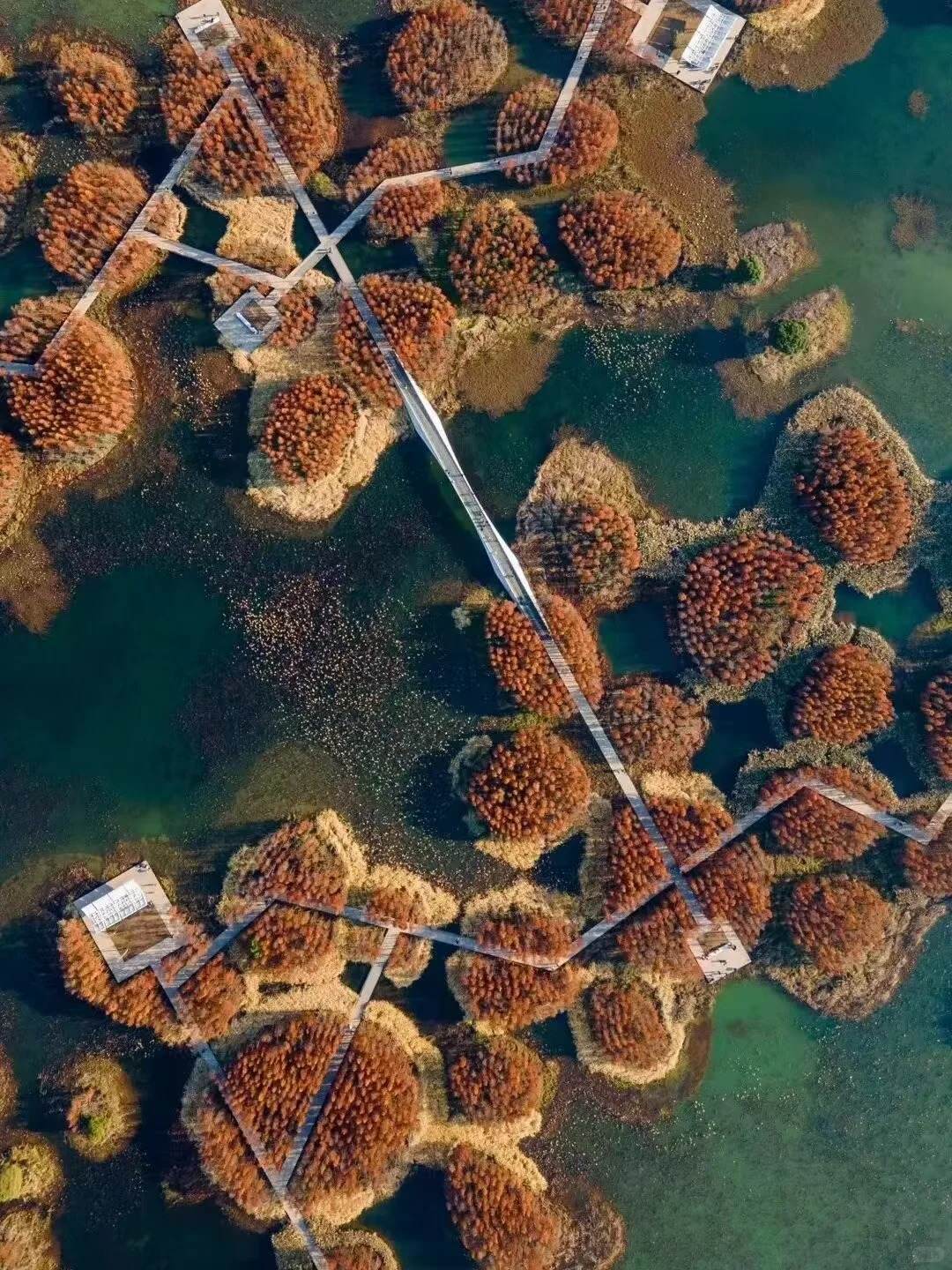
The floating forest from above in early winter, turned russet-gold — the flooded islands and zig-zag boardwalks that make this the park's peak fortnight.
Aixi Lake (艾溪湖) — golden ginkgo, and cranes
The same body of water, immediately south — easily combined with Fish Tail Park into one morning. A large lake wetland with a long greenway, migratory birds, water cypress and, in late autumn, ginkgo that drop a thick gold carpet. The frame worth walking for is in the crane enclosure on the wetland-park side, where leaves fall around birds that stand very still and let you compose.
- Shoot: the ginkgo carpet (late November into December), the crane garden, the lake at sunset, birds and boardwalks.
- Best time: the gold usually peaks somewhere between late November and mid-December and lasts a couple of weeks — it moves with the weather, so check recent local photos before making a special trip. Sunset over the water works in any season.
- Getting there: Metro Line 1 to Aixihu West (艾溪湖西) for the forest-wetland side off Beijing East Road, or Aixihu East (艾溪湖东) for the far shore. The lake is big and the gates are spread out, so drop a pin on Amap or Baidu Maps for the specific gate you want rather than trusting the station name. Free.
Bada Shanren · Meihu Scenic Area (八大山人梅湖景区) — the classical garden
For traditional, painterly frames, this lakeside garden on the city's south side is the place: a classical Jiangnan landscape built around the memorial hall of Zhu Da (八大山人), the Ming imperial descendant who became a painter-monk after the dynasty fell and whose ink birds still glare off the page at you three centuries later. Whitewashed walls, curved bridges, mirror-still water, plum blossom in late winter.
- Shoot: pavilions and moon bridges, lake reflections, plum or lotus in season, and the courtyard walls of the memorial hall.
- Best time: early morning, for soft light and unbroken water. Late winter for plum blossom.
- Getting there: Metro Line 3 to Bada Shanren (八大山人), Exit 2 — the east side of Yingbin North Avenue, signed for the scenic area. The station itself is worth thirty seconds: its fan-shaped light fittings are lifted from one of Zhu Da's own paintings.
- Tickets and hours: the scenic area and the memorial hall have both been free, with the grounds open all day and the hall running roughly 9:00–17:00, Tuesday to Sunday, closed Mondays outside public holidays. A few sub-attractions inside are separately ticketed. Confirm before a special trip. Allow 2–3 hours.
Nanchang University, Qianhu Campus (南昌大学前湖校区) — grand architecture
Out in Honggutan, the city's main university campus is an unlikely photo playground, and the gate is the reason.
- Shoot: the main gate — 323 metres of it, a shallow arc modelled on the old National Chung Cheng University gate and nicknamed "Asia's number one gate" (a boast, not a ranking, but it is genuinely enormous); the tower library; the sunken circular plaza by the lake; autumn colour along the avenues.
- Best time: golden hour for the gate and the library, when the arc throws a long shadow. Autumn for foliage. Term time for life in the frame; holidays for empty symmetry.
- Getting there: Metro Line 2 to Xuefu Ave (E) (学府大道东) puts you on the campus's eastern side; local buses (the 181 among them) and a short DiDi both cover the last stretch, and the campus is big enough that you should not plan to walk it end to end. It is an open, working university — students live here, so shoot people the way you would want to be shot.
Jinxiancang (进贤仓) — weathered lanes, honestly assessed
For characterful, un-touristed old-town frames, the lanes of Jinxiancang are the last of their kind here: a Ming and Qing wharf quarter beside the Fu River (抚河), grey brick and dark tile, and the only one of Nanchang's provincial-level historic districts that still holds the complete "river–warehouse–lane" pattern that made the city's river trade work. Tea houses and inns out front, grain and goods stacked behind — the phrase locals use is 前店后仓, "shop in front, warehouse behind."
Be realistic about what you will find. A large restoration scheme has been announced for years and, as of recent reporting, had not materially begun; a good number of the old houses are boarded, propped or crumbling while they wait. That is exactly why photographers like it and why casual sightseers should skip it. Treat it as texture, not a destination — and pair it with something else, because Shengjin Tower's quarter is only about 400 metres south.
- Shoot: grey-brick lanes, worn doorways, Republican-era shopfronts, the patina of a river port that outlived its river traffic.
- Best time: soft overcast light, or early morning before the lanes wake up. Golden hour warms the brick.
- Getting there: Xihu District, near the Fu River. Metro Line 3 or Line 4 to Shengjinta (绳金塔) and walk north — then finish at the tower and its food street as the lights come on.
For the ambitious: Meiling (梅岭)
With a half-day and a head for hills, Meiling — the forested range on the city's north-western edge, topped by Xiyao Lake at 841 metres, Nanchang's high point — rewards early risers with cloud sitting in the valleys, temples in mist and tea-green slopes. It is a different Nanchang entirely, and the least convenient thing in this guide.
- Getting there: driving is easiest — roughly 30–40 minutes from the centre on a clear morning. Without a car, the route now is Metro Line 1 or 2 to Ditie Dasha (地铁大厦), then bus 712 or 699 to the Wanli cableway station, and the cableway to the top in about sixteen minutes. Full options, costs and timings are in our Meiling guide.
- Know before you go: "Meiling" is a range, not a single gate — the peaks, the waterfall, the Taoist spring and the bamboo-sea lookout are separate sites with their own tickets and their own roughly 8:00/8:30–17:00 hours. Pick one or two, check them the day before, and start early if you want the cloud.
Route two: a morning nature loop on the east side
The counterweight to the evening riverfront run, and the best half-day in this guide between mid-November and early December.
- First train, Line 4 to Yuweizhou (鱼尾洲), Exit 3. Be at Fish Tail Park within half an hour of sunrise — the water is glass, the light is low, and you will have the boardwalks nearly to yourself.
- Work the islands for an hour, then climb the viewing tower for the overhead shot of red cypress and zig-zag boardwalk.
- Move south to Aixi Lake for the ginkgo and the crane enclosure while the light is still soft; a short DiDi saves the shoreline walk if the wind is up.
- Break for lunch, then ride Line 1 back into town from Aixihu West (艾溪湖西) — about half an hour to Bayi Square, and you are set up for the evening route above.
The year at a glance
- Every evening, all year: blue hour and after dark on the riverfront, the squares and the lantern lanes. This is the reliable one — no season required.
- Late autumn into early winter: the red cypress at Fish Tail Park and the golden ginkgo at Aixi Lake, usually somewhere in the November–December window. Nanchang's best fortnight for nature photography, and the dates move every year.
- Late winter into spring: plum blossom at Meihu, then the cherry trees out at Fenghuanggou — no metro to that gate, so budget most of a day.
- Summer: storm light over the river, night markets at full volume, and locals taking the cool at Fish Tail Park after eight. Shoot at the ends of the day and hide in the middle.
- Any clear day after rain: the cleanest skyline and the bluest dusk of the season.
Honest warnings, and what to skip
- Don't plan an evening around the fountain. It runs nightly, but is cancelled in thunder, heavy rain, strong wind or fog. The building illumination is the dependable nightly act; the fountain is the bonus.
- Skip midday on the riverfront. Hot, flat, no lights, no show. Use those hours for a museum — the Jiangxi Provincial Museum is free and air-conditioned.
- Assume drones are a no. Rules in China are strict, registration is required, and a large chunk of Nanchang sits under controlled airspace with an international airport to the north. Check current regulations properly, or leave it in the bag.
- Tripods draw attention at busy ticketed sights and inside some scenic areas. A small travel tripod used quickly is fine; a full rig in a crowd at 8:30pm is not.
- Public holidays multiply everything. National Day and Spring Festival turn the riverfront railing into a scrum. If your dates are fixed, go on the shoulder evenings and shoot earlier.
- Most of this is free. Entering Tengwang Pavilion is ticketed, and the Meiling sites are ticketed individually; the squares, the riverfront, Fish Tail Park, Aixi Lake, Meihu and the old lanes cost nothing.
Practical info
- Getting around: the metro reaches almost everything here — Line 1 for the riverfront and Aixi Lake, Line 3 for Meihu, Line 4 for Fish Tail Park, Line 2 for the university side. DiDi fills the gaps cheaply. Our Nanchang metro guide covers fares, QR payment and last trains.
- How long: one evening for the riverfront classics; add one morning for the east-side nature loop; add a half-day for Meiling.
- Tickets: free unless noted. Confirm current hours and prices before a special trip — several of these have changed in the last two years.
- Pay and language: Alipay or WeChat Pay for everything, including the metro gates. Station signage and announcements are bilingual; park signage often is not, so save Chinese place names on your phone.
- Good for: photographers, night walkers, autumn colour chasers, anyone who wants a city that is not already on every feed. Less good for: travellers who need everything within one walkable district — the best spots here are spread across four metro lines.
Give Nanchang a little time and it photographs far better than its reputation suggests. Build one evening around the riverfront classics and, if you are here in late autumn, one crisp morning around the cypress and the ginkgo, and you will go home with a card that surprises people. Fold it into a Nanchang itinerary, or have us plan your shots around the season and the light.
FAQ
What are the best photo spots in Nanchang? The east-bank riverside for the skyline light show, Tengwang Pavilion at golden hour, the Qiushui Square fountain, Bayi Square at blue hour, and the lantern lanes of Wanshou Palace and Shengjin Tower — plus the lesser-known set: Fish Tail Park's red "floating forest," Aixi Lake's ginkgo and cranes, the classical Bada Shanren Meihu garden, and Nanchang University's 323-metre gate.
When do the red cypress and the ginkgo peak? Late autumn into early winter — usually somewhere between mid-November and mid-December, and only for a couple of weeks. The exact window shifts every year with the weather, so check recent local photos before booking a trip around it.
Are these spots free? Almost all of them. The squares, the riverfront, Fish Tail Park, Aixi Lake, the Meihu garden and the old lanes cost nothing. Entering Tengwang Pavilion is ticketed, and the individual scenic areas at Meiling each charge their own admission.
How do I get to Fish Tail Park? Metro Line 4 to Yuweizhou (鱼尾洲) station, Exit 3 — the exit signed for the park on the north side of Aixi Lake North Road — then about an 8-minute walk. It is free and un-gated, so early light is yours if you want it.
Where can I take classical, traditional-style photos? The Bada Shanren Meihu Scenic Area on Line 3, Exit 2 — a classical Jiangnan garden of bridges, pavilions and still water around the memorial hall of the 17th-century painter Zhu Da. Go at opening time for calm water.
What is the single best hour to shoot in Nanchang? The 30 minutes either side of sunset on the Gan River. Set up at Qiushui Square with Tengwang Pavilion across the water and you get golden hour, blue hour, the skyline switch-on and — on the right night — the fountain, all from one railing.
Last verified: 2026-08 — access, exits, seasons, hours and show schedules change; please double-check locally before you travel.
Cover photo: UserAlbert / CC BY-SA 4.0 via Wikimedia Commons (cropped & resized).