Nanchang: Your Gateway to All of Jiangxi
Why Nanchang is the smartest base for Jiangxi: which of its three stations to book from, what comes back the same night, and how to shape your trip.
By Hello Nanchang · Last updated
Nanchang, Jiangxi Province, China · A planning guide · how to base in Nanchang and reach Jingdezhen, Wuyuan, Lushan, Wugongshan & more
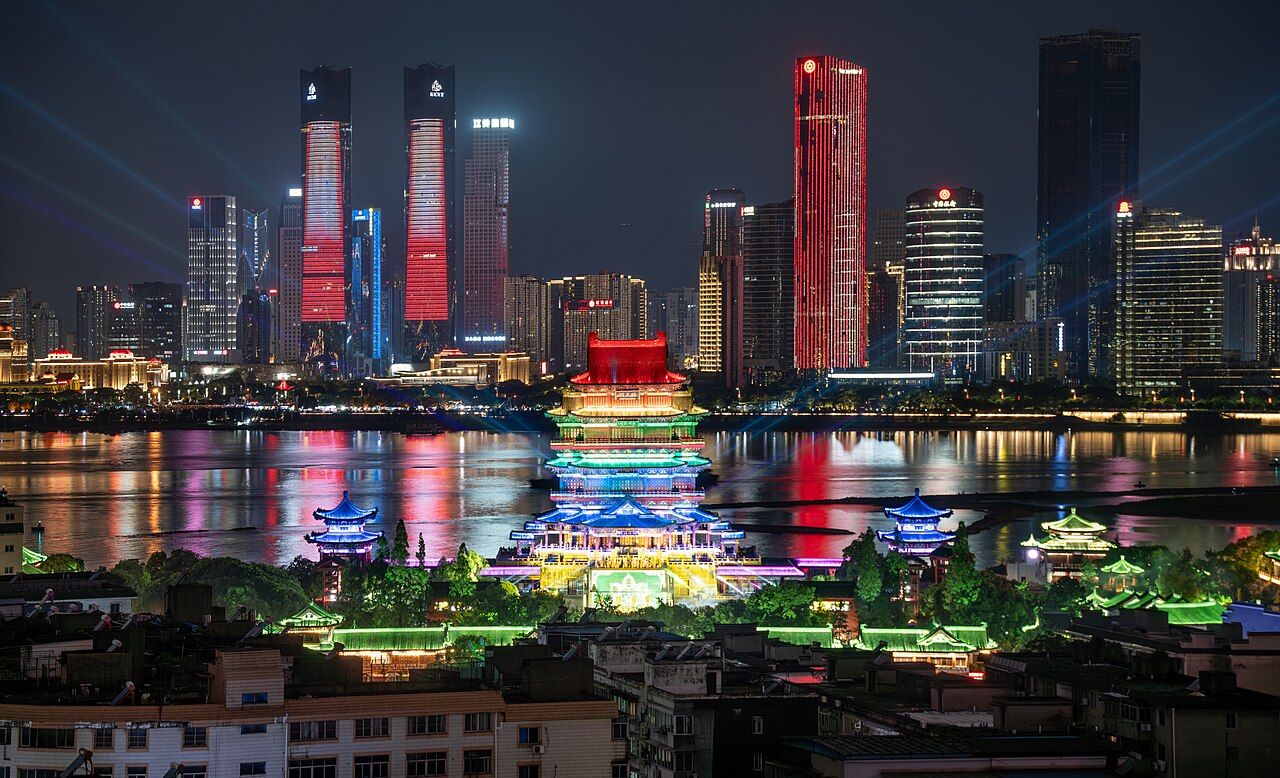
So you're flying into Nanchang, or your high-speed train pauses here on the way to somewhere shinier, and you're wondering: is this place worth stopping for — or is it just the airport with the cheap connection? Here's the honest answer, and it's the reason I keep sending people here: Nanchang isn't the headline of a Jiangxi trip. It's the hub of the wheel. And once you see the map the way a local does, planning the whole province suddenly gets easy.
This is the strategy piece — the "where do I sleep, which station do I book from, and what comes back the same night" article. For what to actually do, eat and photograph in the city itself, I've got a separate, much nerdier full Nanchang city guide; if you're still deciding whether the province is your kind of place, start with why visit Jiangxi. This one is about the mechanics of using Nanchang as a base — and they matter more than most people expect, because in Jiangxi the train ride is never the part that eats your day.
Why base yourself in Nanchang (the case for the boring-sounding capital)
Jiangxi's famous sights have an annoying habit: they're scattered around the edges of the province. Porcelain town in the northeast, whitewashed Huizhou villages up near the Anhui border, big misty mountains north, west, south and east. Try to string them together directly and you'll spend your holiday on regional buses, because the fast lines nearly all run through the middle. Nanchang sits in that middle with high-speed rail fanning out in every direction — so you stop bouncing between villages and start running clean out-and-back day trips or one tidy loop from one comfortable bed.
Four reasons it works as a base:
- It's a genuine high-speed-rail hub. The porcelain capital is 42 minutes from Nanchang East on the fastest services, around 35 departures a day. Yingtan North — the railhead for the province's best day trip — is 35 minutes from Nanchang West, and something close to fifty trains a day make the run. Even the far corners are two to three and a half hours: the granite peaks out east, the red-history mountain down south. Full station-by-station table in getting around Jiangxi by train.
- It's a real airport too. Nanchang Changbei (KHN) is the province's main air gateway — roughly 60-plus mainland destinations plus a smaller international slate (Bangkok, Singapore, Kuala Lumpur, Osaka and the like, though routes shift seasonally). Since June 2025, Metro Line 1 runs right into Terminal 2, so you can land, ride into town for a few yuan and never explain an address to a driver.
- It's cheap. Hotels, taxis and dinner all cost noticeably less than Shanghai, Hangzhou or Guangzhou. A central, well-located base here barely dents the budget — which is exactly what makes the day-trip strategy affordable in the first place.
- The food is a reason on its own. A ¥3–6 bowl of tossed rice noodles for breakfast, a ¥5–10 clay-pot soup to put the fire out, and one of China's genuinely spiciest regional cuisines for dinner. Details, street by street, in the city guide.
Is Nanchang itself worth a couple of days? Genuinely yes — a Tang-dynasty riverside tower, a lantern-lit old town, free museums, a nightly fountain show and almost no foreign-tourist crowds. But that's not the argument. The argument is that you don't have to choose: you get the city and the province from the same pillow.
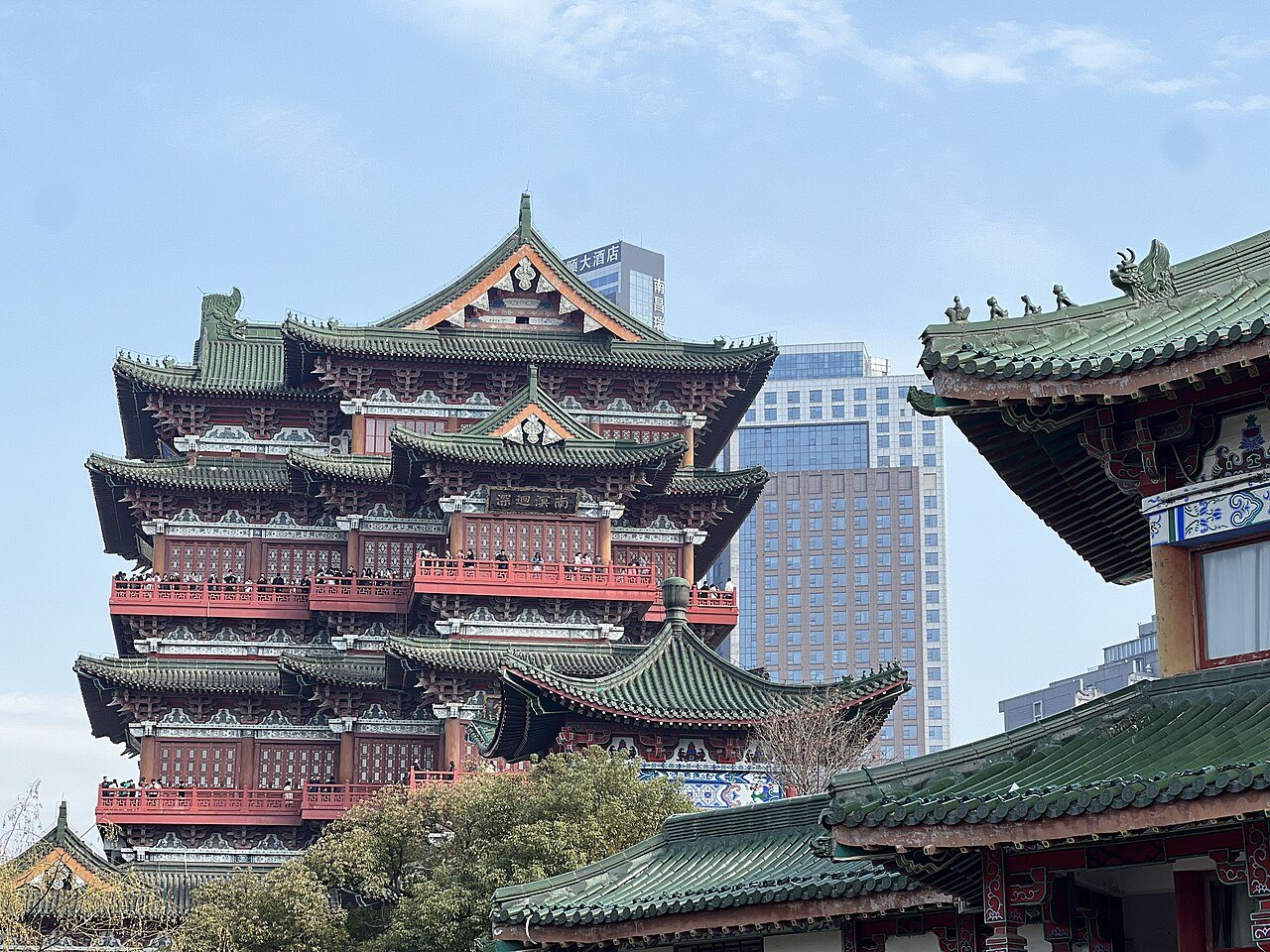
Photo: Huangdan2060 / CC BY 4.0 via Wikimedia Commons — Tengwang Pavilion, Nanchang's signature riverside landmark and a fine half-day before you fan out.
First, check what your visa actually lets you reach
Do this before you fall in love with a mountain. China's visa-free transit exemption now runs to 240 hours — ten days — and Changbei is a listed port of entry, which sounds like a green light for a whole Jiangxi loop. It isn't. Each province declares a permitted area, and Jiangxi's is listed as Nanchang City and Jingdezhen City only. On transit rules, Lushan, Wuyuan, Wugongshan, Sanqingshan, Jinggangshan and Longhushan all sit outside the line, and the check is your hotel's police registration — which happens wherever you spend the night.
So the base-and-spoke plan has two versions. On a tourist visa or a qualifying 30-day visa-free entry, the whole wheel is yours. On transit rules, you get the city plus the porcelain capital — which, honestly, is a strong ten days — and you should stop reading train timetables for the mountains. The current country lists, port lists and permitted areas are in our China visa-free transit guide; policies here have changed twice in two years, so confirm rather than trust any page, including this one.
The single decision that changes your whole trip: which station you book from
Nanchang has three railway stations and they are nowhere near each other. Booking the wrong one doesn't just cost you a taxi — on some routes it costs you an entire afternoon. This is the thing I most often have to un-plan for people.
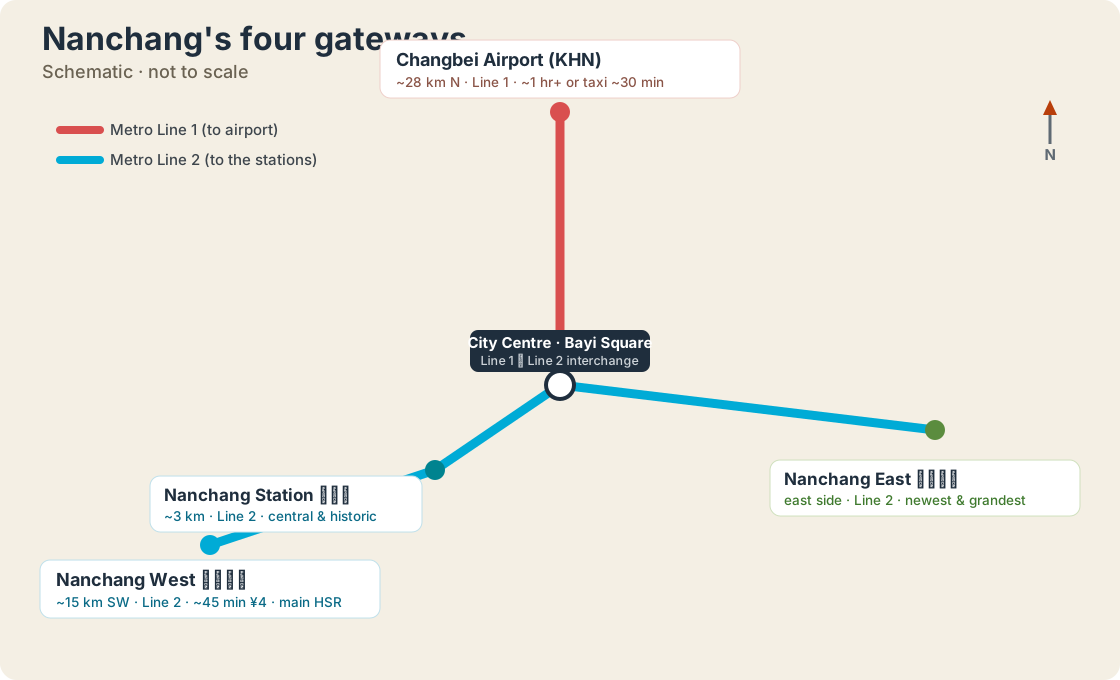
Nanchang's gateways, schematic and not to scale: the airport 28 km north on Line 1, and the three railway stations west, south-central and east on Line 2. None of them is near the others.
- Nanchang East (南昌东) — opened December 2023 on the far east side. This is the one that put the porcelain capital and the villages within easy reach: it anchors the fast Nanchang–Jingdezhen–Huangshan line. If a spoke goes northeast, you almost certainly want East.
- Nanchang West (南昌西) — the busy workhorse, about 15 km southwest, roughly 45 minutes and about ¥4 from Bayi Square on Metro Line 2. Most long-distance trains (Shanghai, Changsha, Guangzhou), and — the part that matters for planning — four of the five mountain railheads: Pingxiang North for Wugongshan, Ji'an West for Jinggangshan, Yingtan North for Longhushan, Yushan South for Sanqingshan. If your spoke is a mountain, it's almost certainly West.
- Nanchang Railway Station (南昌站) — the oldest of the three, about 3 km from Bayi Square and a couple of Line 2 stops from the centre. A mixed bag of conventional and some high-speed services; the kindest arrival if you land late.
Here's the concrete cost of getting it wrong. The fastest trains from Nanchang East to Wuyuan take about 1 hour 20 minutes. The same journey booked out of Nanchang West or the central station runs 1 hour 50 to over 3 hours — same destination, same day, very different afternoon. Read the station name on the ticket before you pay, not at the gate. All three sit on Metro Line 2, which is the one genuinely kind piece of design in this whole system. Deeper dive: our Nanchang airport and stations guide.
A hub with a Tang poem on its roof
Nanchang East is worth arriving early for, and this is the reason. In 675 CE, a governor threw a Double Ninth banquet in a restored riverside tower and expected a relative to read out a prepared piece. A passing young poet, Wang Bo (王勃), took the brush instead and improvised the preface that made the building immortal. One couplet from it — the setting sun and a lone wild duck flying together, the autumn waters sharing one colour with the endless sky — is still the line every Chinese schoolchild can finish. You can stand where it happened: that's Tengwang Pavilion.
Thirteen centuries later, the province built the couplet. Nanchang East's triple-arched steel roof reads as a wild duck with its wings spread: a 96-metre central span with a lower arch to either side clearing 17.6 metres, the ridge topping out just under 50 metres above the ground, and underneath it a column-free hall with roughly 34 metres of clear air over your head. Inside, the structure closes around you like the petals of Nanchang's city flower, the winter daphne (金边瑞香), and a 200-metre painted scroll of that same preface runs the length of a glass-walled display hall. See the tower on your first afternoon, catch a train from under that roofline the next morning, and the hub stops feeling like logistics. Give yourself fifteen spare minutes and look up.
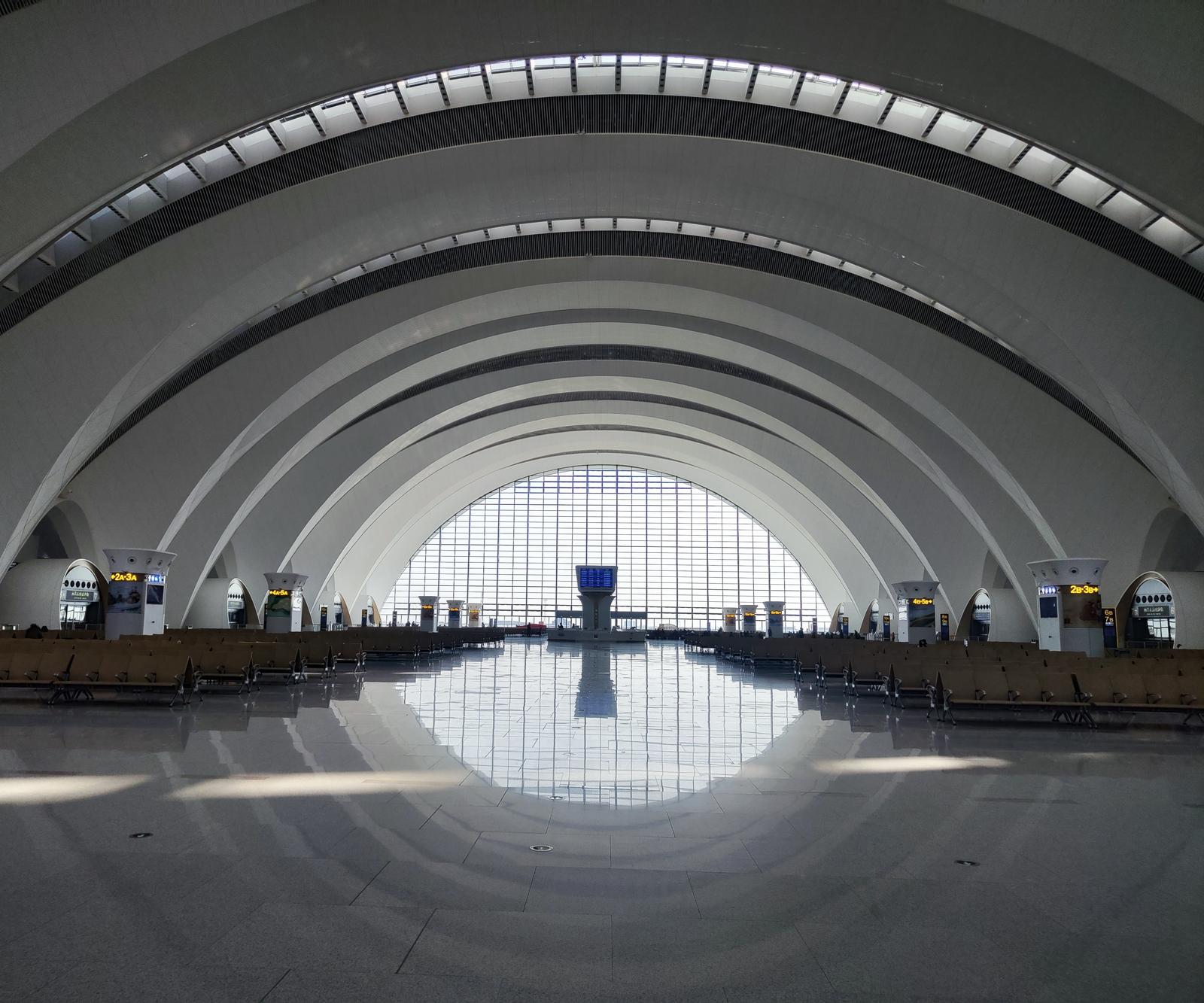
Inside Nanchang East (opened 2023) — a soaring column-free hall, its arched roof evoking a wild duck taking flight. Photo: Yuuki / Wikimedia Commons (CC BY 4.0).
Match your trip: where to fan out from Nanchang
Tell me what kind of traveller you are and I'll point you at the right spoke — and the itinerary that already maps it out:
- Porcelain and craft nerd? Jingdezhen, the thousand-year porcelain capital — lit kilns, the brick-vaulted Imperial Kiln Museum, and old state-factory yards full of young potters renting benches. The easiest hop in the province. Go deep with the Jingdezhen ceramics itinerary.
- Here for the photographs and the villages? Wuyuan — whitewashed Huizhou houses, tea terraces, and for two or three weeks each spring (usually the second half of March, but it moves with the weather) a sea of golden rapeseed. Sleep there; the light you came for is at either end of the day.
- Want mountains? Four, all different. Lushan is the civilised one — a whole town, Guling, sitting at around 1,100 m with hotels and bus stops and summers roughly 10°C below the plain. Wugongshan is the cult one: bamboo, then rolling alpine grassland where people pitch tents on the ridge. Sanqingshan is the dramatic one — UNESCO granite spires and cliff-edge plank walkways. Longhushan is the easy one, and the most under-rated day out in Jiangxi.
- Into revolutionary history? Jinggangshan, the mountain base where the Red Army regrouped and worked out the strategy that won a civil war. The furthest spoke; treat it as its own two-day trip, or follow the whole thread on the red-history itinerary.
- Travelling with kids, or just don't fancy a train at all? There's a whole ring of half-day countryside within the city's own boundaries — ancient villages, a cool ridge, crab-and-lotus lake country. See Nanchang countryside getaways and the Jiangxi with kids route.
- Just want a city break? Stay put. Two focused days — the 2 days in Nanchang plan — is right for a business traveller with a spare 48 hours or a weekender from a bigger city.
The day-trip line: what comes back the same night, and what doesn't
This is the part most Jiangxi plans get wrong, because people budget the train and forget the bus. The test I use: under an hour of rail, plus under an hour of everything else. Break either half and it stops being a day trip, whatever the map says. Rail time is the easy part — it's the switchback coach up a mountain, and the last one back down at five in the afternoon, that quietly eats the day.
Sorted from "go tomorrow" to "don't try it":
- Longhushan — yes, and it's the best single use of a spare day. Trains from Nanchang West to Yingtan North (鹰潭北) run close to fifty times a day, the fastest in 35 minutes and most of the rest inside 50, second class about ¥77 (a handful also leave from the central Nanchang station, a few yuan cheaper); then the K2 tourist bus out to the visitor centre (roughly every half hour, about 40–50 minutes) or a taxi in about 30. Out on a 7:30–8:30am train, you get the bamboo-raft drift past 2,600-year-old cliff coffins, the Xianshuiyan cliffs and Shangqing old town, and an evening train home. What doesn't fit: the evening light show. That one needs a night. Watch the ticket — there are two Yingtan stations.
- Jingdezhen — yes, the easiest hop in the province. Nanchang East to Jingdezhen North (景德镇北): 42 minutes on the fastest services, most 45–60, around 35 departures a day roughly 7am to 9pm. Second class is about ¥86–94 — the fast G-trains sit at the top of that band and the slower D-trains at the bottom, so a cheaper ticket usually means a longer ride. The station is about 10 km out; a taxi in is roughly ¥17–25 and 15 minutes. What doesn't fit in a day: both major museums and a throwing session. Pick two of three, or stay a night.
- Lushan — technically possible, and a shame. Aim for Jiujiang (九江) — the one spoke where the station on your ticket really is a coin toss, because services run from all three Nanchang stations. The quickest do it in about 55 minutes, most take an hour to an hour and a half, and second class runs ¥33–68 depending on the train. Then the Guling coach: about 70 km of switchbacks, roughly 80 minutes, and — this is the detail that decides it — first departures around 06:30 with the last around 17:00. Day-tripping means spending both of the mountain's good hours, dawn and dusk, on a train. One night in Guling changes the whole experience.
- Wugongshan — possible, but you'd be missing the point. Ride west from Nanchang West to Pingxiang North (萍乡北) — getting on for seventy departures a day, the quickest just under an hour, most 1–1.5 hours, second class around ¥130. Then the scenic-area coach, from a stand about 100 m to your right as you leave the station (roughly ¥25–27), takes another hour to ninety minutes to the visitor centre, where a free internal shuttle runs on to the Shigu Temple (石鼓寺) trailhead. Call it three hours door to gate. Plenty of people do the early-train-and-cable-cars version and see the meadow. What they don't see is the sunrise above the cloud, which is the entire reason the mountain has a cult.
- Wuyuan — no. Sleep there. 1 hour 20 from Nanchang East on the fastest services, second class around ¥120. About a dozen a day leave from East — first out around 07:25, last out around 18:45 — and roughly twenty across all the Nanchang stations. Then the villages are still spread across a whole county: the station has an attached bus terminal with express services to Huangling for about ¥19, or a taxi of roughly 50 minutes. A day trip buys you one village and a lot of transfers.
- Sanqingshan — no. Two nights if you want the cloud sea. Roughly 2 to 2.5 hours by rail from Nanchang West to Yushan South (玉山南), then about an hour on a shuttle for ¥20–30 (or a taxi around ¥150–160, worth splitting three or four ways). The last cable car down has commonly run around 5:30pm, which is the wall a day trip hits.
- Jinggangshan — no. Two days and a night, minimum. Either a direct train to Jinggangshan Station from Nanchang or Nanchang West, roughly 3 to 3.5 hours; or the faster Nanchang–Ganzhou line from Nanchang West to Ji'an West (吉安西) — around 36 departures a day, the quickest about 55 minutes, the slower ones nearer an hour and a half, second class about ¥107 — and then the 601 tourist coach up to Ciping, 1.5 to 2 hours for something around ¥35. Take the direct train and the station is still 35 km from town. Door to door it's about four hours each way, which is why nobody sensible day-trips it.
Times and frequencies drift with the seasonal timetable and fares float, so treat all of the above as the shape of the thing and confirm your specific service when you book.
What to do with your bags (the underrated part of hub travel)
The real luxury of basing in one city is that your suitcase stops travelling. Three things make that work:
- The free metro lockers nobody mentions. Nanchang Metro runs a free left-luggage service (阳光寄存) — smart lockers at around a dozen tourist-heavy stations plus a staffed counter at Bada Shanren, with Tengwang Pavilion, Qiushui Square, Wanshou Palace, Bayi Square, Bayi Memorial, Nanchang Railway Station and West Station South Square among them. Free, up to 8 hours, bags go through the scanner first, and you must collect before the day's posted cut-off (it has been around 22:00). On a checkout day this is transformative. The station list and rules change, so ask at the customer-service desk in the concourse and keep a plan B for a big case. Full detail in the Nanchang metro guide.
- Your hotel will hold the big bag for days, not hours. Chinese city hotels do this as a matter of course. If you're doing the pure-hub shape you never need it; if you're doing a loop, book your last Nanchang night in the same hotel as your first and leave the case behind while you go up a mountain.
- Pack a small bag for overnight spokes. Guling is a walking town with steps; there's nowhere to put luggage on the Wugongshan ridge; the Sanqingshan base areas are linked only by the long ring road, so going up one side and down the other strands your bag on the wrong side of the mountain. And there's no check-in on a high-speed train — you carry everything on and lift it onto the rack yourself.
Three ways to shape the wheel
You don't have to choose just one spoke. Here are three base-and-spoke shapes, from laziest to most ambitious. The difference between them isn't distance — it's how many times you pack.
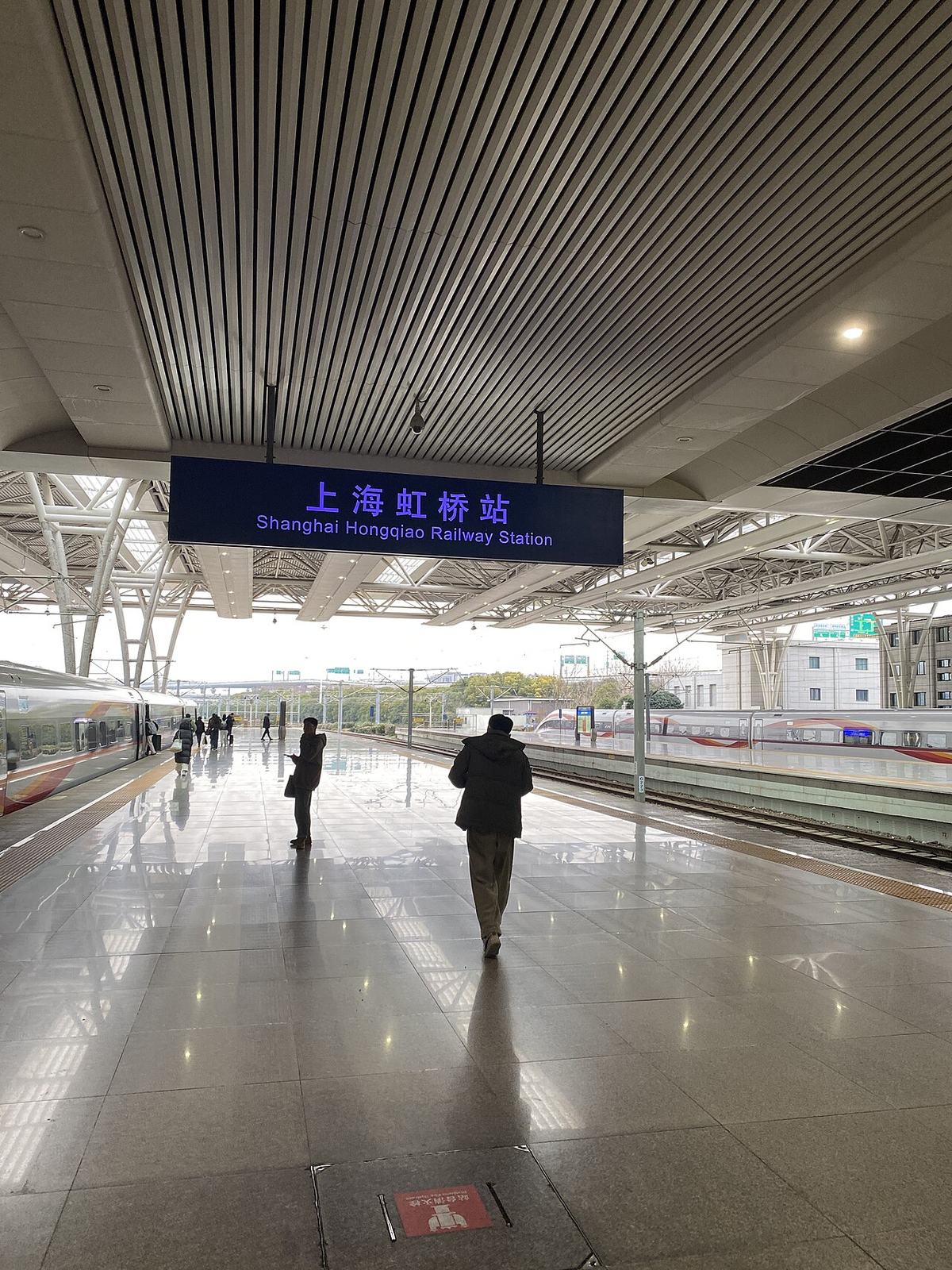
Photo: Kennyhaidang / CC BY-SA 4.0 via Wikimedia Commons — the high-speed network is what turns Nanchang into a hub; most spokes are a short ride away.
1. The pure hub — one hotel, three or four nights, zero repacking
Sleep in Nanchang the whole time and run day trips. A workable skeleton: arrival day and evening in the city; day one out to Jingdezhen; day two in Nanchang itself (tower, old town, museum, fountain show); day three out to Longhushan. Two spokes, one bed, no bag ever leaves the wardrobe.
Who it's for: first-timers, families, anyone on a tight schedule, anyone travelling with a suitcase rather than a rucksack, and anyone on visa-free transit rules (Jingdezhen is inside the permitted area). Where it breaks: the mountains. Every one of them is a compromise as a day trip. The Nanchang weekend trip is this shape in miniature.
2. The short loop — city plus one headline spoke
Two nights in Nanchang, then move for two nights to whichever spoke is your reason for coming: Wuyuan for the villages, Guling for Lushan, the ridge for Wugongshan. Come back to Nanchang for the last night so you're near the airport or the right station on departure morning. One hotel change, one small bag, and you get a place properly rather than in a four-hour window.
Who it's for: most people with four to five days, and anyone whose trip has an obvious headline. The trick: book the same Nanchang hotel for both stays and leave your big case with them.
3. The grand fan — the classic Jiangxi loop
Five to seven days, and you run the arc rather than out-and-back: Nanchang, then Jingdezhen, then Wuyuan — the two sit on different lines, but the lines cross at Jingdezhen North, so that leg costs you 26 minutes and about ¥26 — then a mountain, then back to Nanchang to fly out. Barely a long-distance bus in it. (Carrying on out of the province rather than looping back? Wuyuan to Huangshan North is 25 minutes and around ¥35.) Mapped day by day in the 5–7 day Jiangxi loop, with a summer variant in the Jiangxi summer escape.
One piece of hard-won pacing advice: don't stack two mountains back to back. Each one is a gate ticket, a shuttle bus, a cable car and several hours of steps, and by the second summit you're photographing scenery you've stopped looking at. Alternate: a mountain, then a town. Porcelain workshops and village lanes are what your legs want after a ridge.
One planning rule that saves a day: most Chinese museums close on Mondays and several (Nanchang's museums, Jingdezhen's Imperial Kiln Museum) want a free advance reservation. Sketch your route so the big indoor sights don't land on a Monday — and book the night before.
Where to sleep in Nanchang when it's your hub
Base location matters more here than in a city you're just sightseeing, because you'll be walking to a metro before 7am with a coffee in your hand.
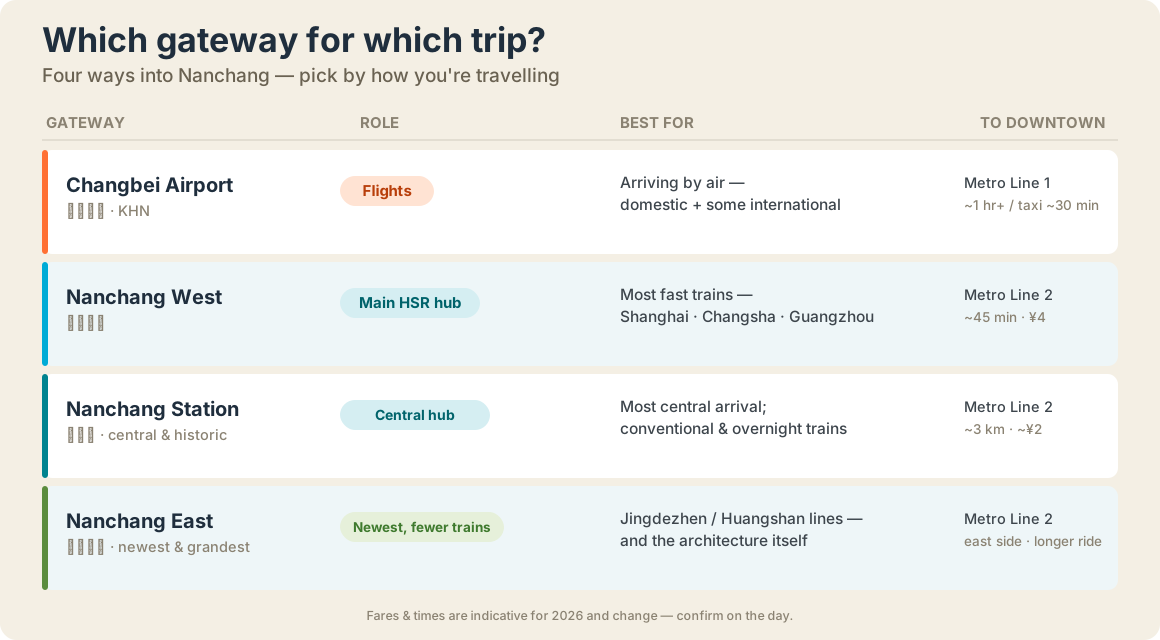
Which gateway for which trip, and what each costs you in time to the centre — the numbers to weigh when you pick a neighbourhood. Indicative and subject to change; confirm on the day.
- Bayi Square / Donghu (east bank) — the default and the right call for a first visit. It's the Line 1 / Line 2 interchange, so you can reach every station and the airport without changing more than once, and you're walking distance from the old town, the memorial hall and the eating streets.
- Honggutan (west bank) — newer rooms, river views, quieter streets, the provincial museum and the big malls on your doorstep, and better value per star. You'll commute across the river for the good street food.
- Next to a station — worth it only if your spokes leave at dawn. The central Nanchang station is about 3 km from Bayi Square; Nanchang West is 15 km southwest but on the same Line 2. Note the metro runs roughly 06:00 to 22:30 (later on Fridays, weekends and holidays), and your own station's first and last trains will differ — check the platform board rather than a blog, and use DiDi for anything outside those hours.
A few honest gateway tips
- Your passport is your ticket. Book on the official 12306 app or an English-friendly reseller like Trip.com; tickets typically release about 15 days out. Foreign passports usually go through the staffed lane rather than the automatic gates, at entry and at the boarding gate. Allow 40–60 minutes at a normal station, 60–90 at a big one or during holidays; gates close about five minutes before departure.
- Set up your phone before you fly. Alipay and WeChat Pay (both take foreign cards now, and when one is refused the other usually works), Amap (高德) for maps because Google's don't work here, DiDi for taxis, a translation app, and a VPN installed at home. Carry a couple of hundred yuan in small notes as a fallback.
- Dodge two weeks a year. Lunar New Year week and the first week of October turn every scenic area and every train into a scrum. If your dates are fixed inside one of them, book everything — trains, hotels, timed entries — much further ahead than feels reasonable.
- Don't overstuff it. The trains are fast, but the joy of basing here is the slower pace. Two spokes done well beats four done in a blur — and nobody has ever come home from Jiangxi wishing they'd added a fifth transfer.
The hub in one screen
- Base: Bayi Square / Donghu for a first visit (Line 1 × Line 2); Honggutan for value and river views.
- Book from: Nanchang East for Jingdezhen, Wuyuan and Huangshan · Nanchang West for almost everything else · central Nanchang Station for the shortest ride into town. All three on Line 2.
- Same-day spokes: Longhushan — Nanchang West → Yingtan North, 35 min at best, about ¥77, then the K2 bus · Jingdezhen — Nanchang East → Jingdezhen North, 42 min, second class about ¥86–94.
- Worth a night: Lushan (Guling) · Wuyuan · Wugongshan. Worth two: Sanqingshan · Jinggangshan.
- Nights needed: 3–4 for city + two day trips · 4–5 to add one overnight spoke · 5–7 for the full loop.
- Bags: free metro lockers up to 8 hours at a set of tourist stations; hotels hold big cases for days.
- Before you book: check your visa route (transit rules = Nanchang + Jingdezhen only), dodge Monday for museums, and dodge Lunar New Year week and the first week of October entirely.
Not sure which shape fits you?
That's literally what we do. Tell us your dates, who's coming, how fast you like to move and what you're into — porcelain, photography, mountains, history, kids in tow — and we'll build a Nanchang-based Jiangxi trip around you, stations, bookings and all. Plan your trip with us and skip the spreadsheet, or browse every route we've mapped in the itineraries hub. Arrival admin — visas, SIMs, payment, seasons — lives on Plan Your Trip.
FAQ: basing your Jiangxi trip in Nanchang
Is Nanchang worth staying in, or should I just pass through? Stay. Two days covers the city properly — a Tang-dynasty riverside tower, a lantern-lit old town, free museums and a nightly fountain show — and the real argument is geographic: it's the one place in Jiangxi with fast trains in every direction, so every extra night here buys you another spoke without another hotel change.
How many days do I need to base in Nanchang and see Jiangxi? Three to four nights gets you the city plus two day-trip spokes with no repacking. Four to five lets you add one overnight spoke — a mountain or the villages. Five to seven is the full arc: Nanchang, Jingdezhen, Wuyuan and a mountain, looping back to fly out.
What is the best day trip from Nanchang? Longhushan if you want landscape — 35 minutes at best from Nanchang West to Yingtan North, about ¥77, then a bus, for red Danxia cliffs and a bamboo-raft drift past cliff coffins. Jingdezhen if you want craft: 42 minutes on the fastest trains from Nanchang East, around 35 a day, second class about ¥86–94. Both come back the same evening comfortably.
Which Nanchang station should I book from? Nanchang East for anything northeast (Jingdezhen, Wuyuan, Huangshan). Nanchang West for most long-distance trains and for the mountain gateways to the west, south and east. Central Nanchang Station for the shortest hop into town. The Wuyuan run is the clearest example of why it matters: about 1 hour 20 from East, versus 1 hour 50 to over 3 hours from the others.
Can I visit Lushan or Wuyuan on a visa-free transit stopover? Not under transit rules. Jiangxi's permitted area for visa-free transit travellers is listed as Nanchang City and Jingdezhen City only, so the mountains and the villages sit outside it. Reaching them needs a tourist visa or a 30-day visa-free entry if your passport qualifies — check the current rules before you build an itinerary around them.
Sources and last check
Images: "Pavilion of Prince Teng" by Huangdan2060 (CC BY 4.0); "Shanghai Hongqiao Railway Station platform with the Fuxing train" by Kennyhaidang (CC BY-SA 4.0); Nanchang East interior by Yuuki (CC BY 4.0) — all via Wikimedia Commons. Cover photo: "Nanchang Skyline" by Akira CA (CC BY-SA 4.0) via Wikimedia Commons (cropped & resized).
Last verified: 2026-08 — high-speed-rail times and fares, bus and shuttle timetables, metro hours, locker rules, museum closures and visa-free permitted areas all change; please double-check official sources before you travel.
You Might Also Like
- Why Visit Jiangxi? China's Underrated Gem
- Nanchang Fireworks: When & Where to Watch
- Nanchang Bridges: The Gan River Guide
Explore Nanchang & Jiangxi itineraries · Plan a custom trip with us