Getting Around Jiangxi by High-Speed Rail
Jiangxi by high-speed rail: Nanchang to Jingdezhen, Wuyuan and Lushan, gateway hops from Shanghai, Hangzhou and Guangzhou, and how to book with a passport.
By Hello Nanchang · Last updated
Jiangxi Province, China (hub: Nanchang) · Practical rail guide · Nanchang as the hub · last verified May 2026
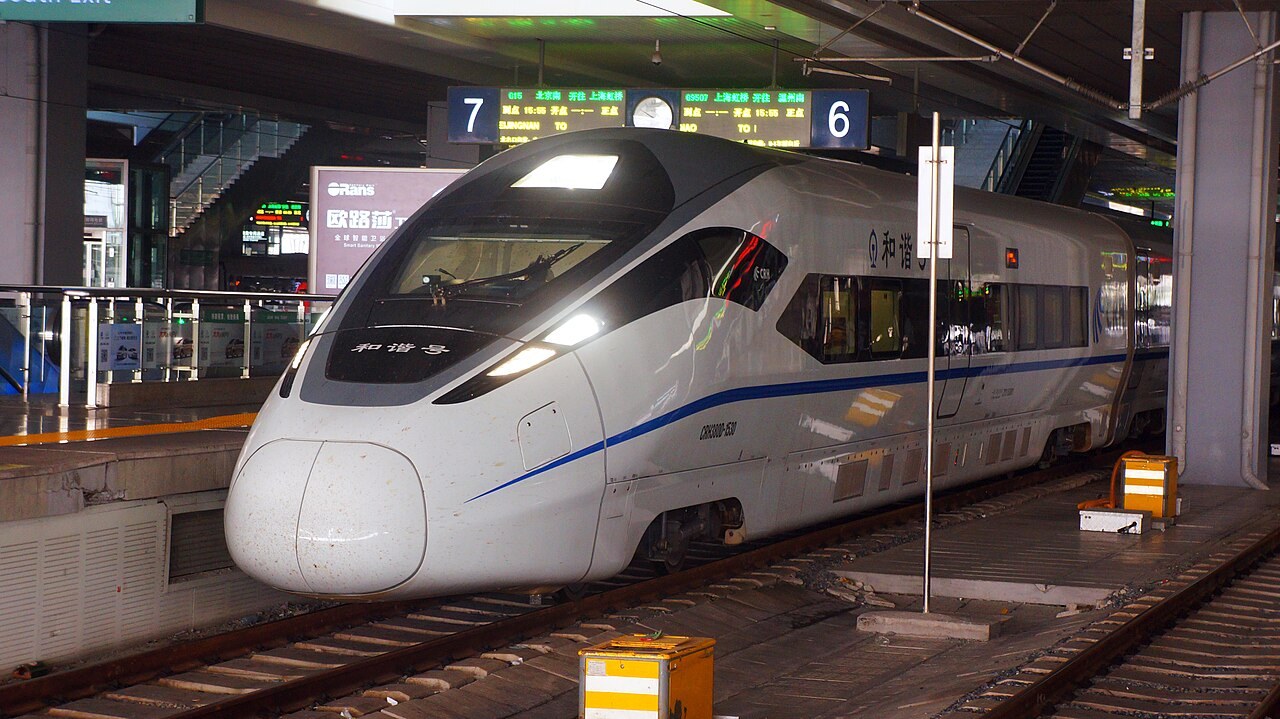
Here's the single best thing about travelling Jiangxi: you can do almost all of it on a train, and you barely have to think about it. China's high-speed network is genuinely world-class — clean, punctual to the minute, absurdly fast — and Jiangxi's headline sights happen to sit scattered around the edges of the province with Nanchang planted right in the middle. So the capital becomes your hub, and the porcelain towns, misty mountains and storybook villages become spokes you reach in well under two hours each. No white-knuckle mountain-road buses, no internal flights, no drama. Just turn up, scan your passport, and go.
This is the comprehensive train pillar — bookmark it. We'll cover Nanchang's confusingly-named stations and which lines they serve, realistic fastest times to every major Jiangxi destination, how to get into the province from the big gateway cities, and the bit everyone actually worries about: how to book and board as a foreigner. (For visas, money, SIM cards and airport stuff, see Plan Your Trip — this page sticks to rails.)
Why do it by train at all?
Because in this part of China the train is almost always the smart move. It drops you in the centre of town instead of an airport an hour out; there's no check-in pantomime; second-class fares are cheap; and the trains leave so frequently you can practically turn up and catch the next one. The whole reason Jiangxi works so well for independent travellers is this rail hub — it's the thread that lets you string porcelain, mountains and villages into one loop without ever renting a car. If you want the why-bother-with-Jiangxi pitch, that's over in Why Visit Jiangxi; if you want the case for using the capital as your base specifically, see Nanchang: Gateway to Jiangxi. This page is the nuts and bolts.
First, decode Nanchang's stations (this trips people up)
Nanchang has three railway stations and their names look almost identical in English, so this is the one thing to get right. Your ticket tells you which one — read it before you set off, and budget extra time if your hotel is across town from it.
- Nanchang Railway Station (南昌站 / Nanchangzhan) — the original, central station. Handy for the old town, and it still handles a good mix of high-speed and conventional trains, including some services east toward Shangrao and a few toward Wuyuan.
- Nanchang West (南昌西 / Nanchangxi) — the giant modern hub on the western edge, and the busiest. Most long-distance high-speed trains use it: the fast corridors toward Changsha/Wuhan/Guangzhou, plus services west to Pingxiang (for Wugongshan), south toward Ji'an and Jinggangshan, and east on the Shanghai–Kunming line toward Shangrao and Yushan (for Sanqingshan).
- Nanchang East (南昌东 / Nanchangdong) — the newest, opened at the end of 2023. This is the one that put Jingdezhen and Wuyuan within easy reach: it anchors the fast Nanchang–Jingdezhen–Huangshan line, so trains to the porcelain capital and the villages mostly leave from here.
Rule of thumb: long-haul into Jiangxi and trips south/west usually mean Nanchang West; the porcelain-and-villages run northeast usually means Nanchang East. But always trust the station printed on your ticket over any rule of thumb — the city is big and the two are nowhere near each other. All three sit on the metro.
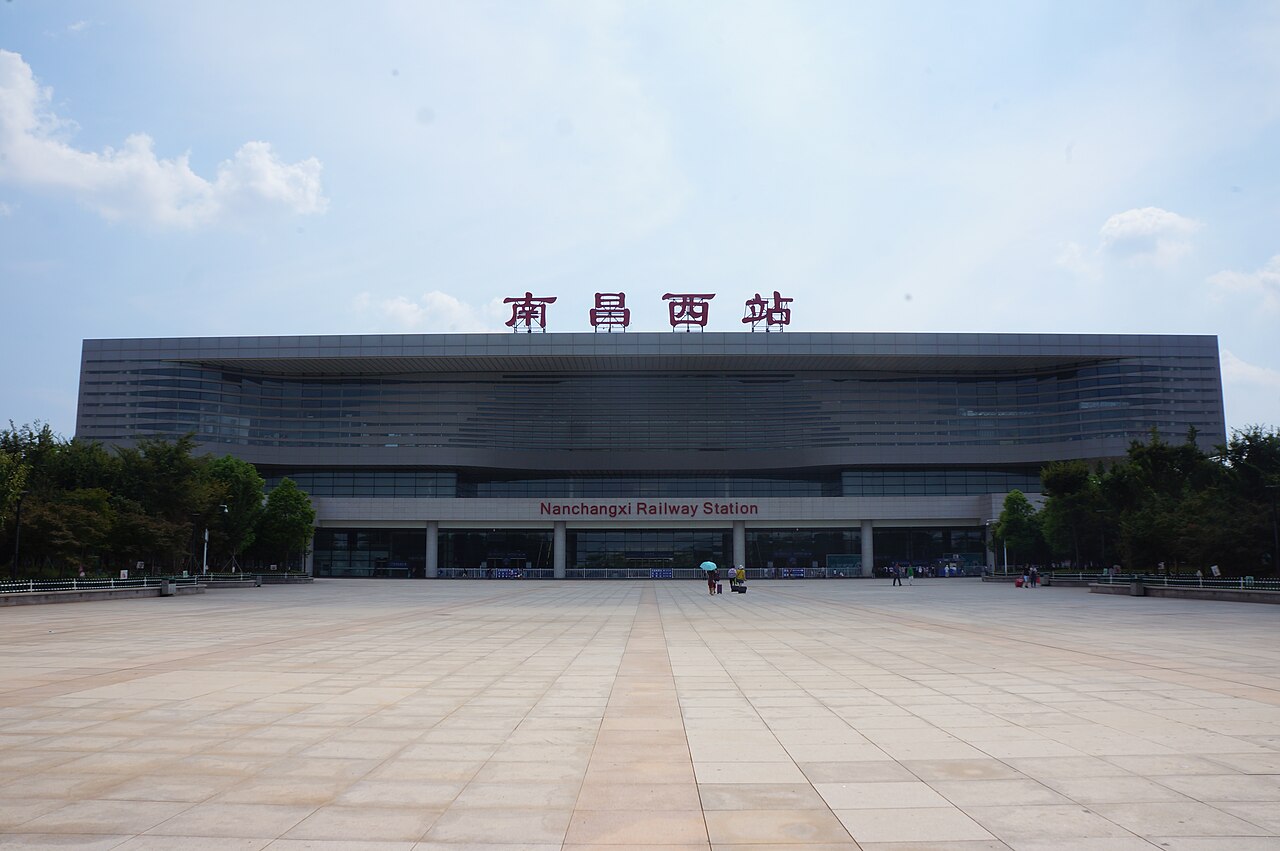 Photo: MNXANL / CC BY-SA 4.0 via Wikimedia Commons
The spokes: Nanchang to everywhere worth going
This is the heart of it. Times below are fastest services — most trains run a touch longer, and a handful of slower D-trains take more — so treat them as "best case, plan for a bit more." Frequencies are approximate and shift with the season, but on the busy routes they're high enough that you're rarely waiting long. All of these are bookable the usual way (see below); second class is cheap on every one.
- Nanchang → Jingdezhen (porcelain): fastest ~40 minutes, very frequent across the day (around 35 trains), from Nanchang East to Jingdezhen North (景德镇北). The easiest day trip in the province — see the Jingdezhen ceramics trip.
- Nanchang → Lushan / Jiujiang (UNESCO mountain, summer escape): aim for Jiujiang (九江), fastest ~55 minutes, very frequent. From Jiujiang it's a shuttle bus up the mountain (~1–1.5h). There is a "Lushan Railway Station," but it's awkwardly placed — Jiujiang is the practical railhead.
- Nanchang → Wuyuan (storybook Huizhou villages): direct, fastest ~1 hour 20 minutes, around a dozen a day from Nanchang East. Wuyuan is on a different line from Jingdezhen, but the two cross at Jingdezhen North — so chaining them is easy, and that leg is only about 30 minutes.
- Nanchang → Pingxiang → Wugongshan (alpine grassland, tent camping): no train reaches the mountain, so ride west from Nanchang West to Pingxiang North (萍乡北), the quickest in just under an hour and most 1–1.5 hours (it's on the busy Shanghai–Kunming corridor, so departures are frequent — roughly 68 a day), then a bus up to the trailhead (~1h).
- Nanchang → Shangrao → Sanqingshan (granite peaks, sea of clouds): the rail leg to Shangrao (上饶) is quick — fastest ~49 minutes, with dozens of trains a day. For the mountain itself you carry on to Yushan / Yushan South (玉山南), roughly 2–2.5 hours from Nanchang (mostly Nanchang West), then a shuttle/taxi up (~1h). Shangrao is also the natural transfer point between Wuyuan and Sanqingshan.
- Nanchang → Ji'an → Jinggangshan (red history + green mountains): two ways. A direct train to Jinggangshan station runs a handful of times daily and takes around 3 hours; or take the faster line south from Nanchang West to Ji'an West (吉安西) — the quickest run 55 minutes, around 36 departures a day, second class about ¥107 — then a tourist bus up to Ciping from there (~1h). Pick whichever has the better departure time.
Notice the pattern: only three of these (Wugongshan, Sanqingshan, Jinggangshan) need a bus at the far end, and even those have a clear, well-trodden transfer. Everything else is train-to-doorstep. That's why a 5–7 day Jiangxi loop out of Nanchang is so painless to run.
Getting into Jiangxi: the gateway hops
Most people don't start in Nanchang — they arrive from a bigger city, very often by rail, and the train usually beats flying once you count airport faff at both ends. Fastest high-speed times into Nanchang (most services run a bit longer; all are frequent):
- Shanghai → Nanchang: fastest around 3 hours (typically 3–4). Leave after work and you're at dinner in Nanchang.
- Hangzhou → Nanchang: fastest around 2 hours (roughly 2–2.5), very frequent — the shortest hop of the lot, mostly Hangzhou East → Nanchang West.
- Changsha → Nanchang: as little as ~1 hour 10 minutes (most run 1.5–2h), very frequent — Jiangxi pairs neatly with Hunan.
- Wuhan → Nanchang: around 2 hours (fastest a touch under).
- Guangzhou → Nanchang: fastest around 3 hours 20 minutes, with frequent departures through the day.
Coming from overseas, the usual play is a long-haul flight into a major hub (Shanghai, Beijing, Guangzhou, Shenzhen or Hong Kong) and then a high-speed train onward to Nanchang. Nanchang's own airport (KHN) is mostly domestic. Full arrival logistics — visa-free transit, airport-to-city, the metro — live on the Plan Your Trip page.
How to book (it's easier than the forums make it sound)
You've basically got two routes, and as a foreigner either works fine in 2026:
- 12306.cn (or the 12306 app) — the official China Railway system. Cheapest, because there's no markup. The one catch: foreign passport holders must do a one-time identity verification before you can buy — either upload your passport photo page plus a selfie in the app (allow up to a day or so for it to clear), or get it done instantly at any station ticket window. Do this before the dates you want sell out. The app has an English mode, though it can be a little clunky.
- An English-friendly reseller like Trip.com. Slicker interface, takes foreign credit cards, books against your passport number, and worth a small service fee to many travellers for the hand-holding. Great if you don't want to wrestle with verification on a tight timeline.
Whichever you use, your passport is your ticket. Book against the exact name and number in your passport. Popular routes and peak travel days (holidays, weekends in spring for Wuyuan) do sell out, so grab seats a day or several ahead rather than rocking up.
At the station: passport in, passport out
China's railways are essentially paperless now — there's no paper ticket to collect for most journeys. The drill, every time:
- Security scan at the station entrance (bags through an X-ray; it's quick). Arrive ~30–45 minutes before departure to be safe — big stations are, well, big.
- Find your train on the big departure boards (they're bilingual) and head for the right waiting area and gate. Each train has a fixed gate number that opens a few minutes before departure.
- At the ticket gate, scan your passport — place the photo page on the reader and the gate opens, matching you to your booking. Some foreign passports don't read on the automatic gates; if yours doesn't, just step to the staffed manual lane beside them and show your passport and booking — totally routine, no stress.
- On the platform, your ticket/app shows your carriage and seat number; carriage numbers are marked on the platform floor and on the train. Boarding closes a couple of minutes before departure and the train leaves exactly on time, so don't dawdle over coffee.
Carry your physical passport for every leg — it's your booking ID, your gate pass and your hotel check-in document all in one. A photo on your phone won't cut it at the gate.
Seat classes, and which to pick
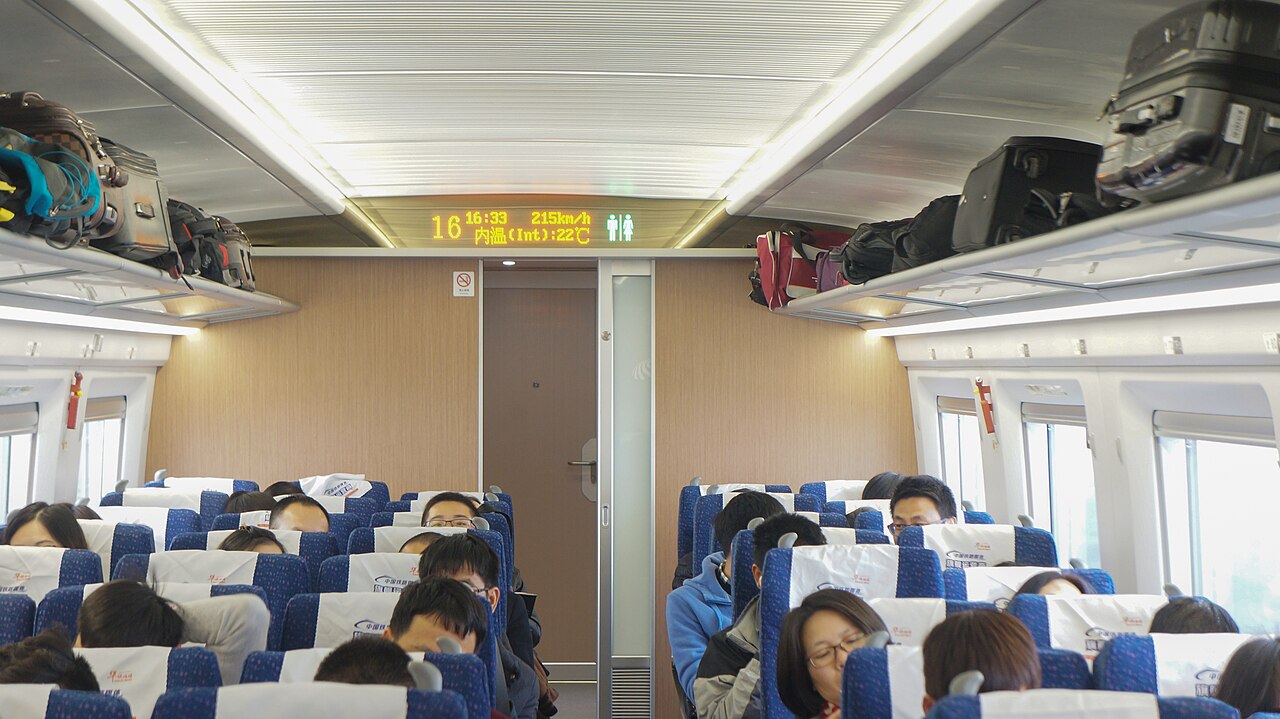 Photo: MNXANL / CC BY-SA 4.0 via Wikimedia Commons
High-speed (G/D) trains come in three flavours; on the short Jiangxi hops the differences barely matter for an hour or so, but here's the lay of the land:
- Second class (二等座): what almost everyone books. Five seats a row (3+2), perfectly comfortable, with a tray table and power sockets. Cheap, and absolutely fine for these distances.
- First class (一等座): noticeably roomier, four a row (2+2), maybe 50–70% more than second on the same train. A nice upgrade on a longer gateway leg if it's only a little more.
- Business class (商务座): the pointy end — wide, near lie-flat seats, often two-ish times the first-class price. Lovely, rarely worth it on a sub-two-hour Jiangxi spoke.
For the in-province spokes, just book second class and spend the savings on dumplings. Save the upgrade for a three-hour-plus run if you fancy it.
Luggage, etiquette & the apps that smooth it all
A few practical odds and ends that make train days frictionless:
- Luggage: there's no check-in and no separate baggage car on high-speed trains — you carry your bags on and stash them on the overhead racks or in the larger spaces at the carriage ends. The official guideline is roughly 20 kg and about 130 cm per person, but in practice nobody weighs or measures a normal suitcase; the security focus is on banned items (no large power banks over the limit, no flammables, no big knives — the usual). Travel light enough to lift your own bag onto a rack and you're golden.
- Etiquette: stations and trains are orderly. Queue at your gate, don't block the doors (people exit first), keep phone calls and videos low or use earphones, and don't put your feet on the seats. Quiet, clean and civilised is the norm.
- Eating: there's a trolley and usually a snack counter, but locals BYO — instant noodles (there's hot water on board), fruit, tea. Grabbing a few bits before you board is half the fun.
- Apps: install a couple before you arrive (some need a VPN to set up from abroad). Amap (高德地图) is the maps app that actually works in China and shows live train/metro info; Didi handles taxis at either end; and you'll want Alipay or WeChat Pay set up for, well, everything — including topping up metro rides to and from the stations. The 12306 app is worth having even if you booked elsewhere, for live platform and delay info.
Quick route cheat-sheet (from Nanchang, fastest times)
- Jingdezhen (porcelain) — ~40 min, very frequent, Nanchang East
- Jiujiang / Lushan (mountain, summer) — ~45 min–1h to Jiujiang, then bus up
- Wuyuan (villages) — ~1h20m direct, mostly Nanchang East
- Shangrao (transfer for Sanqingshan; also Wuyuan↔Sanqingshan link) — ~49 min
- Pingxiang (transfer for Wugongshan) — ~1–1.5h, then bus up
- Ji'an (transfer for Jinggangshan) — ~2h, then bus up; or ~3h direct to Jinggangshan station
- Gateways in: Hangzhou ~2h · Changsha ~1h10m · Wuhan ~2h · Shanghai ~3h · Guangzhou ~3h20m
That's the whole system in one page: Nanchang in the middle, fast trains fanning out, a passport in your pocket doing the work of a ticket. Want someone to actually book the legs, reserve your seats and slot it all into a day-by-day plan — porcelain-heavy, mountain-heavy, or a full loop? Plan your trip with us and we'll sort the rails so you just show up and ride.
Images: "CRH380D at Shanghai Hongqiao Railway Station" (CRH high-speed train) by MNXANL (CC BY-SA 4.0); "Facade of Nanchangxi Railway Station" by MNXANL (CC BY-SA 4.0); "Interior of Second Class Coach of CRH1E-250" by MNXANL (CC BY-SA 4.0) — all via Wikimedia Commons.
Last verified: May 2026 — rail times and routes change; always check 12306 or Trip.com before you travel.
Cover photo: MNXANL / CC BY-SA 4.0 via Wikimedia Commons (cropped & resized).